Meta launches virtual reality glasses with 5K screen and IMAX integration for experiences
Read more
Olhar Digital
olhardigital.com.br

Meta launches virtual reality glasses with 5K screen and IMAX integration for experiences

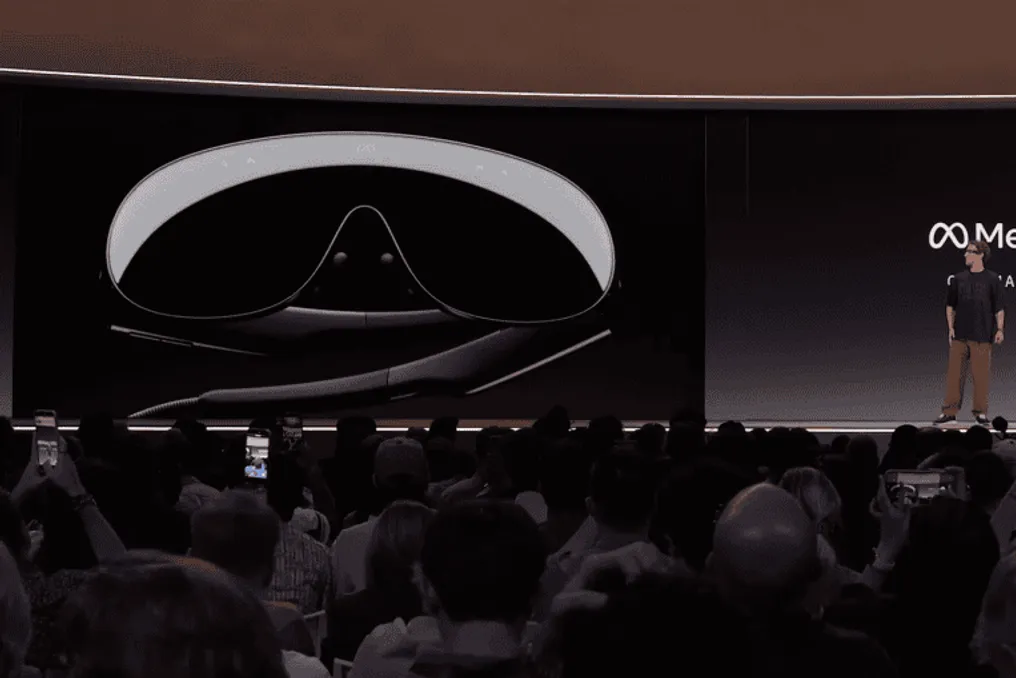
Meta is reinforcing its investment in virtual reality with the presentation of the Meta VR Glasses during the Connect conference, held this Wednesday (23). This new product aims to innovate the VR market with features focused on entertainment.

The glasses stand out for being lighter and having a design closer to regular glasses, unlike the company's previous bulky headsets. They are built from magnesium alloy and use the Snapdragon Reality Elite processor, supplied by Qualcomm. The device is powered by a computing puck that also serves as a battery, allowing the user to keep it in their pocket while wearing the glasses.

Immersion Features and Partnerships

Furthermore, the Meta VR Glasses will support three-dimensional (3D) experiences. Meta has formed a collaboration with Disney so that, starting in November, Disney+ subscribers can view certain films in 3D, including Marvel titles. According to the company, this technology will allow the environment around the viewer to be altered with dynamic effects, spatial audio, and 3D images, transforming movie viewing into something comparable to a virtual reality game.

The device will feature Meta AI, Meta's automated virtual assistant, integrated directly. This will enable users to interact with the glasses through voice commands or hand gestures, such as requesting a film to start simply by speaking to the device.

Availability and Price

Mark Zuckerberg, from the company, announced that the Meta VR Glasses will be available in the following American spring, meaning in 2027. The initial price set for the product will be US$ 1,299.99 (equivalent to R$ 6,890).

Similar stories

Image leak from HorizonOS firmware may reveal details of Meta's Project Phoenix headset
Read more
olhardigital.com.br

Image leak from HorizonOS firmware may reveal details of Meta's Project Phoenix headset

According to information published on the UploadVR website, images have appeared in the HorizonOS firmware—the operating system developed by Meta for virtual, augmented, and mixed reality devices—that may demonstrate the appearance of Project Phoenix, Meta's upcoming mixed reality headset.

These files show a device that has a thin, glasses-like body and differs from traditional headsets. This material appeared shortly before the Meta Connect event and confirms the assumption about the creation of a device positioned between smart glasses and larger headsets. The project is under development and is expected to be released next year.

The images found in the HorizonOS Prescription Lens application package display a thin frame with nose support. Unlike the interfaces used in larger headsets, Phoenix has a design more similar to regular glasses. The files also show sensors located on the sides and the bottom of the earcups. One rear photo shows a cable connected to the left earcup, which apparently connects to an external data processing unit named the compute puck.

Project Phoenix occupies an intermediate position between Meta's Ray-Ban smart glasses and classic headsets like the Quest 3. It is more durable than earlier models but takes up less facial space than the latest ones. The device's concept also echoes the approaches of companies like Xreal and Viture, whose mixed reality solutions fall into this intermediate category between glasses and headsets.

The HorizonOS Prescription Lens application was launched in August and allows syncing vision-correcting lenses with Phoenix. In the September update, the package began containing clearer images of the device, including the process of putting on and taking off the lenses, as well as QR code scanning.

Among the revealed details is that the device previously appeared under the codenames Phoenix, Stanley, and Loma. According to UploadVR, Meta is working on a premium and ultra-lightweight headset that will feature open side sections and use an external processor connected by a cable.

More Information

Meta Connect starts on September 23rd and includes a session titled 'Hands-free Interaction Guide'. Since Phoenix is associated with eye and hand tracking, this event may provide additional details about the project.

At present, while the firmware images help understand Meta's chosen development path, they do not confirm all the technical specifications of the headset nor guarantee that the final design will be identical to what is shown in the files. The initial publication about Project Phoenix appeared on the Olhar Digital portal.

Popular