Meta launches camera-free smart glasses, Ray-Ban Meta Audio, in response to privacy concerns
Read more
Olhar Digital
olhardigital.com.br

Meta launches camera-free smart glasses, Ray-Ban Meta Audio, in response to privacy concerns

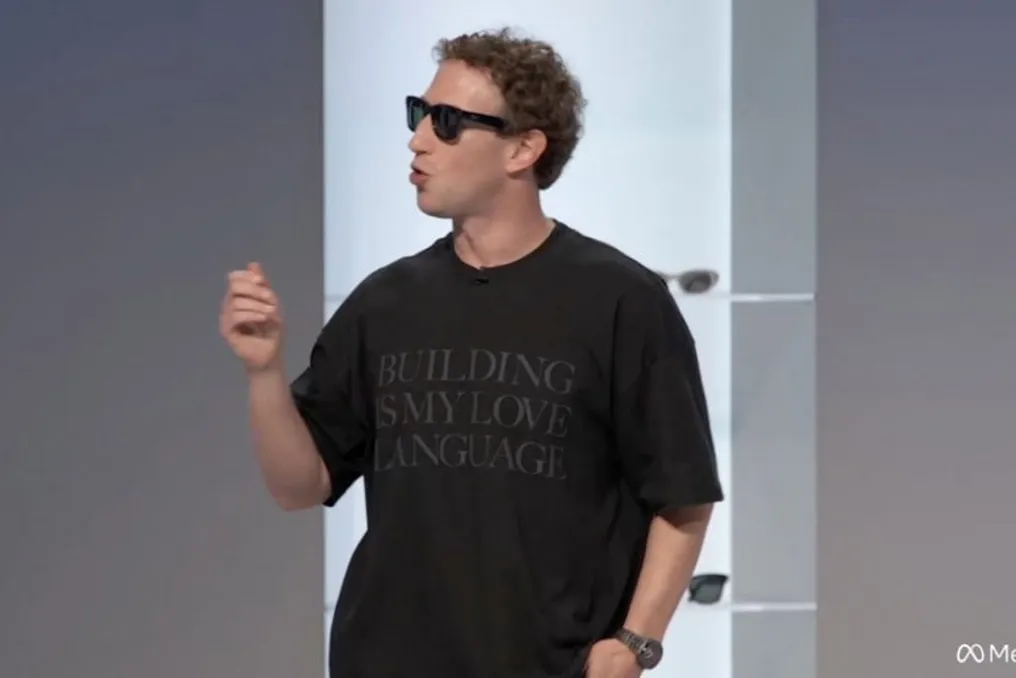
On Wednesday, the 23rd, during the Connect 2026 conference, Meta unveiled its first smart glasses equipped with artificial intelligence (AI) and devoid of a camera. These new devices, named Ray-Ban Meta Audio, were designed to mitigate concerns raised about the more controversial uses of the company's AI glasses.

Unlike other models offered by the company, the Ray-Ban Meta Audio operate solely with audio functionalities. They allow users to listen to music and podcasts, make calls, translate speech, and interact with Meta's AI assistant, known as Muse.

The development of this product was carried out in collaboration with EssilorLuxottica, Meta's partner in AI-focused hardware projects. The initial price set for the device is US$ 349 (equivalent to R$ 1,850).

Statement on the new product category

Meta CEO Mark Zuckerberg commented during the presentation that after developing the idea, the company identified the possibility of creating a new line of products centered on audio glasses. He asked the public: 'Once you get used to high-quality audio, it's simply something you want all the time, right?'

The decision to eliminate cameras also helped Meta design a thinner device compared to its previous models. The Ray-Ban Meta Audio weighs 43 grams and includes adjustable arms, replaceable nose pads, and hinges with protection against excessive stretching.

Battery life can reach 12 hours on a single charge, according to Meta. When used with the provided charging case, this duration can be extended up to 48 hours. The glasses will be available in various color options and combinations, totaling 23 color and lens arrangements, in addition to two new frame designs.

Among the new styles are the Clubmaster, which recalls the retro look of Ray-Ban models, and the Burbank, characterized as a classic and timeless rectangular frame. As with other Meta smart glasses, the Ray-Ban Meta Audio can be ordered with corrective lenses, if necessary.

Pre-sales of these glasses will begin on October 13th.

Next Generation with Camera

In addition to the camera-free glasses, Meta also presented the next version of its smart glasses equipped with a camera, the Ray-Ban Meta (Gen 3). This line will maintain the Ray-Ban Meta Wayfarer model and introduce two new styles: Aviator and Zena, the latter featuring a frame shape closer to a cat-eye style.

The renewed models will feature a 12 MP camera capable of recording videos in 3K Ultra HD resolution, along with a six-microphone system and a battery that lasts up to nine hours. The glasses, developed by Meta in partnership with EssilorLuxottica, will also receive an increase in the variety of available colors and styles.

The company also announced a new collaboration with singer Lisa, following a previous work with Kylie Jenner. Meta reported that the glasses will be launched in more countries globally. All of Meta's AI smart glasses will have access to Muse, the company's new AI personal assistant.

Meta anticipated several features that will be implemented in the devices. Innovations include Dolby Atmos Capture, a function that selects the best image among multiple captured frames, and the option to choose between landscape and portrait formats. The company is also working on auditory enhancement features for people with hearing impairments, more detailed responses, different audio modes, and customizable controls.

Another highlighted feature is the so-called 'private processing,' which, according to Meta, prevents the company itself from accessing user data.

Similar stories

Meta launches virtual reality glasses with 5K screen and IMAX integration for experiences
Read more
olhardigital.com.br

Meta launches virtual reality glasses with 5K screen and IMAX integration for experiences

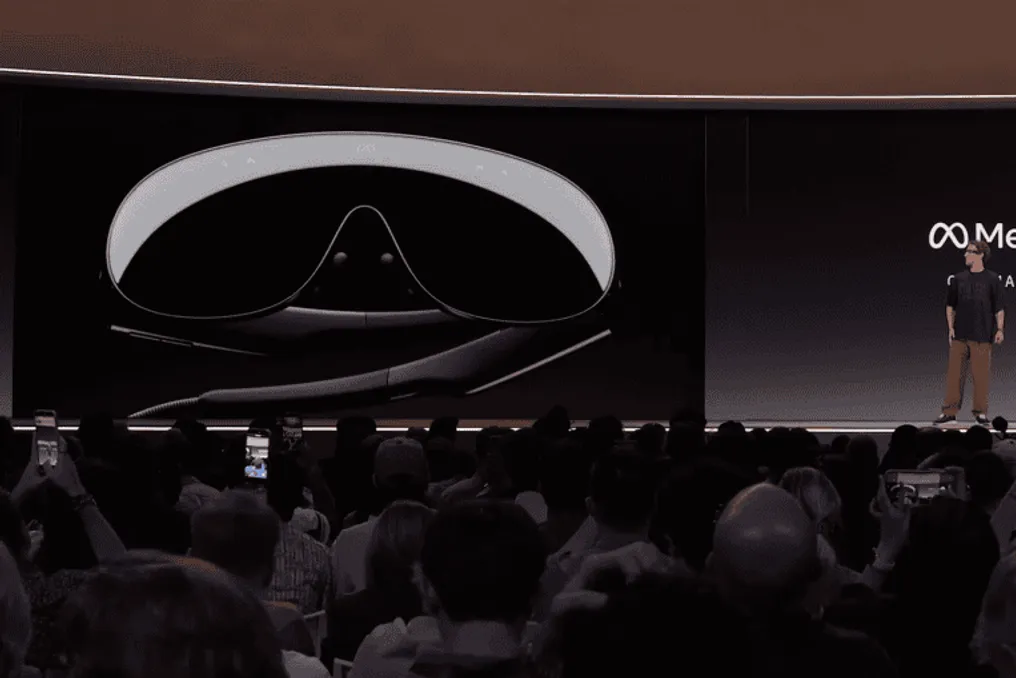
Meta is reinforcing its investment in virtual reality with the presentation of the Meta VR Glasses during the Connect conference, held this Wednesday (23). This new product aims to innovate the VR market with features focused on entertainment.

The glasses stand out for being lighter and having a design closer to regular glasses, unlike the company's previous bulky headsets. They are built from magnesium alloy and use the Snapdragon Reality Elite processor, supplied by Qualcomm. The device is powered by a computing puck that also serves as a battery, allowing the user to keep it in their pocket while wearing the glasses.

Immersion Features and Partnerships

Furthermore, the Meta VR Glasses will support three-dimensional (3D) experiences. Meta has formed a collaboration with Disney so that, starting in November, Disney+ subscribers can view certain films in 3D, including Marvel titles. According to the company, this technology will allow the environment around the viewer to be altered with dynamic effects, spatial audio, and 3D images, transforming movie viewing into something comparable to a virtual reality game.

The device will feature Meta AI, Meta's automated virtual assistant, integrated directly. This will enable users to interact with the glasses through voice commands or hand gestures, such as requesting a film to start simply by speaking to the device.

Availability and Price

Mark Zuckerberg, from the company, announced that the Meta VR Glasses will be available in the following American spring, meaning in 2027. The initial price set for the product will be US$ 1,299.99 (equivalent to R$ 6,890).

Oversight Board criticizes Meta's AI deepfake protection measures as inadequate
Read more
cgtn.com

Oversight Board criticizes Meta's AI deepfake protection measures as inadequate

Meta decided to remove AI-generated videos targeting two women, including a British politician, after the Oversight Board criticized the company's protection measures against deepfakes, calling them 'fundamentally inadequate.'

Earlier on Thursday, the Oversight Board, a quasi-independent body funded by the company to review moderation decisions, demanded that Meta remove fabricated videos from its platforms. The Board noted that such cases undermine Meta's own policies regarding hate speech, disinformation, and harassment.

The first AI-generated video depicted a Labour Party member in Scotland making provocative statements about refugees. No public record existed to confirm the politician's remarks, and the video showed clear signs of forgery, including audio not synchronized with her facial movements.

The second fabricated video was aimed at a Muslim activist in Europe. The goal was to discredit her role as a health advocate by falsely showing her consuming fast food while giving advice on mindful eating and performing absurd exercises.

The Board stated that Meta's policies are 'consistently and fundamentally inadequate' to counter the growing flow of AI-generated content on its platforms, which include Facebook and Instagram.

Co-chair Pamela San Martin stated in her submission: 'From politicians to private citizens, AI-generated deepfakes are increasingly used to harass and silence women who participate in public discourse.' She added that 'these cases demonstrate a broader, troubling pattern where women publicly engaged in issues are disproportionately subjected to harassment and disinformation.'

The Oversight Board's decisions on individual cases are binding for Meta, but its broader policy recommendations do not carry the same weight.

Meta expressed approval of the Board's decision on both cases and agreed to comply within seven days. San Martin emphasized that 'Meta and other social media platforms need more robust policies to combat the spread of deepfakes, including a much stronger approach to labeling misleading content, stricter penalties for violators, and the removal of deepfakes that target private individuals.'

Last week, the Board urged Meta not to replace professional fact-checking with the 'Community Notes' feature—a collective participation model based on the misinformation that became popular on Elon Musk's platform X. This call followed Meta's announcement of testing 'Community Notes' in 16 Spanish-speaking Latin American countries as part of a move to replace its fact-checking program.

Popular