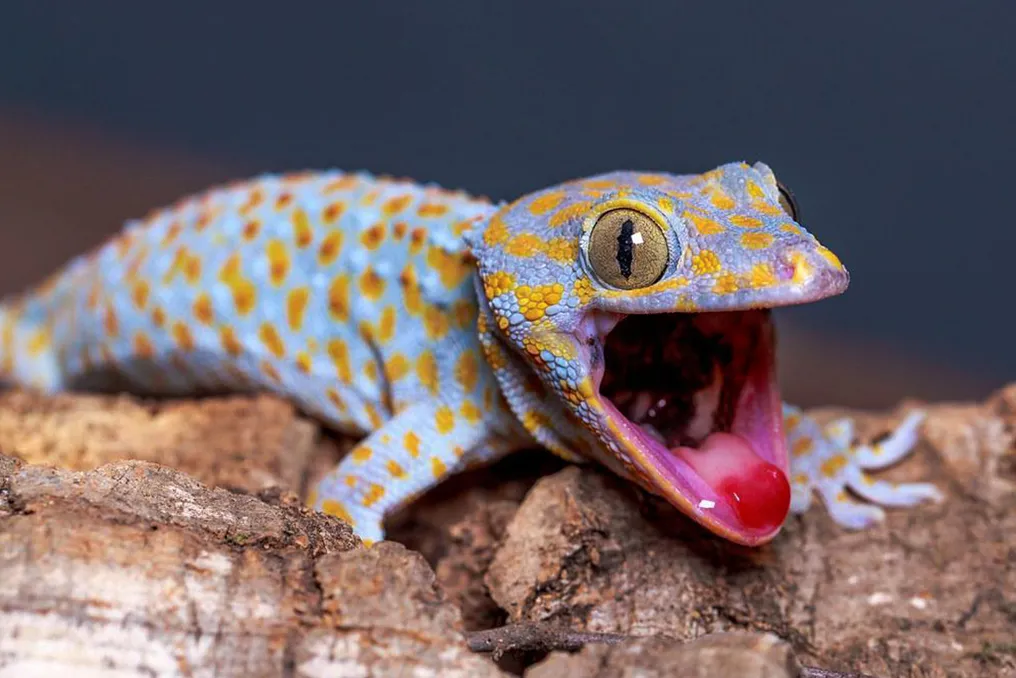
In addition to having dry, scaly skin, reptiles possess the notable characteristic of producing noises. Sounds such as screams, cries, moans, screeches, and clicks are part of these animals' routine, ranging from crocodiles to turtles. Each species generates a specific type of sound that fulfills determined functions.
Previously, the scientific community focused mainly on the vocal communication of mammals and birds. However, recent research has begun to pay attention to reptiles and has discovered that noise constitutes a crucial form of communication for these creatures, playing a more significant role than previously believed. These sounds are used in mating processes, interaction with offspring, and other behaviors.
Crocodiles and turtles emit sounds even while inside the egg, serving as a warning to the mother and other hatchlings about the imminent birth. This mechanism also aids in synchronizing the hatching of the young; this functionality was specifically identified in turtles only in the last century.
Gavials, frequently found in northern India, share similarities with crocodiles, notably by having an exceptionally long snout (one of the largest among crocodylians) and visible teeth even with their mouths closed. Males exhibit an elevation at the tip of the snout that generates a hum, attracting females for mating and assisting in selecting the ideal partner.
Additionally, gavials use a protrusion called a ghara to warn about the presence of strange individuals in their natural environment. This sound is subtle, comparable to the pop of a bottle cork when opened, and was only the subject of in-depth study in 2025. Each animal has a unique pattern of clicks that allows for differentiation between individuals.
Lizards also participate in this communication, with approximately 30% of families emitting sounds. The way they use these sounds varies according to the species. Some vocalize when they feel threatened or simply to establish contact with each other.
The Chilean arboreal iguana, a species native to Chile and Argentina, shows variations in its danger warning signals, emitting distinct sounds that denote the severity of the threat. When this high-risk sound is produced, neighboring iguanas remain still for a period.
Meanwhile, the tokay gecko is capable of adjusting its vocalization in noisy environments. Unlike humans, who tend to raise their pitch in such situations, it modifies the sound pattern by prolonging the emission of higher frequencies.
Another variation observed in reptiles is the alteration of the sound according to the animal's size: larger specimens produce deeper sounds with lower frequencies.