Raspberry Pi prevents RAM upgrade after firmware verification implementation
Read more
Tecnoblog
tecnoblog.net

Raspberry Pi prevents RAM upgrade after firmware verification implementation

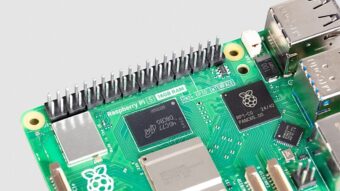
Raspberry Pi users are facing difficulties when trying to update the RAM of the devices because the boards now block this procedure. Even when users replace the component following all necessary technical procedures, they are confronted with an error message that prevents the board from functioning.

Although this block is not new, the topic recently gained prominence after being discussed on the Reddit platform. A thread author reported that when replacing the RAM chip of a Raspberry Pi 5, they received the error notification: “BOOT ERROR: code 9 – ‘SDRAM mismatch’”.

Previously, in June of this year, another user shared a similar situation on the Raspberry Pi forum, while trying to increase the memory from 2 GB to 4 GB in a Compute Module 5. In this case, an engineer from the organization itself clarified the reason for this failure.

According to the website It’s Foss, the limitation on swapping the RAM module in Raspberry Pi devices has been active since the end of 2024, with the release of firmware version 2024-09-23-x and its subsequent updates. This firmware performs a memory check during the board's boot-up. If the system detects that the installed RAM does not match the equipment's original module, the error message is displayed.

Phil Elwell, known as PhilE, a Raspberry Pi engineer, detailed that this restriction was introduced with the goal of preventing scammers from acquiring models with less RAM, performing an upgrade using modules of dubious origin, and subsequently selling these devices as if they were original units with higher memory capacity.

PhilE exemplified the risk, citing the case of someone who buys a Raspberry Pi with 2 GB of RAM, replaces the component, and resells the product claiming it is an original 8 GB model. He explained that this poses a risk to the consumer, since the board has not been tested by the company, and imposes a potential support cost due to complaints about unreliable equipment. For this reason, the company eliminated the commercial incentive by blocking the devices so they only function with the original RAM size.

Considering that the price increase of many Raspberry Pi boards occurred due to RAM scarcity, the justification presented by Raspberry Pi has merit. However, reports show that there are technically knowledgeable users who acquire boards with specific RAM capacity and perform upgrades themselves, seeking better performance in applications or for other legitimate reasons.

These users do not intend to cause harm to third parties, which makes their frustration with the limitation understandable. Furthermore, PhilE informed that the replacement can be prevented even if the new module has the same capacity as the previous one. Some people are bypassing the problem by installing an older firmware that does not contain the block, such as version 2024-09-10-x or earlier.
Similar stories

Memory shortage forces manufacturers to alter designs, test chips, and adjust device prices
Read more
olhardigital.com.br

Memory shortage forces manufacturers to alter designs, test chips, and adjust device prices

The scarcity of memory chips is forcing smaller manufacturers of cell phones and notebooks to redesign their products, test components, and pass some of the additional costs on to consumers. In addition to the impact on prices, the uncertainty about supply threatens these companies' ability to produce their devices.

According to Reuters, companies such as Fairphone, Jolla, and Framework have adopted distinct strategies to cope with this shortage. The crisis is expected to last until at least 2027, although Jolla expects supply to only return to normal from 2028.

For smaller producers, securing sufficient memory has become an even greater priority than simply absorbing the increase in component costs. Raymond van Eck, CEO of Fairphone, told Reuters that, 'If you don't have allocation, you are out of the game anyway.'

The difficulty intensified late last year, a period when companies sought to secure stocks. Nirav Patel, CEO of Framework, reported that this led 'everyone to try to get as much supply and stock as possible, as quickly as possible,' worsening the shortage situation.

The market also reflects this impact on smartphone projections. Counterpoint Research estimates a 13.9% reduction in global smartphone shipments this year, totaling 1.08 billion units, representing the largest annual contraction ever recorded. The rising cost of memory makes entry-level models less viable for manufacturing.

Companies are also modifying the design of their equipment to create more options in case certain components become difficult to source. In the specific case of Jolla, tests involve an additional verification to confirm whether the chips are new and not refurbished parts sold as original items.

Although memory prices remain high, the growth rate has slowed. TrendForce anticipates an increase of 13% to 18% in conventional DRAM contracts this quarter, a level significantly lower than the 93% to 98% observed in the first quarter.

The effect is particularly severe on cell phones in the $400 range (about R$ 2 thousand). Raymond van Eck, from Fairphone, pointed out that memory can constitute almost 60% of the bill of materials for these devices. Thus, each manufacturer has developed a particular approach to managing the increase in costs.

The supply outlook remains constrained. In July, the CEO of SK Hynix warned that 2027 would be 'the worst year in the industry's history from a supply perspective,' with demand exceeding capacity even after 2030. Jolla, meanwhile, projects that supply will only stabilize from 2028. Until then, smaller manufacturers will have to deal not only with higher costs but also with the complexity of securing enough components to maintain production.

Popular