
Fujifilm India explores deals for supplying chemicals to domestic chip manufacturers
Read more
Business Standard
business-standard.com

Fujifilm India explores deals for supplying chemicals to domestic chip manufacturers

Japanese electronics giant Fujifilm India is considering entering into agreements to supply chemical substances and raw materials for semiconductors with several companies in India amid the expansion of the silicon chip production and packaging ecosystem in the country. This was reported by Kodji Wada, the company's managing director.

Initially, Tata Electronics will be an important client. However, as India aims to significantly increase semiconductor production, more front-end manufacturing enterprises are expected to emerge in the future. Furthermore, there are packaging companies that use chemicals and materials that Fujifilm could supply.

Recently, the company announced plans to invest about 800 crore rupees in establishing a new plant for producing semiconductor materials in India. According to Wada, the total investment will be made in two phases, with commercial production planned for 2027–2028.

This facility in Dholera, located near the Tata Group's production complex, will initially produce chemicals for front-end processes. The second phase involves expanding the range to include materials for semiconductor surface conditioning and high-purity chemicals.

Although many raw materials for producing these chemicals will initially be imported into India, Fujifilm India also plans to collaborate with Indian firms. The company intends to consult them on production and technical knowledge, provide support in technology transfer, and ultimately purchase products from them.

Wada noted that several companies have expressed interest in this area, but it is necessary to carefully select partners who possess the required capabilities and willingness to invest. He emphasized that areas such as metal contamination control, quality control, and manufacturing processes must meet semiconductor-grade requirements after suitable partners are identified.

Kodji Wada also stated that India must continue to support the semiconductor ecosystem by providing appropriate incentives beyond already announced programs so that companies interested in silicon chip manufacturing find reasons to invest in the country. To compete on cost with other semiconductor markets such as Taiwan, Malaysia, and Singapore, Indian firms should maximize the use of local supply sources.

He added that although the silicon chip production and packaging ecosystem in the country is in its early stages, this gives local companies an advantage in starting with the best available technologies. As the local manufacturing sector develops, Indian companies will be able to develop significant competencies in intellectual property and patented methods for the entire semiconductor manufacturing process. Wada compared this path to the experience of Japan, Korea, and Taiwan, noting that India has only recently begun building this ecosystem.
Similar stories

Tata Electronics announces five partnerships to create an integrated semiconductor ecosystem in India
Read more
yourstory.com

Tata Electronics announces five partnerships to create an integrated semiconductor ecosystem in India

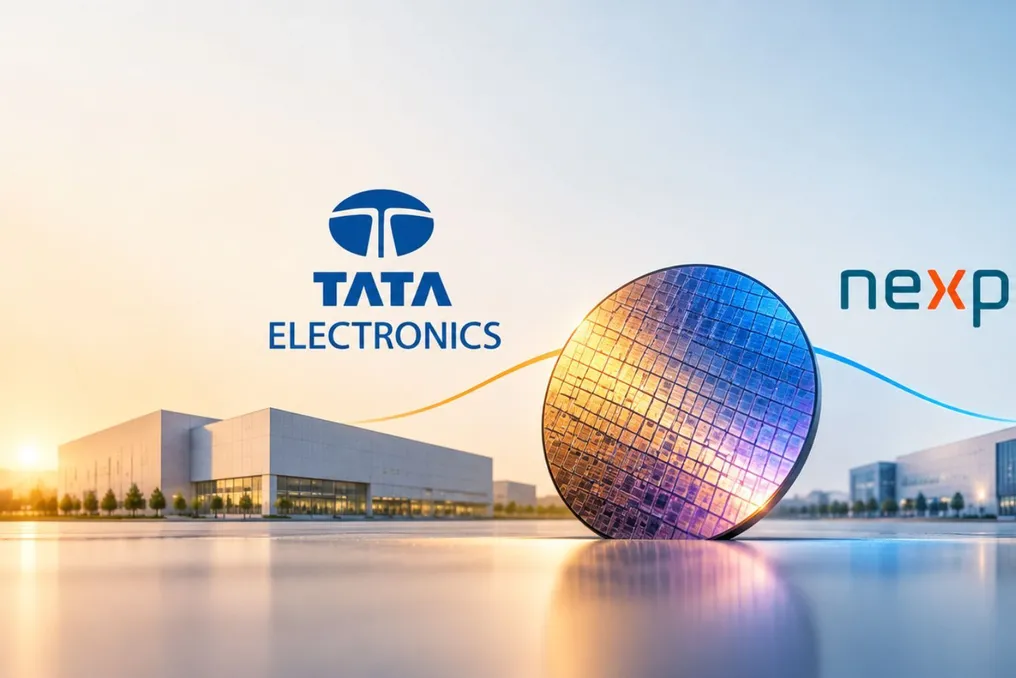
Tata Electronics announced on Wednesday a strategic collaboration with Dutch semiconductor leader Nexperia, covering wafer fabrication, assembly and testing, as well as technological interaction. This was the main event in a series of five partnerships signed on the same day, which together cover almost all levels of the semiconductor value chain—from raw materials and packaging equipment to strategic localization and talent development.

The agreement with Nexperia establishes the foundation for long-term interaction structured around three areas: front-end wafer production, back-end assembly and testing, and technology and ecosystem development. Under the front-end cooperation, the companies are working to create a portfolio of Nexperia MOSFETs at the upcoming 300mm Tata Electronics plant in Dholera, Gujarat. In parallel, Nexperia's discrete semiconductor products will be assembled and tested at the Tata Electronics packaging facility in Jagirod, Assam.

Dr. Randhir Thakur, CEO and Managing Director of Tata Electronics, stated: 'We are pleased with the partnership with Nexperia to manufacture their products at our semiconductor facilities in Dholera and Jagirod,' adding that this collaboration 'aligns with the growing technological and trade relations between India and the European Union.' Stefan Tilger, Interim CEO of Nexperia, noted that this partnership combines 'complementary strengths in technology, manufacturing, and innovation,' while strengthening a 'resilient and globally balanced manufacturing network.' Achim Kempe, COO of Nexperia, described it as 'much more than just manufacturing,' detailing a long-term partnership supporting 'innovation, growth, and supply chain resilience in the semiconductor value chain.'

Nexperia, headquartered in the Netherlands, employs over 12,500 people and ships over 100 billion products annually, supplying critical semiconductors used in virtually all categories of electronic design—from automotive and industrial to mobile and consumer.

The deal with Nexperia was one of five initiatives presented by Tata Electronics on September 17, each aimed at addressing a specific gap in India's developing chip ecosystem. The foundation of these efforts lies in two flagship Tata projects: India's first commercial semiconductor plant in Dholera and the country's first local assembly and testing facility in Jagirod, representing combined investments of $14 billion USD.

Popular