
Cade archives investigation into Amazon and Anthropic partnership but reserves possibility of new analysis
Read more
Olhar Digital
olhardigital.com.br

Cade archives investigation into Amazon and Anthropic partnership but reserves possibility of new analysis

The Administrative Council for Economic Defense (Cade) decided to archive the case investigating the investments made by Amazon in Anthropic and the terms of the agreements established between both companies this Wednesday, the 23rd.

The court based its decision on the fact that Amazon's minority stake did not require prior notification, since Anthropic's revenue in Brazil had not reached the level stipulated by current legislation. Furthermore, the decision dismissed the allegation of 'gun jumping,' a situation where a company executes an operation before obtaining due authorization from Cade.

Although the archiving concludes the current procedure, it does not prevent a reassessment if there are changes in the relationship between the companies or if issues arise that could harm market competition.

Analysis of Investment and Agreements

During the evaluation, Cade analyzed the minority investment made by Amazon in 2023, as well as the technological collaboration pacts signed between the two entities. The councilors followed the opinion of rapporteur José Levi Mello do Amaral Jr., who concluded that the agreements did not constitute a partnership with an autonomous structure intended to share decisions, risks, and results.

Among the aspects examined by Cade, Amazon argued that the agreements were not exclusive in nature and that the collaboration served to boost innovation. To demonstrate that Anthropic was not exclusively dependent on Amazon, the company also mentioned its connections with other partners and investors, such as Nvidia, Microsoft, Google, Broadcom, and SpaceX.

Cade recognized the increase in cooperation between Amazon and Anthropic and the growing proximity between them. However, the court did not identify any changes in how decisions are made that would justify classifying the partnership as a joint venture.

“Law No. 12.529/2011 offers structural and behavioral instruments that, when their respective prerequisites are observed, allow the authority to examine operations not captured by ordinary notification criteria and investigate practices capable of producing anti-competitive effects,” the rapporteur emphasized.

Cade has the prerogative to reexamine the partnership if there is a change in the way Amazon and Anthropic operate or if the agreements generate adverse impacts on competition. Factors that could motivate this new evaluation include technological or commercial dependence, difficulty in switching suppliers, access to confidential data, and potential restrictions on competitors.

Court's Position

Councilor Camila Cabral summarized the collegiate body's view, emphasizing the need for operations of this type to remain under special monitoring by Cade. Nevertheless, the procedural matter in question was closed by archiving.
Similar stories

Study points to accelerated growth of extreme weather events in the central Amazon
Read more
olhardigital.com.br

Study points to accelerated growth of extreme weather events in the central Amazon

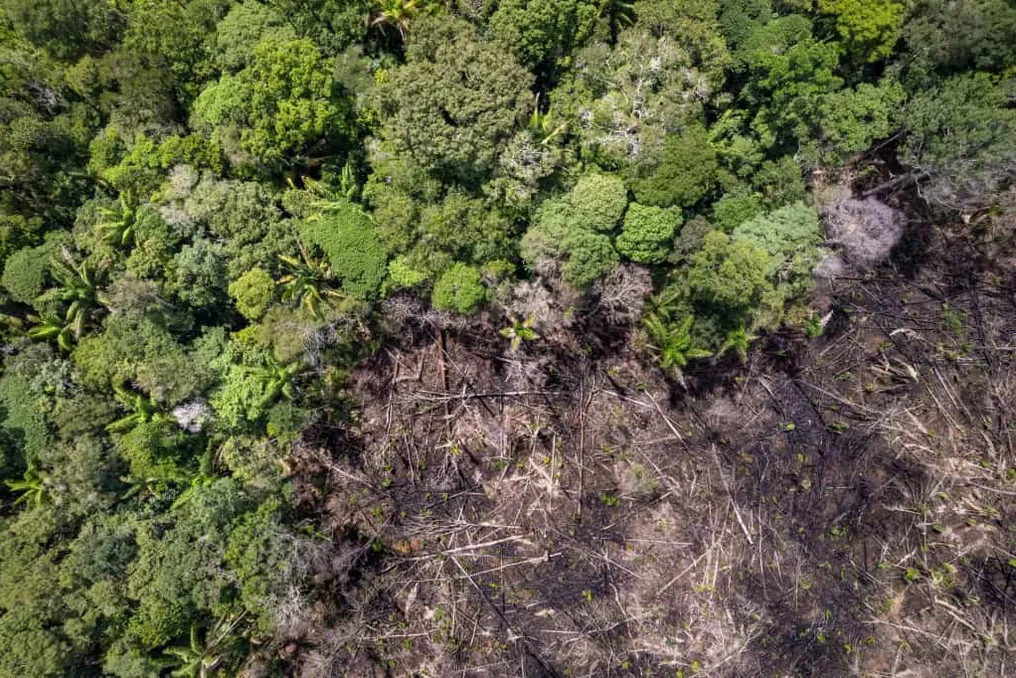
A new study revealed a worrying climate change in the Amazon, indicating that the north-central part of the region is experiencing the fastest increase in extreme weather events. This area, which encompasses vast expanses of preserved forest, natural savannas, and indigenous lands, had not previously been flagged as the most impacted by climate modifications.

The research, published in the journal Communications Earth & Environment, examined temperature and water availability behavior between 1981 and 2023. The findings show that approximately 10% of the Amazon basin, covering over 700,000 sq km, registered an increase of at least 0.75°C per decade in extreme temperatures during the dry season. Since 1981, the heat in these locations has exceeded 3.22°C.

To conduct the climate analysis of the entire Amazon, scientists segmented the area into 11 km cells and used high-resolution data regarding precipitation and temperature. This information was obtained by combining satellite records with local meteorological station data, which allowed for the identification of the specific dry season for each sector.

Additionally, the study introduced a new water deficit metric that takes into account the influence of temperature on water evaporation. Using this data, the team was able to calculate temperature variations and water stress across the entire Amazon over 43 years, covering both the dry season and the complete hydrological cycle.

The assessment of changes was conducted from two perspectives. The first used the so-called 'central tendency,' which measures the average evolution of temperatures and water deficit over the years. The second option adopted the 'extreme tendency,' giving greater relevance to years that presented exceptionally hot or dry conditions.

This second methodology highlighted a crucial distinction: although the southern Amazon registers the greatest warming when considering averages, it is the north-central region that exhibits the fastest growth in extreme events. Researchers argue that focusing on the hottest and driest periods helps identify conditions conducive to causing the greatest damage.

Periods characterized by intense heat and dryness have been contributing factors to forest fires and atmospheric pollution. Furthermore, rivers are subject to drying up, which affects communities that depend on these water bodies for transport and other essential activities.

In the north-central region, recent research has documented signs such as a decrease in mammal and bird populations. The region has also faced severe heatwaves, droughts, and burnings, elements that have driven megafires and air pollution peaks significantly higher than the average recorded in Manaus (AM).

The severity of the situation is accentuated by the forecast of the El Niño phenomenon for 2026, which is expected to be one of the most intense ever documented. Scientists warn that the combination of heat and drought can exert additional pressure on the forest.

Another aspect highlighted by the study is that the north-central region is geographically distant from the so-called deforestation arc. For this reason, researchers conclude that the rapid increase in extremes in this area cannot be solely attributed to local land-use changes. This result corroborates the influence of global climate change on different regions of the Amazon.

Popular