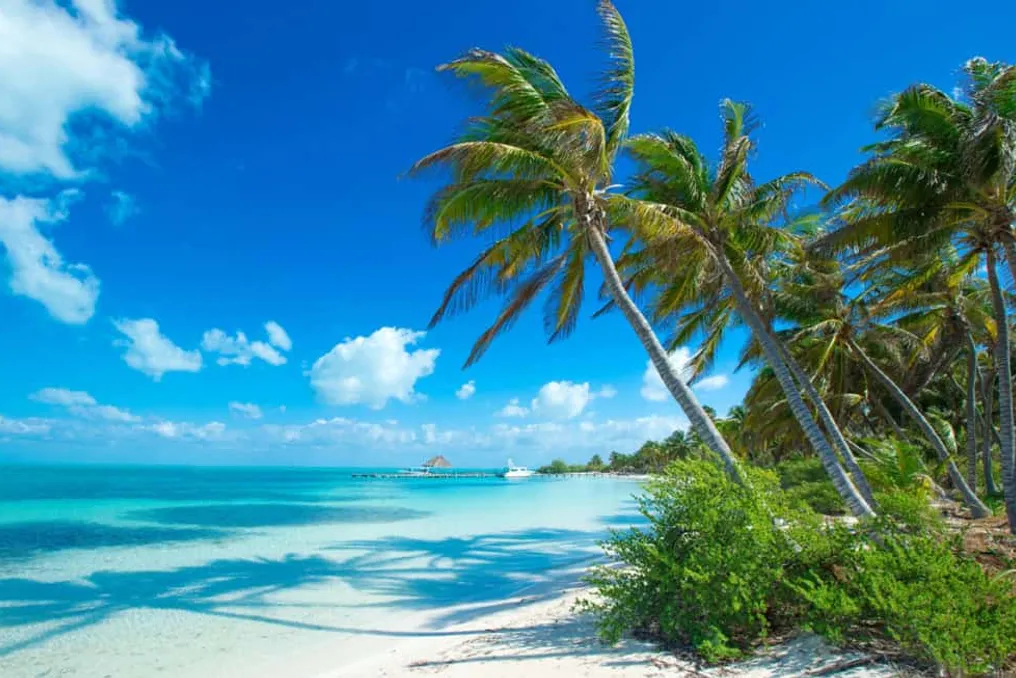
Rising ocean levels are causing beaches to recede in many parts of the world. In the Maldives, a team is using artificial intelligence, satellite imagery, and ocean current data to study erosion and attempt to restore sandy areas.
The Coastal Assembly project, created based at the MIT laboratory, has already managed to extend the beach strip by approximately 27 meters. In another location, a sand bank exceeding 849 cubic meters was formed over six months.
Erosion Study in Kaafu Atoll
In Kaafu Atoll, the team analyzed ten years of satellite imagery, currents, and other data to determine the rate of erosion. This analysis served as the basis for developing 54 structures made of marine concrete, which were manufactured from crushed sand and shells, according to The New York Times.
These elements are placed underwater in a hexagonal sequence. This shape reduces wave force without impeding water circulation, allowing sand and sediment to accumulate in that area. An effect is already visible in the landscape: according to those responsible for the project, the beach has practically doubled in size. Furthermore, corals have begun to grow on the structures, becoming a habitat for fish and other marine animals.
Part of the work happens before installation. The company's technology tracks erosion in real time at nearly 900 coastal points. Skylar Tibbits, one of the founders of Coastal Assembly, notes that the process was much slower initially. 'Before, we spent months on one section. Everything was done manually at first.'
Today, according to Tibbits, the team can predict future erosion and develop a countermeasure plan in just one day.
The application of satellite imagery and artificial intelligence has seen significant development precisely when island nations face difficulties obtaining data about their own coasts. A United Nations report mentioned in the project emphasizes that satellite mapping and observation are an important foundation for climate change adaptation.
Coastal Assembly left MIT at the end of last year and began operating as a public good organization. Ten more installations are planned in the Maldives, as well as projects for the Bahamas, Boston Harbor, and Miami.
Stability Issues and Alternatives
Nevertheless, a fundamental question remains unresolved: how long will the restored beaches remain stable? Seasonal currents, sediment movement, and continuous sea-level rise could alter the results achieved.
Mohamed Nasir, former President of the Maldives, closely monitored the results and views this initiative as an alternative to traditional erosion control methods. He stated: 'I have seen it. It really works.'
For Nasir, large concrete barriers can be expensive. Sand pumping and dredging also require repeated investments and can negatively affect coastal ecosystems. Therefore, the focus is on intervention that utilizes the natural behavior of water instead of trying to block it.
This possibility attracted the attention of Hyun Kim, Senior Consultant at the Global Centre for Climate Mobility, affiliated with the UN. He considers this technology a specific solution and noted that his organization is working to disseminate it to other low-lying countries.
Despite the results achieved in the Maldives, the experience is still in the monitoring phase. The durability of the restored beaches and the possibility of applying this methodology in different regions remain open questions whose answers will demonstrate the potential of the solution.