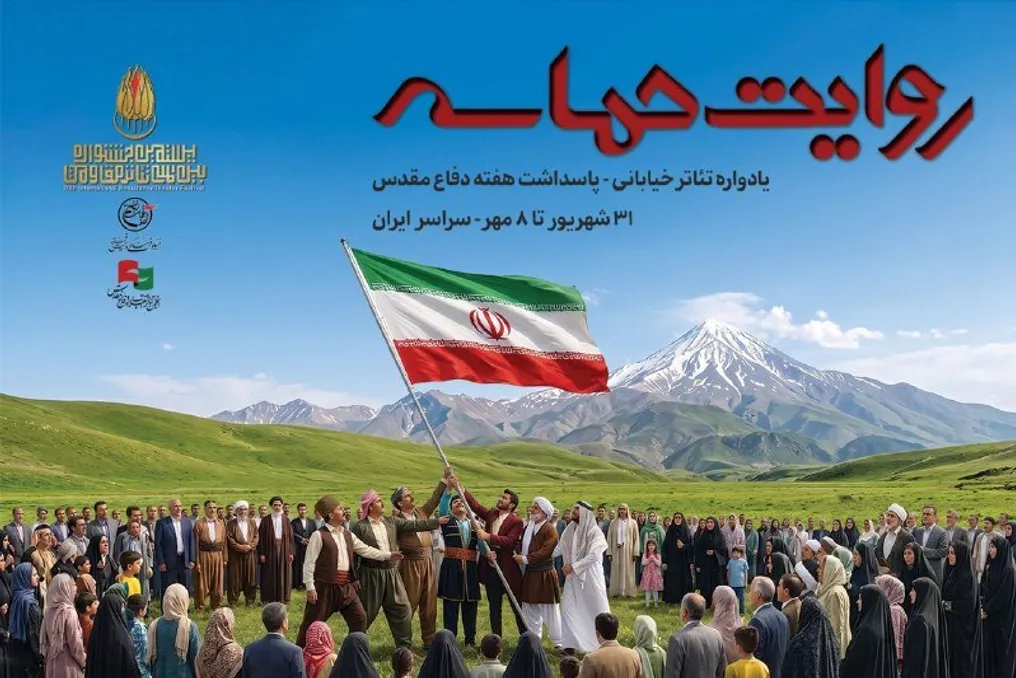
As part of the 'Epic Narration' program, 64 street theater productions from 26 provinces are taking place across Iran. These performances run concurrently with the Sacred Defense Week to immortalize the experience and sacrifices made during the war between Iran and Iraq from 1980 to 1988 through the language of theater.
The 'Epic Narration' event is organized as part of the 20th International Festival of Resistance Theater and began on Tuesday, September 22, running until October 1, presenting its shows in various Iranian cities.
According to the Secretariat of the Festival of Resistance Theater, the program aims to honor the memory of participants in the eight-year war and promote the culture of resistance through street and environmental theater. The performances take place in public spaces, allowing theater to go beyond traditional venues and reach audiences in their daily environment.
Organizers note that the goal of the event is to strengthen the connection between epic themes and the general public by utilizing the opportunities provided by open performances. Furthermore, it provides a platform for street theater artists from different regions of the country to present their work and explore creative approaches to themes related to war, sacrifice, resistance, and collective memory.
The participation of 64 productions from 26 provinces gives the program a national character, reflecting the geographical diversity of Iranian street theater and the ability of artists outside Tehran to participate in cultural events dedicated to the theme of resistance.
The program takes place during a period traditionally associated with commemorating the Sacred Defense in Iran. The war between Iran and Iraq began on September 22, 1980, when Iraqi forces invaded Iran, and lasted eight years, concluding in 1988. In Iran, this conflict is called the Sacred Defense, and the anniversary of its start is annually marked through cultural and artistic programs across the country.
Theater has long served as one of the artistic forms used in Iran to preserve and reinterpret the memory of the war. Alongside stage productions, street theater has provided artists with a way to present historical and social themes in direct contact with audiences in public spaces.
The 'Epic Narration' program is held in connection with the launch of the 20th International Festival of Resistance Theater. The festival officially opened in Tehran on September 21 at Azadi Tower, launching an edition that brings together theatrical works and related cultural and educational programs under the broader theme of resistance.
The 20th edition was organized under the slogan 'Iran, Eternal Stage of Resistance' and includes several sections, including dramaturgy, stage theater, street theater, scientific and research activities, workshops, and an international section.
The festival is curated by Mohammad Kazemtabar and takes place in Tehran and other cities in Iran. At the opening ceremony, festival secretary Mohammad Kazemtabar announced that more than 20 stage productions dedicated to the recent war would be presented during the festival. The ceremony was also dedicated to a tribute to the figure of theater, cinema, and television, Kourosh Zarei, and the presentation of the collection '8 Scenes of the Ramadan War,' consisting of eight new plays by Iranian playwrights focusing on the events of the conflict.
The Festival of Resistance Theater has developed over two decades as an event focused on themes such as the Sacred Defense, the Islamic Revolution, and broader concepts of resistance. Its organizers have also sought to expand the scope of the festival beyond traditional theatrical productions, including workshops, research programs, and street performances.
The call for submissions for the current edition covered themes ranging from the experience of the Sacred Defense and the lives of martyrs and fighters to Palestine, Gaza, the role of women in resistance, and contemporary events. The festival's research section is also intended to stimulate academic and interdisciplinary discussions on resistance theater and its social and cultural functions.