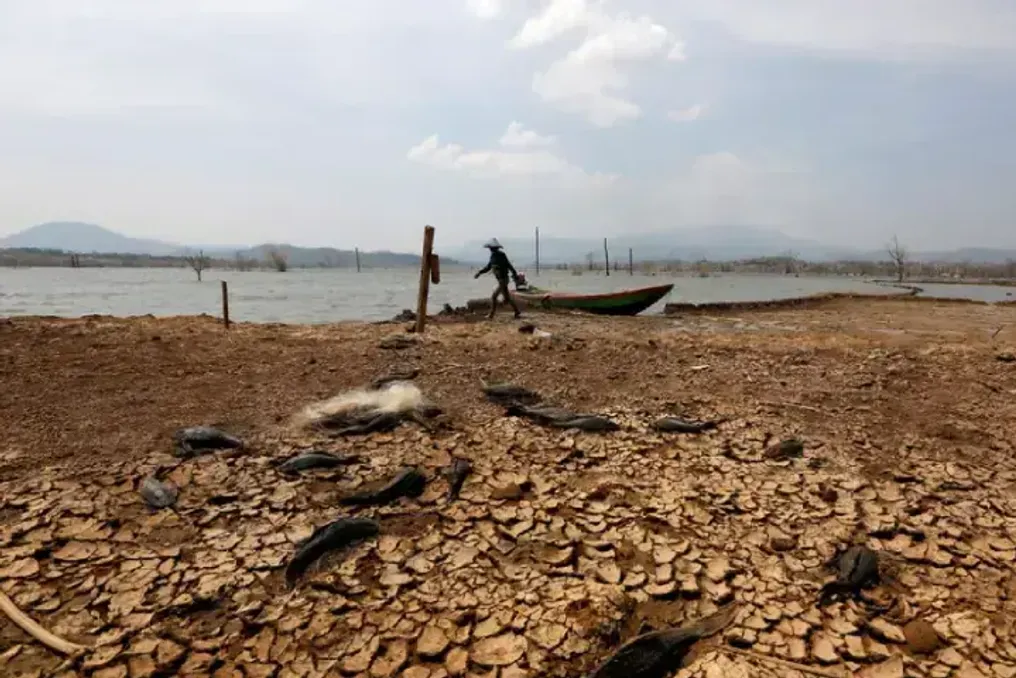
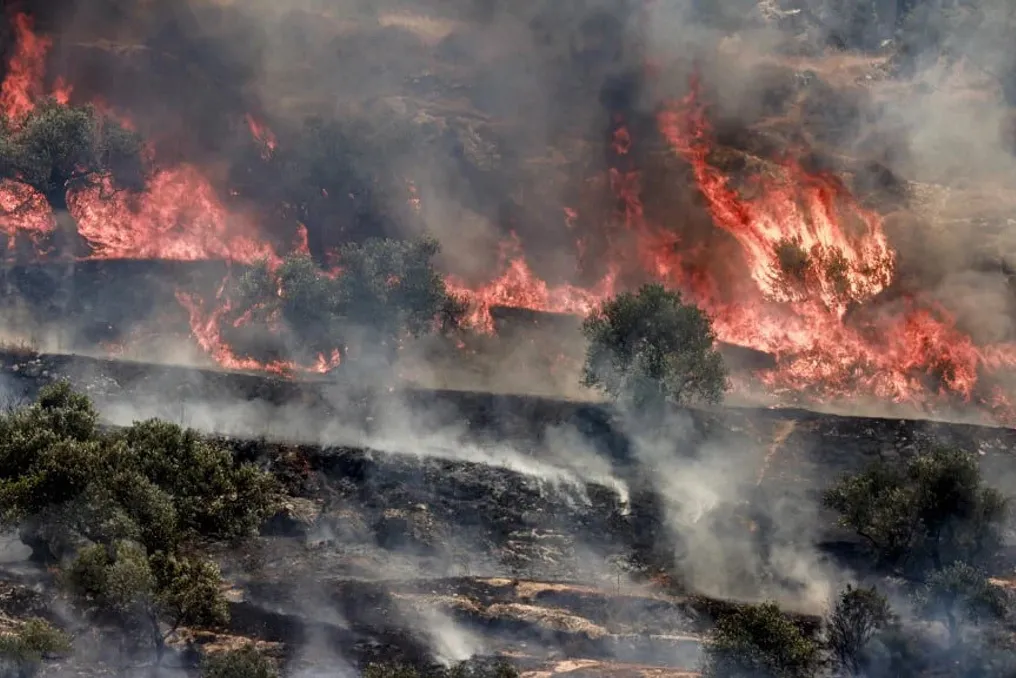
The environmental damage inflicted by Israel on Palestinian territory has been accompanied by the destruction of Palestinians' lives, housing, and livelihoods. Agricultural lands and olive groves have been subjected to burning or destruction, while homes, vehicles, cities, and refugee camps have been repeatedly bombed.
Thick clouds of soot, formed as a result of bombings in Gaza, have raised serious concerns among ecologists regarding the destructive impact of the war on the environment.
In September 2025, the Palestinian Institute for Climate Strategy, in collaboration with Tipping Point North South, calculated that Israel and its allies owe Palestinians climate compensation for military actions and conflict-related damages amounting to $148 billion, dating back to the Nakba period. This assessment is based on calculating the climate costs from tracked military emissions, with $103 billion attributed to Israel, $40.8 billion to the United States, and smaller amounts to several European allies. Researchers emphasized that this figure represents only a measurable part of the broader environmental and social damage.
Additional environmental harm was caused by the burning of agricultural lands and forests in Southern Lebanon, as well as the destruction of residential buildings in villages and cities, including Beirut.
The war in Gaza has also led to colossal greenhouse gas emissions. According to a study published in the journal One Earth in March 2026, direct emissions from the conflict exceeded 1.3 million tons of CO2 equivalent by January 2025. Including emissions related to pre-war military infrastructure and post-war reconstruction, this estimate rises to 33.2 million tons of CO2 equivalent, with approximately 31.4 million tons attributed solely to reconstruction.
However, the ecological consequences extend far beyond carbon emissions. The war has created serious threats to both the Mediterranean marine environment and Gaza's groundwater system. These two issues are closely linked: the destruction of water supply and sanitation systems has allowed pollutants from surface and groundwater systems to enter the Mediterranean Sea.
The most immediate consequence has been the massive discharge of untreated sewage into the sea. Gaza's wastewater treatment system has largely failed. UNEP estimated that in March 2024, about 60,000 cubic meters of sewage and wastewater were discharged into the environment, primarily into the Mediterranean Sea. This sewage can contain pathogens and disease-causing microorganisms, nitrogen and phosphorus that promote eutrophication and oxygen depletion, microplastics, organic pollutants, industrial chemicals, and other hazardous substances. Damaged infrastructure and military activities can also lead to the entry of heavy metals and other pollutants.
UNEP's assessment for September 2025 showed that Gaza's marine and coastal ecosystems were contaminated with sewage, solid waste, and munitions. Nevertheless, it was noted that the exact scale and chemical composition of the contamination cannot yet be determined due to severe limitations in conducting proper environmental sampling.
The war has also damaged marine life and fisheries. Pollution threatens Gaza's coastal ecosystems, fish stocks, and other marine organisms. UNEP stated that the conflict has effectively eliminated the livelihoods of fishermen in Gaza, and the destruction of environmental management systems has hindered control over food chain contamination.
There is also a long-term problem: if huge volumes of military waste are dumped into the sea or used for land restoration without proper sorting and treatment, asbestos, heavy metals, hydrocarbons, and other pollutants could enter marine ecosystems and potentially the food chain.
The war has also placed significant additional pressure on Gaza's Coastal Aquifer, which is the primary natural source of fresh water in the enclave. This could be one of the most serious long-term ecological consequences of the conflict. The destruction of sewage networks and treatment facilities, combined with a widespread reliance on septic tanks, allows contaminated water to seep into the porous soil and reach the aquifer. UNEP's 2025 assessment indicates a high probability of groundwater contamination and warns that the destruction of pipeline systems and the increased use of septic tanks have raised the risk of such pollution. Potential pollutants include sewage and pathogens, nitrates and other nutrients, chemicals, heavy metals, hydrocarbons, and pollutants associated with munitions and destroyed infrastructure.
The groundwater issue is exacerbated by soil contamination. The crisis is not limited to sewage. Building destruction has resulted in tens of millions of tons of debris, and military operations have contaminated the soil with munitions, solid waste, and untreated sewage.
According to UNEP estimates for September 2025, the destruction of approximately 78 percent of Gaza's buildings has resulted in about 61 million tons of debris. It was warned that about 15 percent of this debris could pose a relatively high contamination risk due to asbestos, industrial waste, and heavy metals if waste streams are not properly separated.
Rainwater passing through contaminated soil and debris can carry pollutants down to the groundwater. At the same time, the destruction and compaction of the soil have reduced its ability to absorb water, increasing surface runoff and decreasing groundwater recharge.
Seawater infiltration could become an even more serious problem. Gaza's aquifer has already experienced over-extraction before the war. Excessive groundwater extraction lowers the freshwater level and can allow Mediterranean seawater to penetrate the aquifer.
The war has severely damaged pumping, storage, desalination, and wastewater treatment systems, significantly complicating the management of both groundwater depletion and contamination. UNEP's assessment found extensive damage to Gaza's water infrastructure and warned that the ecological consequences could persist for decades.
Thus, the environmental damage is not limited to Gaza's coastline.
The Mediterranean Sea is a semi-enclosed sea, and pollutants discharged from Gaza can be carried by currents and coastal circulation. The precise regional scale of contamination remains uncertain due to severe limitations in environmental monitoring. Nevertheless, scientific modeling has studied how pollutants from sewage can disperse from Gaza's coastal waters into the Mediterranean Sea.
The latest UNEP assessment warns that restoring the damage to Gaza's water resources, soils, freshwater ecosystems, and marine environment could take decades.
Israel's environmental impact on Palestinian lands predates the current war. Palestinian environmental activists have documented for years the destruction of agricultural lands and restrictions affecting water and other natural resources. Among the practices mentioned by Palestinian environmental groups are the spraying of pesticides in agricultural areas in Gaza and the destruction of arable land.
Palestinian environmental activists also accuse Israel of policies that systematically restrict Palestinians' access to water resources. Najla Abdelatif, founder of Zero Waste Palestine, told Middle East Eye that she met with Palestinian farmers whose groundwater sources were affected by measures related to the Israeli state water company.
Collectively, the destruction of agricultural lands, water supply and sanitation systems, soil, coastal ecosystems, and natural resources has created an environmental crisis whose consequences will likely be felt long after the fighting ends.