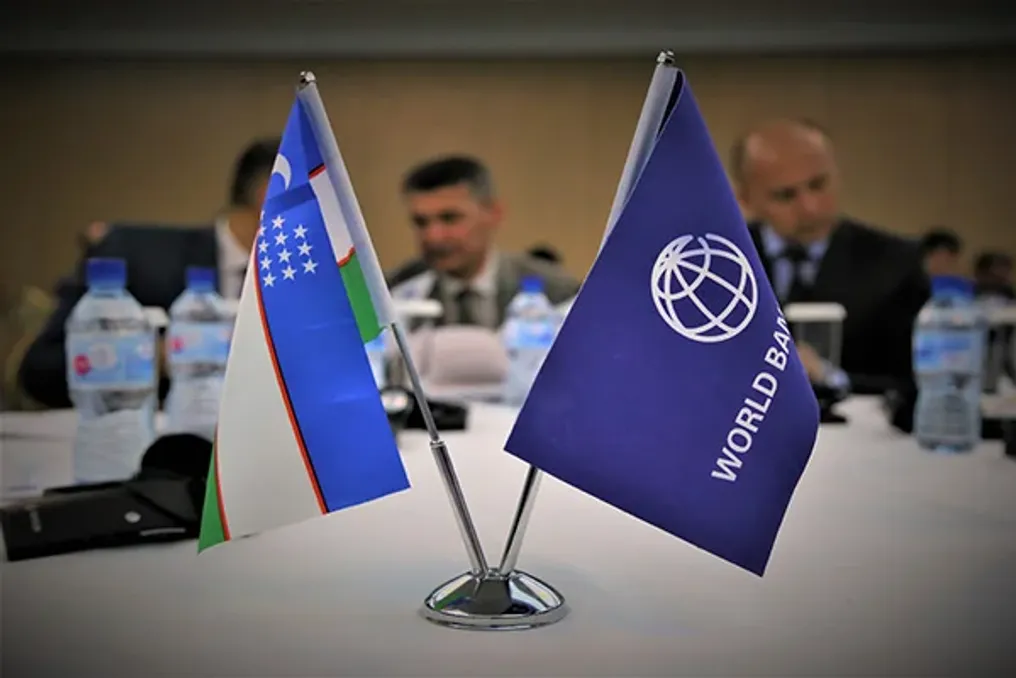
According to a new World Bank study titled 'Poverty and Inequality Assessment in Uzbekistan: Towards Shared Prosperity and Opportunities for All,' the absolute poverty rate in Uzbekistan, calculated using the World Bank's international methodology, has decreased from 4.4% in 2021 to 2.3% in 2025. During this period, approximately 3.7 million people have managed to exit poverty.
The report was presented jointly with the Ministry of Employment and Poverty Reduction, as well as the Ministry of Economy and Finance. The study identifies Uzbekistan as one of the upper-middle-income countries that has made significant progress in combating poverty in recent years.
Based on the poverty line established for upper-middle-income countries in Europe and Central Asia, Uzbekistan achieved approximately 40% of the overall poverty reduction among countries in this regional group.
Changes were also observed in the structure of household welfare. If 37% of the population of Uzbekistan belonged to the middle class in 2021, this share exceeded 72% by 2025. Furthermore, between 2019 and 2024, 44% of the country's population moved into a higher economic category.
There was also an increase in employment among the most vulnerable households. The share of men from such households who had paid employment increased from 18% in 2022 to 46% in 2025. Simultaneously, real annual wages in these households grew by 11–12%.
The study showed that poverty in Uzbekistan is no longer predominantly a rural phenomenon. The faster reduction of poverty in rural areas significantly narrowed the urban-rural gap. If this gap was 5.9 percentage points in 2021, it reduced to 1.2 percentage points by 2025.
During the presentation of the study, methods for improving household welfare and economic mobility, reducing regional inequality, creating stable and well-paid jobs, expanding women's economic participation, and increasing the efficiency of the social protection system were also discussed. Further priorities included increasing household incomes, developing sustainable and decent employment, enhancing women's economic activity, and consolidating the achieved progress.
