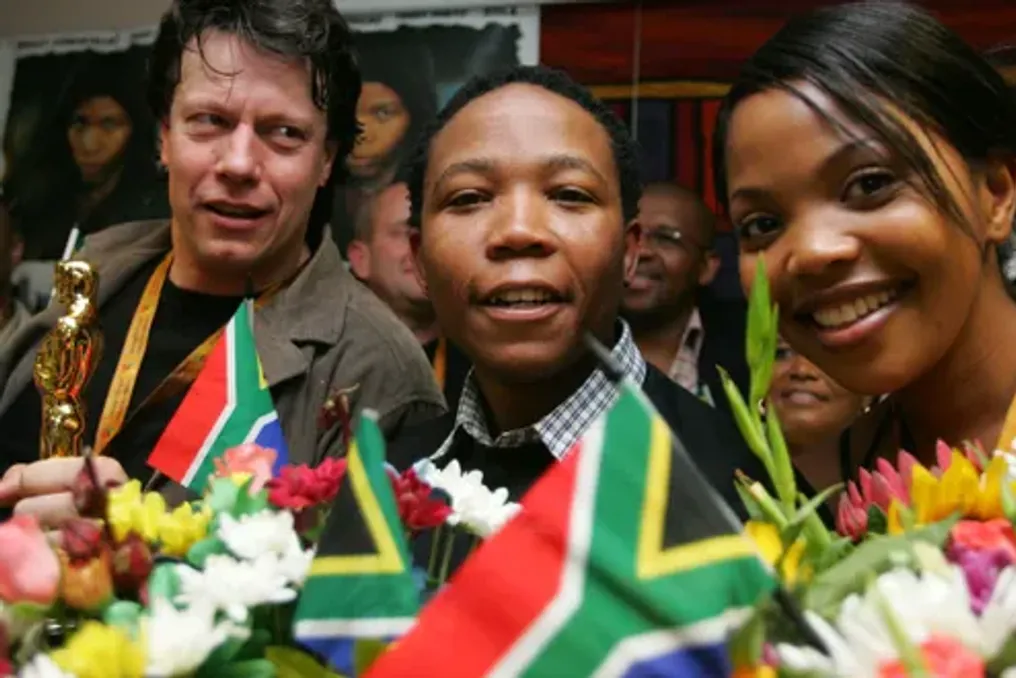
South Africans live by the principle of 'Just be Lekker,' and music has played a significant role in shaping their culture. Songs from Brenda Fassie to Master KG have become the soundtrack to memories, celebrations, and the feeling of home for the people of South Africa.
There are compositions that are perceived differently specifically in South Africa. Their first notes can instantly transport the listener to a family gathering, a noisy wedding party, a Sunday barbecue, or childhood spent listening to loud radio music. Soon everyone starts singing along or dancing, and the whole room knows the words.
This is the power of the South African anthem. During Heritage Month, music is one of the most powerful ways to understand the uniqueness of South African culture. Musicians of different generations, genres, and languages have reflected struggle, joy, hope, humor, and the country's unique ability to turn any event into a celebration.
From the bubblegum pop era of the 1980s to the global phenomenon of 'Jerusalema'—here are some songs that have become part of South Africa's soundscape.
Let's start with 'Sister Bethina' by Mgarimbe. This song is an unofficial anthem played during rugby matches as players prepare for confrontation. The 2006 kwaito hits became an integral part of parties due to their infectious energy, capable of instantly changing the mood in a room.
It doesn't matter if you know all the words; as soon as 'Sister Bethina' plays, everyone relaxes. It doesn't matter if you can dance or if you have 'two left feet'—nobody cares. The rhythm will find you.
This collective reaction is what makes South African music special.
It is almost impossible to talk about South African anthems without mentioning Brenda Fassie. The song 'Weekend Special,' released in 1983 with the group Higher Dimensions, became one of the defining sounds of the bubblegum pop era and helped establish Fassie as one of the country's most recognizable performers. However, its popularity extends far beyond the decade of its release.
'Weekend Special' has something almost irresistible when listened to at a South African celebration. Fassie's infectious rhythm, memorable melody, and unique energy allowed her to cross generations: parents introduced it to their children, and young listeners continued to discover it.
For many South Africans, it is not just an old hit; it is a feeling of home.
Long before South African music became a global export, Miriam Makeba represented the sounds of the country to audiences worldwide. 'Pata Pata,' released in 1967, became one of her signature compositions and remains one of the most recognizable South African recordings internationally. Its infectious dance rhythm conveys something fundamental about South African music: even when history is complex, music can create moments of joy.
Makeba's legacy gives the song added meaning. Known globally as 'Mama Africa,' she became an important cultural ambassador whose music spread South African identity far beyond the country. Decades later, 'Pata Pata' continues to make people move.
Mango Groove has a special nostalgia associated with the song 'Special Star.' Released in 1989, this composition combined a distinctive mix of pop music, kwaito-inspired sounds, and African musical influences. Its whistling melodies immediately evoke a specific South African soundscape.
What might make 'Special Star' so enduring is the feeling it evokes. It belongs to a generation that experienced South Africa during immense social and political change. Today, it serves as a reminder of how music can coexist with history, creating its own memories.
Then came Mandosa. 'Nkalakatha,' released in 2000, was more than just a kwaito hit; it became a cultural event. Its infectious beat and undeniable hook made the song almost irresistible, uniting people of different ages and backgrounds. It could play at a barbecue, a wedding, a party, or a major sporting event and instantly change the atmosphere.
There is a reason why many South Africans still jokingly call 'Nkalakatha' an unofficial national anthem. It possesses a rare quality: it doesn't need explanation. As soon as it starts playing, people simply know what to do.
Some artists embodied the musical diversity of South Africa better than Johnny Clegg. Together with Juluka Clegg, he helped create a sound that merged Western pop and rock influences with Zulu musical traditions, challenging the rigid cultural division of the apartheid era in South Africa. 'Scatterlings of Africa,' released in 1982, remains one of the best examples of such fusion. Its significance goes beyond the music itself; it represents the possibility of cultural meeting, mutual influence, and the creation of something common to all. This spirit makes the song particularly fitting for Heritage Month.
While some songs make you dance, others prompt you to stop and listen. 'African Dream' by Vicky Sampson is one such song. Released during South Africa's transition to democracy, this song became associated with a sense of hope, opportunity, and pride in the continent. Its emotional core conveys a difficult-to-describe feeling: belief in a different future being possible. For a country emerging from decades of apartheid, this optimism was hugely significant.
If 'Weekend Special' presented one facet of Brenda Fassie's musical talent, 'Vulindlela' showed why her legacy will live for generations. Released in 1997, this song became one of Fassie's most beloved hits and almost synonymous with South African celebrations. Especially at weddings, its opening notes can make guests stand up. But beyond dancing, 'Vulindlela' embodies something more: Fassie's exceptional ability to transform everyday South African experience into music that feels deeply personal yet belongs to everyone. This is why, decades after its release, the song still feels completely native at celebrations across the country.
By the 2000s, South African music continued to evolve. 'Doo Be Doo' by Freshlyground, released in 2004, blended elements of Afro-fusion, pop music, and the group's distinctly playful sound. It was vibrant, optimistic, and undeniably mood-boosting. The song also reflects the musical mood of a new generation of South Africans—those who feel increasingly comfortable with mixing influences, experimenting with sound, and creating music that transcends traditional genres.
Finally, there is 'Jerusalema.' Released in 2019 by Master KG featuring Nomcebo Zikode, this song became a global phenomenon thanks to its characteristic South African house sound and accompanying dance challenge that spread across countries and continents. Suddenly, people everywhere were dancing to a song rooted in South African music and culture. 'Jerusalema' demonstrated something that artists like Makeba had shown decades earlier: South African music can travel. But this time, the world wasn't just listening—it was dancing along with them.
These songs are more than just 'old favorites.' They are connected to weddings, birthdays, barbecues, family gatherings, and trips. They are songs our parents knew before we were born, and songs we have passed on to the next generation. They remind us of different eras of South African history, but also of something more personal: where we were, who we were with, and what we felt when we heard them.
Our heritage lies in our languages, food, traditions, and history, but it is also contained in the music that makes the whole room sing the same chorus. Whether it is Brenda Fassie's 'Weekend Special,' Mandosa's 'Nkalakatha,' or Master KG's 'Jerusalema,' these songs continue to prove that sometimes the simplest way to understand a country is just to listen to what makes its people dance.