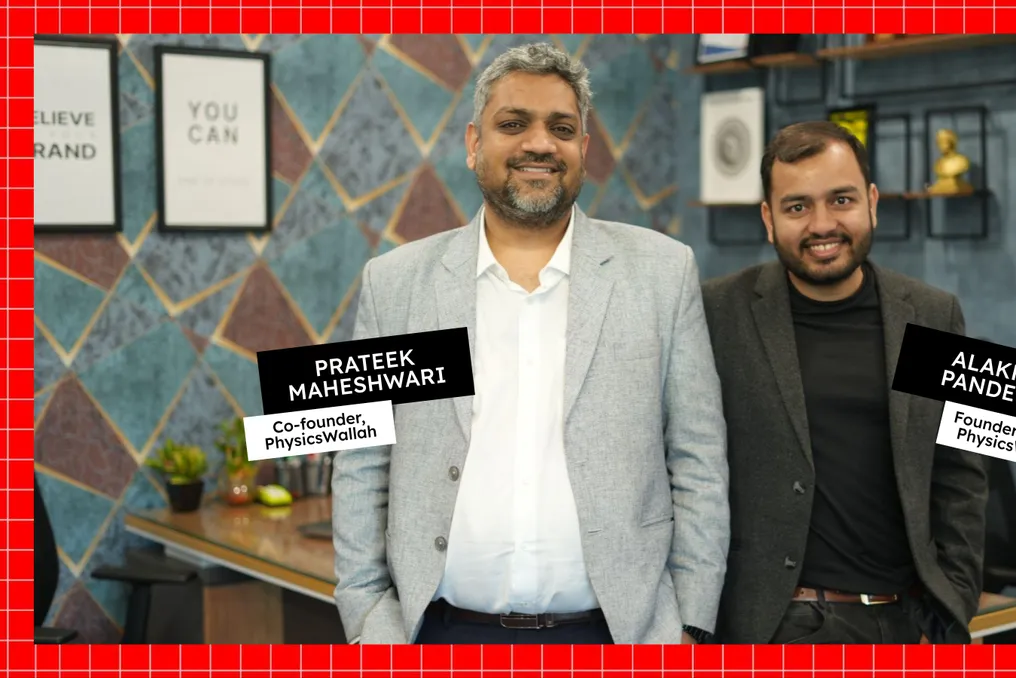
The educational technology company PhysicsWallah (PW) is commencing a two-year phase of expansion, concentrating its efforts on South India. The founder and CEO, Alakh Pandey, is personally leading this initiative.
This move is significant as the company aims to adapt its model—based on affordable digital learning, physical centers, and a hybrid format—to markets where linguistic nuances, local academic preferences, and existing tutoring networks may differ.
During an event in Tirupati, Pandey stated that for the next twenty-four months, he would dedicate himself to the students of South India and be based there. He specified that the focus will cover states such as Andhra Pradesh, Telangana, Tamil Nadu, Karnataka, and Kerala.
The first step in this strategy was a five-year partnership with Mohan Babu University in Tirupati. According to the company, this collaboration will enable the provision of career-oriented, upskilling, and AI-focused courses online to approximately eighteen thousand students. Thus, PW's strategy in South India extends beyond entrance exam preparation to include university education and employability enhancement.
Pandey emphasized his goal: 'Through our platform, I want to provide them with the tools necessary to realize their potential. Since the founding of PW until today, I feel we need to create a more measurable impact in the southern part of our country.'
This ambition comes against the backdrop of the company's rapid growth. PW initially launched as a YouTube educational channel in 2014, and in 2020, it was officially established by Pandey and Pratik Maheshwari. Today, the company operates in online, offline, and hybrid formats, covering numerous segments of education.
The company reported that since its inception, it has served over forty million students, and in the financial year 2026, it had over one and a half million paid students. By the financial year 2026, the total downloads of its application reached nearly ninety million. PW was listed on the NSE and BSE in November 2025.
In the testing sector across India, service providers are gradually expanding their presence beyond traditional coaching centers, reaching second and third-tier cities. Online-focused companies are also establishing physical clusters.
In its Q2 FY26 letter to shareholders, PW indicated that it has over twenty centers in Chennai, Hyderabad, and Bangalore, and plans to open another thirteen centers in five southern states.
The broader political landscape also supports multilingual and digital delivery of educational services, although this does not guarantee commercial success. National education policy mandates the integration of educational technologies and digital content in major Indian languages, and the government's DIKSHA platform supports educational content in eighteen languages, including Tamil, Telugu, and Kannada.