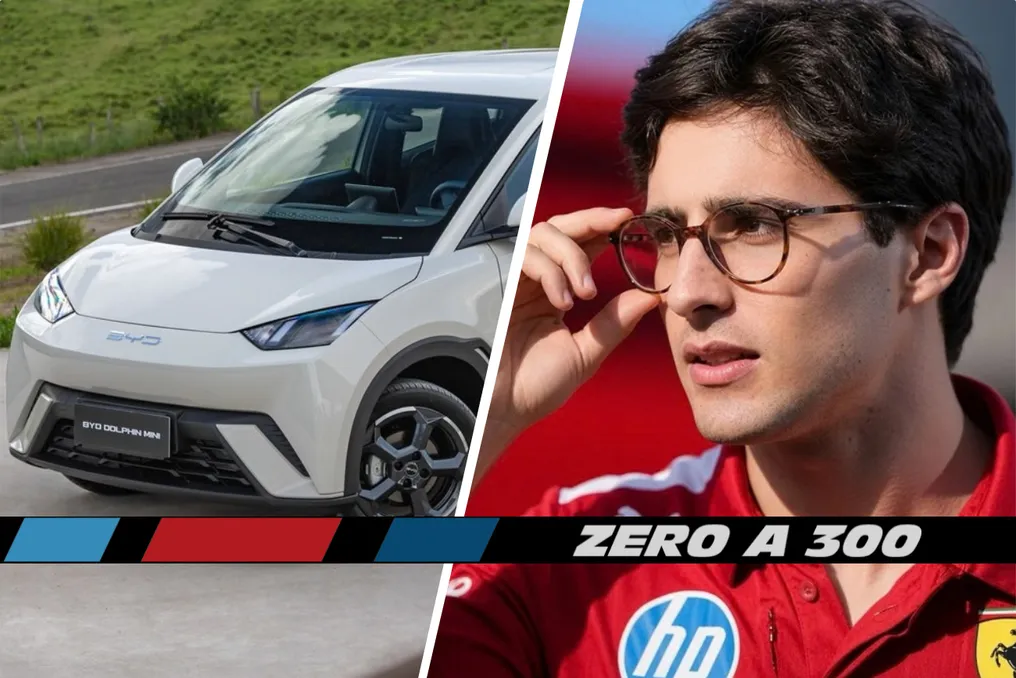
BYD fined $1.2 million for misleading advertising; Rafael Câmara may join Haas F1
Read more
FlatOut
flatout.com.br

BYD fined $1.2 million for misleading advertising; Rafael Câmara may join Haas F1

The news covers various topics in the automotive and sports sectors, including a fine imposed on BYD and the growing chances of Rafael Câmara joining Formula 1.

Regarding BYD, the Court of Justice of Maranhão applied a compensation of R$1.2 million to the automaker due to collective moral damages. This penalty stems from an advertising campaign conducted in 2024 in the state, where the company allegedly violated the consumer's right to information and used abusive practices during the pre-sale of the BYD Dolphin Mini model.

The lawsuit, filed by Procon-MA, alleged that the advertisement omitted the vehicle's actual cost, which was set at R$115,800. Initially, the advertisement created the expectation that the car would cost around R$99,800, with the possibility of reducing to R$89,800 through discounts for early buyers.

Driven by this promise, more than 200 individuals in Maranhão alone made a deposit payment of R$10,000 to reserve the vehicle. The judge considered that the company's tactic cornered the consumer, forcing them to accept a final price significantly higher than expected or risk losing priority in line and facing difficulties recovering the deposit.

In addition to the fine, which will be allocated to a state fund for the defense of rights, the court imposed specific obligations to compensate those affected. Those who wish to exercise the right of withdrawal must receive their deposit back within a maximum of five business days after requesting it. BYD must also ensure the promised conditions in the pre-sale (such as the R$10,000 bonus and the battery charger, valued at R$7,000) for all who reserved the car between February 25 and 28, 2024, and chose to complete the purchase.

Furthermore, the manufacturer will have up to 30 days after the end of the process to establish physical and virtual service channels dedicated to these customers.

Rafael Câmara may take a spot at Haas F1 in 2027

Prospects for another Brazilian driver competing in Formula 1 in the 2027 season are increasing. Recent reports indicate that Rafael Câmara, who currently competes in Formula 2, is one of the most considered names to join the Haas F1 team alongside Oliver Bearman next year.

This speculation arises amid rumors about tensions between French driver Esteban Ocon and the team's management, a situation that has been discussed since the beginning of the year. In a recent statement, Ocon said he is free for the following season, mentioning that there are aspects of the negotiations beyond his control, but that he will continue dedicating himself until the end of the year to see how the situations unfold.

As reported by the Italian portal AutoRacer yesterday, Câmara is among the favorites of the team owner, Gene Haas, to fill a possible vacant seat. During a test session held in Algarve, Portugal, it was the Brazilian's performance that caught Haas's attention the most, placing Rafael Câmara at the top of the candidate list. Technical chief Ayao Komatsu also highlighted Leonardo Fornaroli, current F2 champion and part of the McLaren young driver program, in his technical assessment, although it is understood that the final decision rests with Gene Haas.

Câmara's connections may also be a positive factor, given that he trains at the Ferrari Drivers Academy, and Ferrari is responsible for supplying the engines used by Haas in Formula 1.

Porsche registers PDK with clutch pedal and H shifter

Porsche may become the next manufacturer, after Ferrari and Koenigsegg, to offer a manual transmission in H format based on a dual-clutch gearbox. The brand registered a transmission system in Europe that functions as a triple PDK: it can operate with automatic shifts, manual via paddles, or in H using a lever.

This system is functionally similar to what Ferrari recently presented in the 12Cilindri Manuale and Koenigsegg in the CC850, where the shift is requested by the H lever but executed by an internal robotic mechanism within the transmission.

Despite seeming like a complex solution for something established over a hundred years ago, the main obstacle to using a manual gearbox lies in the hybrid system of the 911 models, according to Timo Resch, CEO of Porsche North America. Because the T-Hybrid incorporates an electric motor into the eight-speed PDK, it becomes technically unfeasible to integrate it with a manual gearbox, which explains why the new 911 Carrera GTS does not feature a six-speed manual transmission.

The registration of this system does not necessarily imply its arrival in production, but the timing is notably opportune: in August, Resch had stated that the T-Hybrid and a manual gearbox 'are not compatible,' but expressed that he would not be surprised if engineers found a solution, suggesting he might have planted an expectation.

Jeep Avenger gets limited edition 85 Years for R$142,990

Jeep began selling the Avenger Special Edition 85 Years, presented at the Interlagos Festival in August. Only 500 units will be produced, priced at R$142,990, making this commemorative edition R$3,000 cheaper than the Avenger Limited, which is the most expensive model in the current lineup.

This special edition goes beyond simple stickers and emblems, incorporating 18-inch wheels with exclusive finishing, a contrasting roof, illuminated grille, and Matrix headlights, in addition to an interior finished in Mayan Gold. The vehicle also features a 360-degree camera, ACC, front sensors, and the Jeep Adventure Intelligence system with ChatGPT voice assistant.

Mechanically, there were no changes. The Avenger maintains the 1.0 Turbo 200 flex engine, which has been recalibrated to deliver 116 hp and 20.4 kgfm, assisted by a 12-volt mild hybrid system. The electric motor contributes 4 hp and 1 kgfm, but is not capable of moving the car alone. According to Jeep, this configuration allows the Avenger to reach 100 km/h in 10.3 seconds and a top speed of 185 km/h.
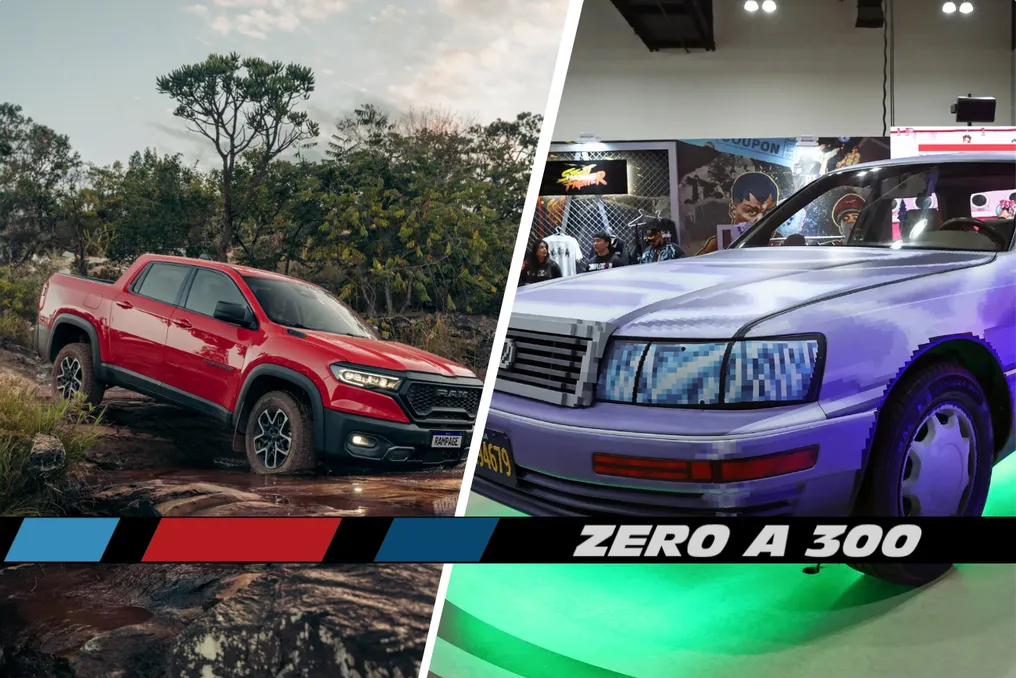
PRS launches

Similar stories

Brazilian Ram Rampage to be sold in the US; details on new models and automotive launches
Read more
flatout.com.br

Brazilian Ram Rampage to be sold in the US; details on new models and automotive launches

The Ram Rampage pickup truck, developed in Brazil, will be available for sale in the United States. Its main objective in the American market is to establish itself as the brand's lowest-cost model.

The Rampage was the first Ram vehicle designed outside of North America. After its launch in 2023, the truck manufactured in Goiana (PE) began being distributed in other South American countries, including Chile, Argentina, Paraguay, and Uruguay. In 2025, Stellantis confirmed the export of the Rampage to Europe, but the most significant development was announced by Stellantis CEO, Antonio Filosa, during an interview with The Detroit News: its arrival in the US.

Even though it is of Brazilian origin, the Rampage destined for the American market will likely remain at the Pernambuco factory due to financial barriers. Vehicles produced outside of North America are subject to a 25% tax, known as the Chicken Tax, a protectionist tariff implemented by the US in the 1960s.

To avoid this tariff and maintain price competitiveness, the most probable route for Stellantis is to produce the Rampage at the Toluca plant in Mexico. This factory already manufactures the Jeep Compass, sharing the Small Wide 4x4 architectural platform with the pickup. This component integration helps reduce operational costs and allows for local production with tax exemption for the North American market.

Considering that the debut in the US is expected in 2028, coinciding with the Rampage's fifth year in the Brazilian market, the vehicle should arrive in North America already with its first mid-life facelift. Improvements are expected in the front design, cabin changes, and the inclusion of specific equipment packages for the American consumer. Additionally, there may be modifications to the engine lineup; currently, in Brazil, the line offers the 2.0 turbo gasoline engine with 272 hp and the 2.2 turbodiesel with 200 hp, both with a nine-speed automatic transmission.

GWM starts pre-sale of Haval H7

GWM started the pre-sale of the Haval H7 in Brazil on the 5th. Reservations are only available for current brand customers, requiring a deposit of R$ 9,000. This SUV aims to occupy the intermediate space between the H6 and H9 models, with an estimated price below R$ 300 thousand. The official launch is scheduled for Wednesday, the 7th.

With a look reminiscent of more traditional utility vehicles, the H7 stands out for its rectangular lines, robust front end, and spare tire mounted on the tailgate. Despite its considerable size, its structure is unibody, unlike the H9, which uses a body-on-frame chassis. It has a length of 4.80 meters, a wheelbase of 2.74 m, and a trunk capacity of 586 liters.

The propulsion system is a plug-in hybrid with all-wheel drive, combining a 1.5 turbo engine with two electric motors (one on the front axle and one on the rear). This setup generates about 364 hp and 77.5 kgfm of combined torque, managed by a two-speed DHT transmission. With this configuration, the Haval H7 can reach 100 km/h in 5.8 seconds.

Internally, the vehicle features a 12.3-inch digital instrument cluster and a 15.6-inch multimedia center with wireless connectivity, in addition to a complete package of advanced driver assistance systems (ADAS). GWM's strategy for the Brazilian market foresees at least two trim levels, maintaining the same mechanics and differentiating only the level of standard equipment.

Lexus LS from Street Fighter gets a 'real' version

In an initiative to promote the new Street Fighter franchise movie, the production chose to evoke nostalgia by recreating the Lexus LS400 present in the iconic bonus stage of Street Fighter II in reality. This Japanese luxury sedan was presented at ComplexCon in Los Angeles and was modified to faithfully replicate a 16-bit model taken directly from 1991 arcades.

The project was led by Vehicle Effects, a workshop headed by Dennis McCarthy, known for his work on the cars in the Fast and Furious franchise. The customization was deep, going beyond a simple graphic decal: the car received exclusive three-dimensional parts to simulate the pixelated look, replacing components such as the front grille, side mirrors, and even door handles with pixelated elements. The headlights were also covered with caps imitating 2D sprites.

The cabin followed the same rigor regarding gamer culture. The interior was completely upholstered and featured headrests embroidered with the famous phrase «YOU WIN». A notable creative detail is the seat heater control, which was adapted to operate within a decorative slot mimicking the arcade coin slot. As expected, the movie actors participated in the presentation, delivering the first punches and kicks on the car's body.

To finalize the promotion, the pixelated Lexus will not be a museum piece; it will be raffled off in a contest for fans, accompanied by a cash prize worth exactly US$ 25,400.69.

New BMW 5 Series may have leaked in video

Following the launch of the controversial new BMW 3 Series, attention turned to the rest of the line. There are indications that the Bavarian manufacturer may have exposed the first images of the 5 Series update. This slip-up was noticed by a Reddit user in a frame of an institutional video filmed at the Dingolfing factory in Germany. Although the recording, focused on the presentation of the 3 Series, was quickly removed by the manufacturer, the assembly line footage revealed a sedan in the background with front characteristics and proportions different from the smaller model.

It is crucial to note that this does not represent an entirely new generation. The current eighth generation of the 5 Series (code G60) is relatively recent, having been launched globally in 2023. Therefore, the vehicle seen in the video is likely the mid-life update, expected to be launched in 2028. A complete renewal of the executive sedan is only expected towards the end of this decade, around 2030.

Although the silhouette and side profiles remain very similar to the current model, the update will bring significant changes to the front end. The leaked image shows redesigned headlights, bumpers with softer lines, and the abandonment of the oversized grille, giving way to a smaller, more horizontal double ring, aligned with the new visual standard introduced in the 3 Series. Inside the cabin, the implementation of the Panoramic Vision screen on the windshield and the possible discontinuation of the iDrive rotary control on the console are expected.

Fiat Argo X production has begun

Fiat began the production of the Argo X on the 5th at the Betim (MG) factory, marking what is considered its most relevant launch of the year. Derived from the European Grande Panda model, this compact introduces the CMP platform to the Minas Gerais complex, an architecture that will serve as the future basis for the new generations of Pulse, Fastback, Strada, and Mobi.

The car will arrive at dealerships in mid-November, aiming to gradually replace the current Argo. The version lineup will be segmented into two mechanical proposals. Entry-level versions will use the 1.0 Firefly flex engine, which delivers up to 75 hp and 10.7 kgfm of torque, coupled with a five-speed manual transmission. The more expensive options will feature the 200 hp 1.0 Turbo unit, equipped with a 12V mild hybrid (MHEV) system capable of generating 116 hp and 20.4 kgfm, always combined with a seven-speed simulated CVT automatic transmission.

A notable advancement lies in safety and electronics. The Argo X will be the first model produced in Betim to leave the factory with six standard airbags at all levels, complemented by an ADAS package that includes autonomous emergency braking, lane keeping assist, and fatigue detection, except for adaptive cruise control (ACC). In top configurations, the 10-inch digital dashboard will be integrated into the multimedia center.

Aesthetically, the hatchback will maintain the square lines of its European sibling, but with adaptations and simplifications for the local market. At least in the more expensive versions, the Argo X will preserve the LED 'pixelated' headlights of the Grande Panda, while the most basic variants will have more conventional halogen lighting. Furthermore, no version will feature the LED signature on the grille, and the brand and model names stamped on the body will be omitted.

Popular