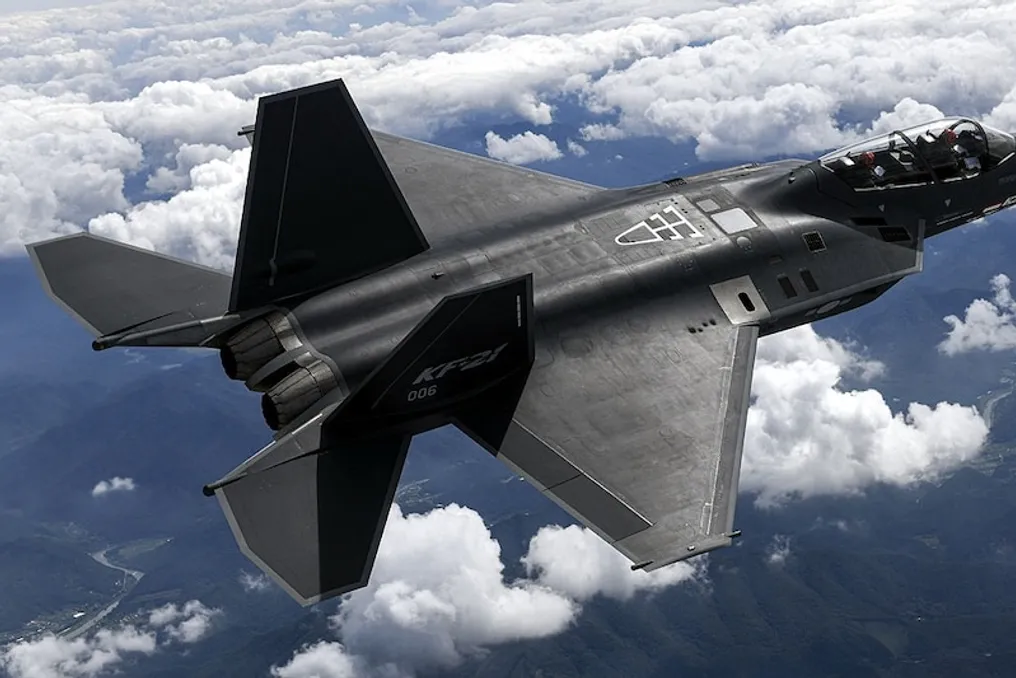
The South Korean Air Force accepted its first KF-21 Boramae fighter jet on September 22, 2026. This aircraft was delivered at the Sacheon factory by Korea Aerospace Industries and subsequently sent for a test flight to Yecheon Air Base.
The KF-21 received the codename 'Young Hawk,' which translates to 'young hawk.' It is a 4.5-generation multirole fighter capable of performing various missions. During this event, Air Force Chief General Song Su-rag noted that it was now time for the Air Force, as previously it was the developers' time, emphasizing the significance of incorporating the domestic aircraft into service.
The KF-21 Boramae will be integrated into the reactivated 156th Fighter Squadron. The main goal of this step is to replace outdated F-5 and F-4 Phantom aircraft, which have been in service for a long time and have become less effective against modern threats. The arrival of the new aircraft will significantly enhance the combat capabilities of the South Korean Air Force.
As a 4.5-generation multirole fighter, the KF-21 Boramae is capable of performing numerous missions, including achieving air superiority, conducting ground strikes, and reconnaissance flights. Equipped with modern avionics, radars, and weaponry, this aircraft is designed to counter regional threats. The name 'Young Hawk' reflects its maneuverability and future potential. Because it is developed based on domestic technologies, maintenance and modernization will be simpler, and reducing dependence on foreign supplies will help control long-term costs.
The successful flight of the aircraft from Sacheon to Yecheon Air Base indicates its initial operational readiness. The Air Force will now begin integrating it into its squadrons for training and operational preparation.
South Korea has defined a clear production plan: 40 units of the Block I version are planned for commissioning by 2028. Then, 80 Block II aircraft will be produced by 2032. Overall, it is expected that over 100 KF-21s will be in service in the early 2030s. This plan is a key part of the Air Force's fleet modernization, with Block I and Block II having phased capability development to increase aircraft efficiency.
This project strengthens South Korea's defense self-sufficiency. Korea Aerospace Industries has completed extensive work on development and achieved success in the production phase. The statement by the Air Force Chief emphasizes the transition of responsibility from developers to operators.
The addition of the KF-21 will strengthen the military power of the South Korean Air Force. Replacing old machines with modern platforms will improve operational efficiency. Given regional security challenges, possessing a domestic fighter jet is strategically important. This development serves as an example for other countries striving to strengthen their defense industries. Further stages include training, weapons integration, and squadron-level preparation. Receiving the first aircraft is just the beginning; after achieving production goals, the South Korean combat force will become highly modern. The KF-21 Boramae is moving towards becoming the backbone of the future South Korean Air Force.