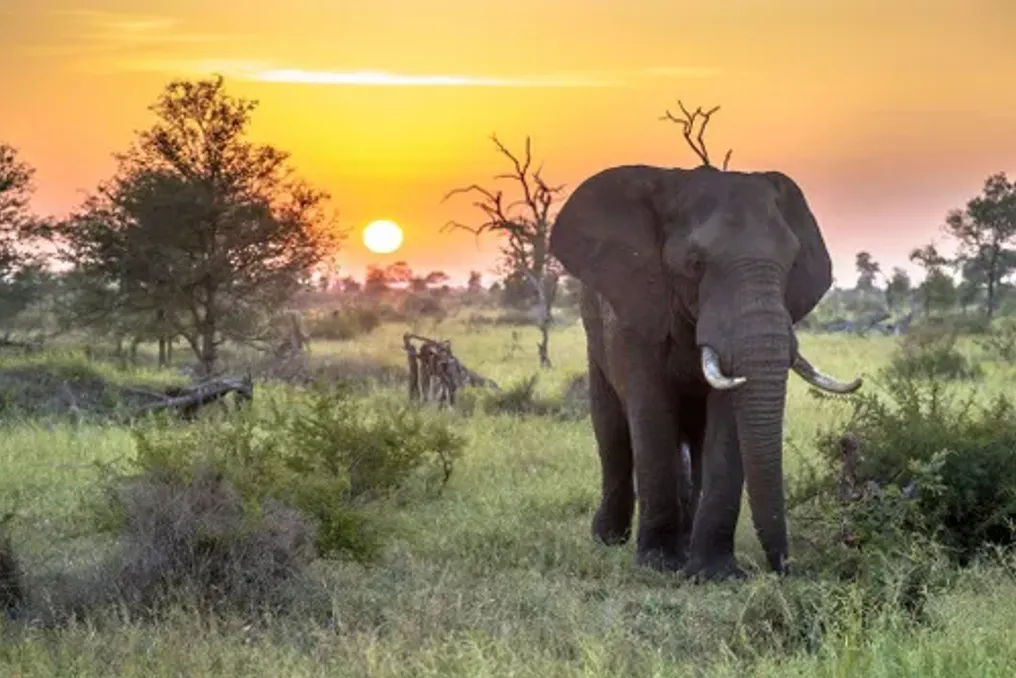
Domestic tourism generates more revenue in South Africa than international visits
Read more
IOL
iol.co.za

Domestic tourism generates more revenue in South Africa than international visits

South Africa's tourism narratives traditionally focus on the arrival of international guests, but statistics show otherwise: domestic travel by citizens generated significantly more income in 2025 than visitors from abroad. A large portion of these funds goes to small businesses located in rural areas and settlements.

The tourism economy of South Africa is often associated with visiting places like Kruger National Park and Stellenbosch. Nevertheless, it is the domestic travelers who are the more significant force in terms of both the number of trips and expenditure, supporting businesses in villages, settlements, and rural communities.

In 2025, South Africa welcomed 10.5 million foreign tourists, which is 17.7% more than in 2024 and exceeds the 2019 level by 2.6%. However, during the same period, South Africans undertook 44.7 million domestic trips, generating R111.6 billion in tourism revenue, according to the Department of Tourism's Budgetary Vote for 2026/27.

Approximately 24.1 million of these trips were related to visiting friends and relatives, meaning many travelers did not use paid accommodation.

According to the Satellite Tourism Statistics Report, spending on domestic tourism in 2024 amounted to R665.3 billion, including transport and business travel, compared to R113.9 billion from international visitors. In 2024, tourism accounted for 4.9% of South Africa's GDP and provided 953,981 direct jobs, equivalent to 5.7% of the workforce.

Tourism Beyond Traditional Destinations

Visiting friends and relatives remains a key factor in domestic tourism, as trips are often timed around weddings, funerals, and religious gatherings. These expenditures can benefit intercity bus operators, minivan taxi services, vendors in settlements, and rural businesses.

Centers in settlements, shasanyamas, and public spaces can function as day trip destinations, while business travel to rural areas attracts facility managers, NGO staff, and government officials to regions without large hotel chains. Small businesses are also becoming part of this broader tourism economy.

In five mining-related communities in the Limpopo and North West provinces, about 700 entrepreneurs receive support through the Settlement Economy Programme. This initiative is funded by a mining partner and managed by the Tshikululu Social Investments NPC through the Tshikululu Trust, implemented by the Lima Rural Development Foundation. Although the program was not initially designed as a tourism initiative, many participating businesses serve domestic travelers.

Among them are IYOTI Crafts and Design, where Thembelo Ngaga creates jewelry and design items in Bokamoso; Khotso Pretty Legodi's fresh food business in Hospital View, Mahavelenga; and MPM Fresh Produce, managed by Morin Malindisa. In Mozesetjane, Helen Lamola provides hair and nail services for weddings, funerals, and homecoming, while Bella Makhapola, who owns the floristry salon Serampana Deco in Ga-Chuene, serves weddings, church events, and school functions. Her business employs 12 people and mentors another 11 entrepreneurs within the program.

In Sandfontein, Kagiso Kgwadi runs LK Transport and Tours, providing transport and personalized tourism services. His services include organizing accommodation, trips, and events for groups heading to places such as Sand City and Mozambique.

Expanding Tourism Opportunities for Small Businesses

Many of these enterprises do not fall into traditional tourism sector categories, despite receiving a significant portion of their income from domestic travelers. The Settlement Economy Programme provides training, mentorship, and grants paid directly to suppliers for purchasing stock and equipment, aiming to increase business stability and sustainability.

The need to expand access to tourism opportunities is also recognized at the state level. In May 2026, President Cyril Ramaphosa stated that tourism has the potential to bring economic activity to rural and underdeveloped areas, as well as create opportunities for youth, women's businesses, and informal traders.

The allocation of R2.54 billion for tourism in 2026/27 aims to ensure that more settlements, villages, and rural areas benefit from this sector. The challenge lies in ensuring that investments reach small businesses rather than concentrating in established accommodation and entertainment complexes.

Informal and micro-enterprises continue to face obstacles, including collateral requirements from commercial creditors. The article argues that creating a special investment pathway for businesses with an annual turnover below R1 million could help broaden access to tourism financing opportunities. Thus, for South Africa's tourism economy, the focus should not only be on attracting more international visitors but also on recognizing the millions of South Africans who already travel within the country and the businesses that depend on them.

Similar stories

The 'Mini-tourism' Concept: How to Notice Hidden Attractions Instead of Popular Spots
Read more
iol.co.za

The 'Mini-tourism' Concept: How to Notice Hidden Attractions Instead of Popular Spots

In South Africa, the problem is not overtourism, but the concentration of too many visitors around a small number of the most famous tourist attractions. The solution, according to an expert, is not to deter guests from iconic places, but to encourage them to look at the places they are already visiting in a new way. This mindset is the basis of the concept called 'Mini-tourism' (Tiny Tourist mindset).

The idea of 'Mini-tourism' arose as a response to the pressure of overtourism in Europe. Its main premise is simple: to go beyond the traditional bucket list and start showing curiosity towards smaller and less obvious experiences that give a place its authentic local flavor.

The author considers this idea particularly relevant for South Africa because, despite having outstanding attractions, the most popular routes are overcrowded. For example, on Table Mountain, 98% of tourists walk around the cable car station. This raises the question: what else can they see if they look further?

Essentially, 'Mini-tourism' represents a compact approach to travel. It includes visiting a local supermarket for unusual chip flavors, walking through a neighborhood dog park, or searching for a pool, cafe, bookstore, or sports club used by locals. As the report states, 'Mini-tourism' is a slower, scattered curiosity that celebrates micro-attractions and allows one to get to know a place through its details.

This does not mean completely abandoning iconic places. Kruger Park, Cape Point, and Union Buildings play an important role in an economy of attention where an iconic image can serve as a quick way to attract attention. One striking photograph can motivate someone to buy a plane ticket. However, once the postcard has served its function, one can move into the hyper-niche segment, where personal interests transform the experience of being in a place, allowing one to find their company on the other side of the world, rather than just taking a picture.

Recently, one of the author's colleagues visited Cape Town. Although the author suggested riding the cable car up Table Mountain, the colleague declined, deciding to watch an Aston Villa match—a kind of ritual during trips. As a result, he took an Uber to Bellville, watched the match during a power outage, and spent the evening with locals. He noted that it was thanks to this approach during business trips that he received some of the best local experiences.

The author has his own approach: he always looks for opportunities for open-water swimming. This led him to the urban lakes of Berlin and, closer to home, to the Konvile municipal pool near George, known for its beautiful late 1970s architecture. Neither of these places would likely make it onto a standard bucket list, but both were memorable for offering a different way to get to know a place.

Recently, the author took a train trip to Kalk Bay. A round-trip ticket costing 24 rand provided a safe, clean, and slow journey, the opportunity to observe people, and enjoy unparalleled views, offering a completely different perspective on a well-trodden route. The author hopes this will become an independent attraction. And speaking of the same coast, the question arises: why does Miller's Point, undoubtedly one of the most beautiful semi-urban campsites in the world, remain empty most of the year?

The need is not to build new attractions, but to become better at discovering, curating, and promoting those that already exist. This also changes the role of people providing tourism services. Guides must truly know their clients and understand their hyper-niche interests, rather than just following a standard bucket list. A friend of the author, a guide, once discovered that her client was passionate about sustainable development. Instead of taking him on a typical tour, she organized an excursion to the Cape Town municipal recycling plant. It was unforgettable and very specific.

The author recalls the phrase about diving safety: 'look up, look down, and look out for yourself.' Underwater, this is a practical safety check. As a traveler, he considers it excellent advice: look up and notice the ordinary shop windows that no one photographs. Look down and choose the R24 train instead of Uber. Look out for yourself and ask someone sitting on the steps of the Union Buildings where the best place to eat is.

None of this requires building anything new. The Kalk Bay train runs several times a day. Miller's Point is empty most of the year. Around our most famous attractions live locals who lead lives that tourists rarely see. The question is not whether South Africa has enough tiny, ordinary, yet remarkable things—it is obvious that it does. The task of those working in tourism strategy is to turn these 'Mini-tourism' micro-attractions into new main attractions, treating the ordinary with the same seriousness as the iconic.

The author wishes Miller's Point would receive the same attention.

Popular