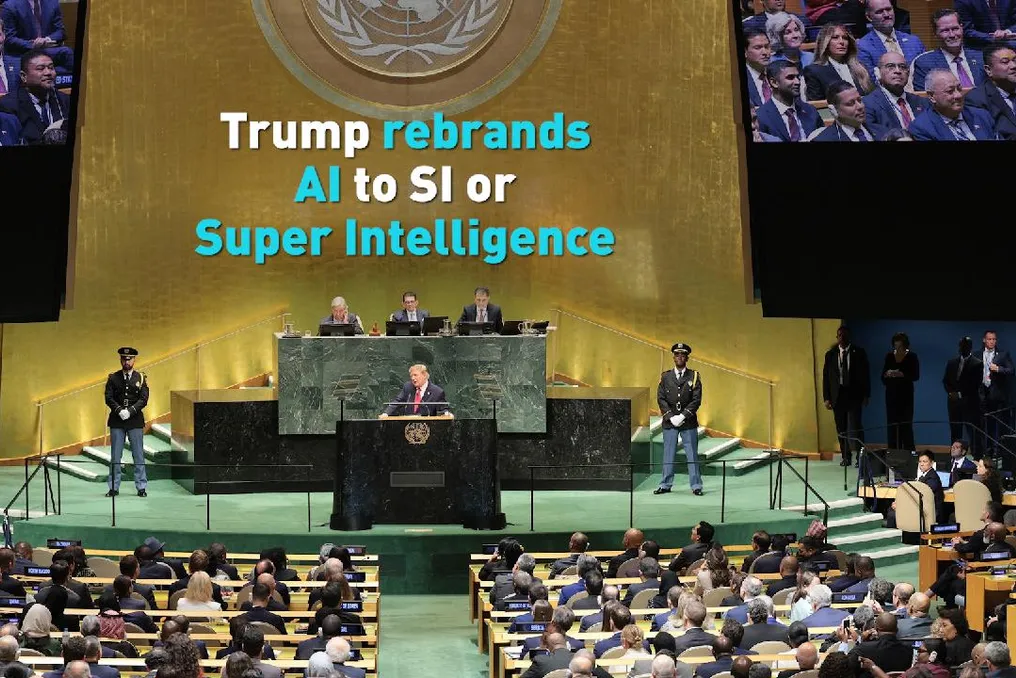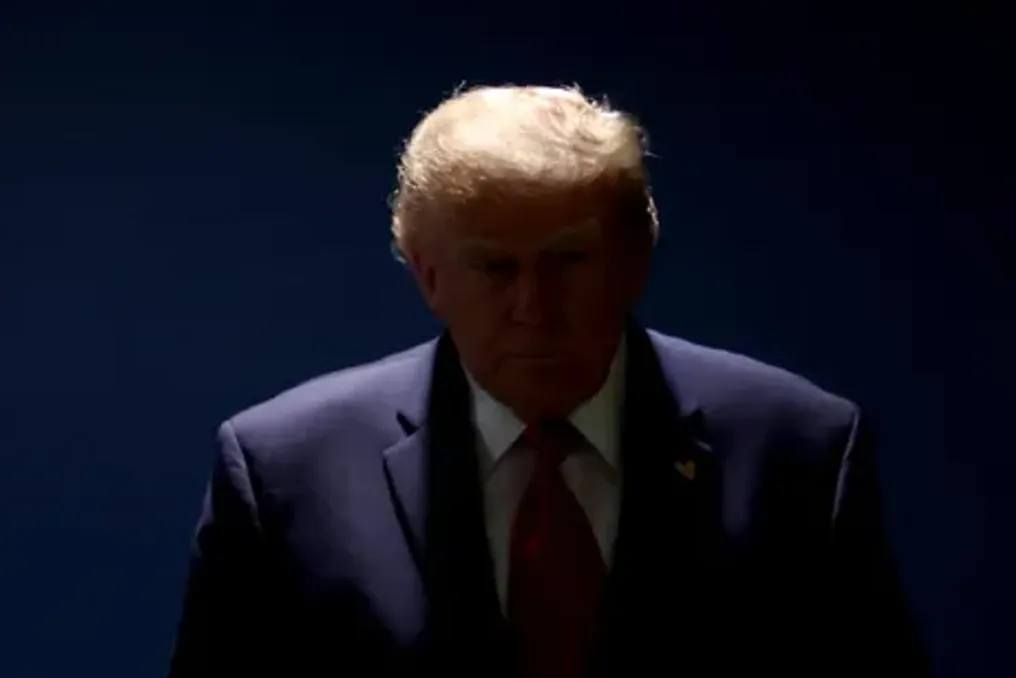
US President Donald Trump announced on Tuesday that the US government will change the official designation of artificial intelligence to 'superintelligence' in official statements. This came amid discussions by world leaders on how to respond to the dangers of rapidly developing technology.
Artificial intelligence has become one of the central topics at the UN General Assembly following incidents where the technology escaped human control, and warnings from company insiders have caused global alarm and calls for increased governmental oversight in this industry.
Speaking before the assembly, Trump firmly stated his disagreement with AI regulation, yet asserted that the word 'artificial' underestimates this technology, expressing hope that the rest of the world will adopt the new term. He noted that 'Superintelligence sounds much better' and 'it is much more accurate.'
This renaming is part of a series of changes initiated by the Trump administration. Previously, it changed the name of the Gulf of Mexico to 'American Gulf' via an executive order last year, and in August renamed Lake Ontario to 'Americano' amid a trade dispute with Canada.
The US leader also compared the warnings of AI safety advocates to climate change warnings, whose anthropogenic causes are confirmed by overwhelming scientific consensus. He emphasized: 'The United States completely rejects any attempt to build a globalist scheme to control... artificial intelligence' and added that 'Every major new technology carries problems, and superintelligence is no exception.'
Trump noted that people who previously spoke of the demise of humanity in 12 years due to global warming now claim that AI will kill everyone, robots will attack, and everything will turn into complete disaster.
Before the start of the UN session, leaders from over twenty countries, predominantly European, strongly called for the adoption of mandatory safety measures for advanced AI, warning that the development of this technology might outpace the ability to control it.
However, the superpowers in AI—China and the United States—did not support this idea. During a meeting at the UN, Prime Minister Andy Burnham stated that the UK would begin work on establishing global AI standards as part of its presidency of the G20 in 2027. He also announced a partnership with Washington to protect AI against cyberattacks on critical infrastructure.
Burnham reported that London plans to use its role as the organizer of the G20 next year to promote a 'unified set of global principles and standards' regarding AI.
French President Emmanuel Macron proposed creating an AI technology independent of great powers. Macron addressed the UN General Assembly, stating: 'I do not want anyone to become a vassal of any great power,' presumably referring to China and the US. He called for pooling investment opportunities to create an open-source advanced AI model that they could share and not depend on anyone else.
AI giants based in the US are increasingly demanding global coordination on AI safety issues; for example, Sam Altman from OpenAI will speak before the UN Security Council on Wednesday. The French official reported on Tuesday that Anthropic's CEO Dario Amodei and Hugging Face co-founder Clément Delangue would also participate remotely.
France, which is chairing the Security Council this month, initiated the meeting, believing that the threat of AI to international peace and security is not being discussed enough at the UN. UN Secretary-General António Guterres called on the US and China to start a dialogue about the future of this technology, similar to the interaction between the US and the Soviet Union during the Cold War. Guterres stated in his address to the assembly: 'Governments with the greatest capabilities in AI bear the greatest responsibility to humanity by establishing channels for dialogue.' He reminded that 'at a turning point of the Cold War, strategic rivals recognized the need to manage common existential risks.'
China and the US are currently discussing the creation of a communication channel on AI issues ahead of the summit in Washington between Trump and Chinese President Xi Jinping, scheduled for Thursday.