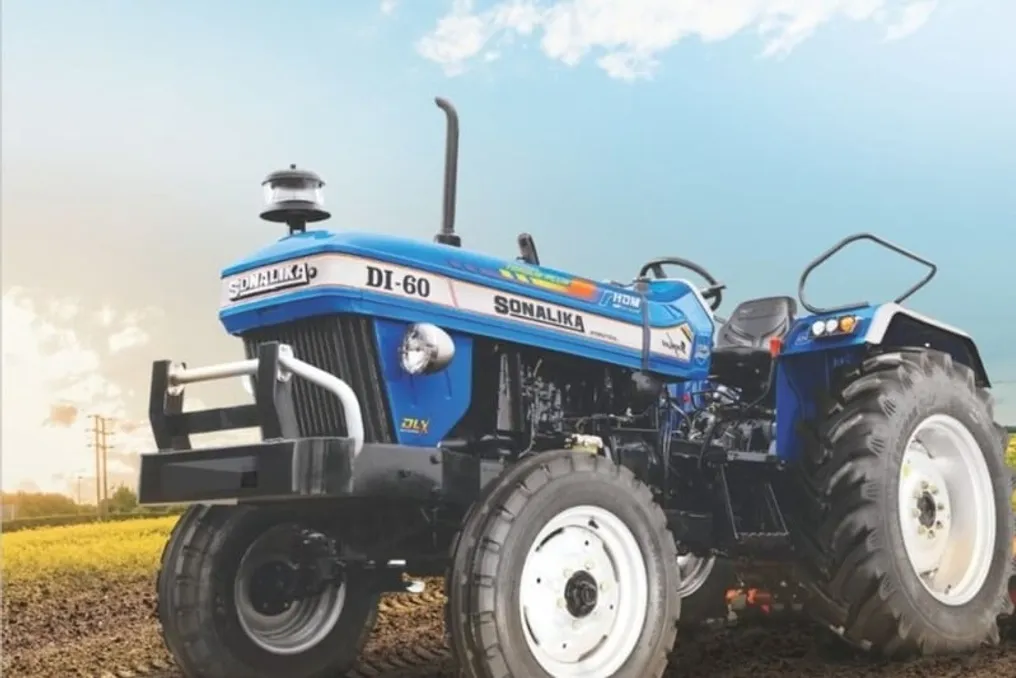
For farmers engaged in agriculture who currently rely on others for field cultivation, important news has emerged: they can now acquire their own tractor and other agricultural equipment with state support.
The government aims to stimulate farmers to purchase tractors and other agricultural equipment by making expensive machinery more accessible through the provision of significant subsidies.
This state-implemented program is called the Sub-Mission on Agricultural Mechanization or SMAM. Its main objective is to provide financial support to farmers when purchasing expensive agricultural machinery and to increase the use of machinery in the agrarian sector.
Under this scheme, the state provides subsidies for the purchase of agricultural tools such as tractors, cultivators, rotators, seeders, harvesters, crushers, sprayers, and others. This program has been operational since 2014-15 and remains one of the key government initiatives in the field of agricultural mechanization.
As of July 2026, 21.61 million agricultural machines have been distributed to private farmers across the country under this program, with a total support amount of ₹9.404.47 billion rupees.
The subsidy can significantly reduce the cost of the equipment. For example, if a farmer chooses a tractor worth 6 million rupees, its price could drop to 3 million rupees after receiving the state subsidy, as the government provides a 50% subsidy for this purchase.
Subsidies are available for a wide range of equipment, including tractors, cultivators, rotators, seeders, zero till seeders, multi-crop seeders, harvesters, harvester combines, crushers, multi-crop crushers, straw choppers, bush cutters, manual sprayers, harvesters, supports, crop collection machines, as well as gardening equipment.
To apply, required documents include an Aadhaar identity card, passport photo, land ownership document, bank passbook copy, additional identification, and a certificate of expenditure.
It is crucial to follow the correct sequence of actions: one cannot first purchase the machine and then apply for a subsidy. The standard DBT workflow requires registration on the portal and application for the machine, followed by selecting an available dealer, and finally verifying the purchase and the machine invoice.