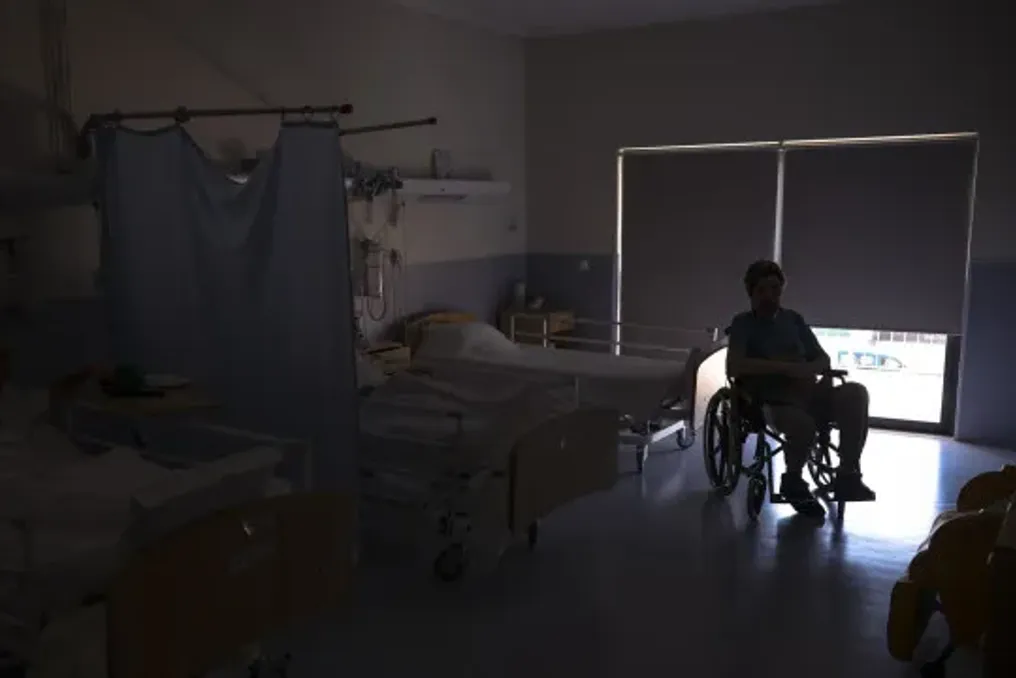
Over 750 continuous care beds closed in five years, according to ANCC
Read more
Noticias ao Minuto
noticiasaominuto.com

Over 750 continuous care beds closed in five years, according to ANCC

According to data provided to the Lusa agency by the organization ANCC, 264 beds were completely closed this year, and another 72 were discontinued; however, the institution strengthened other teams, especially those dealing with integrated home care.

ANCC President, José Bourdain, told Lusa that a bed being closed cannot be replaced by home support because these are fundamentally different things; typically, people requiring inpatient treatment are directed specifically to inpatient facilities.

According to the head, beds included in the network consolidation are being closed, but at the same time, institutions are strengthening their teams, such as home care teams, and are effectively closing down.

He added: 'I would venture to say that only this year 264 [complete closures] plus 72 [network consolidation] have closed. From 2021 to 2022, we are talking about 749 plus 115.'

The data also shows that 15 beds were reclassified (changed types) since January. ANCC reports that there are 55 beds whose information is unconfirmed.

Of the beds for which information exists in the continuous care network, ANNC estimates nearly 880 have been effectively closed since 2021, which have been replaced by home care teams or reclassified.

José Bourdain called this 'extremely serious,' noting that the number of bed closures increased in 2026, even though September has not yet ended, compared to the previous three years.

He also warned about the chronic underfunding of these institutions, and this issue will be addressed in the Presidency of the Republic today. The head emphasized that annual updates conducted by successive governments have not compensated for the increase in institutional costs, especially those related to salaries.

ANCC regrets the long history of frozen prices or 'absurd price increases,' which are causing institutions to reach their limit and be forced to close.

He recalled that the initial goal of the Recovery and Resilience Plan (PRR) was 5,500 beds, but only 4,446 were launched into the competition: 'From the beginning, 1,054 beds remained outside the plan.'

Furthermore, he noted that approximately 400 beds of various types advanced in the Central region, and 2,000 in the North, totaling about 50% of the initial targets. In the Lisbon and Tagus region, 1,457 beds were approved, of which just over 100 advanced.

Responding to the question of the PRR's impact on this sector, he stated that the new beds actually implemented 'do not compensate for the closed ones': 'Instead of improving, the situation has worsened.'

ANCC data indicates that 264 beds were closed this year, 72 were discontinued, but home support teams were strengthened, and 15 changed type. Last year, 90 were closed, and 43 were discontinued, but institutions strengthened their teams, especially in providing home services. Data on continuous care bed closures provided by ANCC shows 88 in 2024, 87 in 2023, and 220 in 2021-2022.


Similar stories

Study shows that nighttime light exposure can affect heart size and increase the risk of heart failure
Read more
www.aajtak.in

Study shows that nighttime light exposure can affect heart size and increase the risk of heart failure

Scientists have proposed a hypothesis based on a study suggesting that bedroom lighting at night may influence the heart. This conclusion was drawn after examining sleep patterns of 10,000 people, with the results published in the European Heart Journal.

The study demonstrated that individuals who slept under low light had a higher likelihood of experiencing enlarged heart chambers and thicker walls compared to those who slept in near-total darkness. This condition could potentially lead to heart failure.

In the group exposed to the most light, participants were kept under illumination of 3 lux for about 34 minutes daily. This is a very low level of light, comparable to bright moonlight or dim light. According to new data in the European Heart Journal, even such weak illumination can affect the heart.

For those who slept under this level of light for the longest duration, the heart walls were 1.5% thicker than those who slept in the dark. Furthermore, the left ventricle size was 2.4% larger, and the heart's contractile ability decreased by 1.9%.

Pathomorphologist Lu Chi from Tulane University in the USA noted that this is the first such study indicating a link between increased nighttime light exposure and changes in heart structure. These changes affect both the structure and function of the heart, which is typically associated with prolonged mental stress. This can weaken the heart and trigger heart failure.

The study also showed that for people sleeping under light, the risk of heart failure over 8–10 years increased by 29%, the risk of atrial fibrillation increased by 15%, and the risk of myocardial infarction increased by 24%. No significant link was found between sleeping under bright daylight and cardiovascular death.

The journal BMJ reported that nighttime illumination, whether from an on light, mobile screen, nightlight, or streetlamp, affects heart function—a process known as cardiac remodeling. Light enters the brain through the eyes, disrupting the body's internal circadian rhythms. Due to the light, the brain cannot fully relax, which can lead to an increased heart rate even during sleep, and all of this directly impacts the heart.

Study shows acetylglucosaminidase inhibitor does not halt Alzheimer's disease progression
Read more
nplus1.ru

Study shows acetylglucosaminidase inhibitor does not halt Alzheimer's disease progression

A team led by Oscar Hansson from Eli Lilly conducted clinical trials and found that the experimental drug ceperognastat, which belongs to the class of O-linked N-acetylglucosaminidase inhibitors, does not have a slowing effect on the early stage of Alzheimer's disease.

These studies involved double-blind randomized controlled trials of phase two. A total of 326 individuals with early signs of Alzheimer's disease participated. The average age of the participants was 73.4 years, and 61.5 percent of them were women.

The trials were conducted in 72 clinical centers located in five different countries. Patients were assigned equally (a ratio of 1:1:1) either 0.75 milligrams or 3 milligrams of ceperognastat (LY3372689), or a daily placebo.

The results of this study were officially published in JAMA: The Journal of the American Medical Association.

EUA announce $1.9 billion savings from combating healthcare fraud
Read more
noticiasaominuto.com

EUA announce $1.9 billion savings from combating healthcare fraud

The United States announced a savings of $1.9 billion resulting from efforts to combat fraud in the healthcare sector. This action involved canceling subsidy payments to hundreds of thousands of individuals enrolled in the Affordable Care Act (also known as Obamacare) who were deemed fraudulent or non-existent.

Vance, who leads a government task force focused on eradicating fraud, made this statement during a press conference held with Mehmet Oz, administrator of the Centers for Medicare and Medicaid Services (CMS), and other government officials. He emphasized that the goal is to ensure that only eligible individuals receive Obamacare subsidies.

Additionally, the Donald Trump administration announced a six-month suspension for new agents or brokers who enroll people in health plans. Officials indicated that these professionals are responsible for a disproportionate share of the discovered frauds.

In early 2026, approximately 19.2 million Americans were enrolled in Obamacare health plans, according to data from the Department of Health and Human Services. The number of enrollees increased during the Covid-19 pandemic, a period when expanded subsidies were offered through two plans introduced by former President Joe Biden.

This announcement represents the latest initiative by the Trump administration to combat fraud at the national level, covering federal health programs, with the aim of controlling excessive spending and protecting taxpayers. During the conference, Vance cited cases of canceled enrollments that lacked Social Security numbers or immigration documentation.

Some health policy experts have called for greater transparency regarding the criteria adopted by the Trump administration to remove hundreds of thousands of enrollees, raising questions about how many individuals may have been improperly excluded. Ellen Montz, who served as deputy administrator and director of the Consumer Information and Insurance Supervision Center (CCIIO) during the Biden administration, acknowledged previous efforts to combat fraud in ACA programs.

Montz commented that while the Trump administration has taken positive measures against actual fraudsters, the current announcement lacks details on how the administration reached the exclusion decision. She predicted there would be many consumer questions about the reason for the cancellation of their enrollments.

This measure comes amid persistently high inflation and rising healthcare costs, putting pressure on the government to create a plan to reduce public expenses, as financial accessibility remains a crucial point in this autumn's midterm elections. Obamacare insurance costs rose drastically for many users during Trump's second term, after Republicans opposed the renewal of pandemic subsidies. For many enrollees, premium values doubled or tripled, forcing millions to migrate to more basic plans or abandon the program, after Congress, under Republican leadership, allowed the end of subsidies this year.

Popular