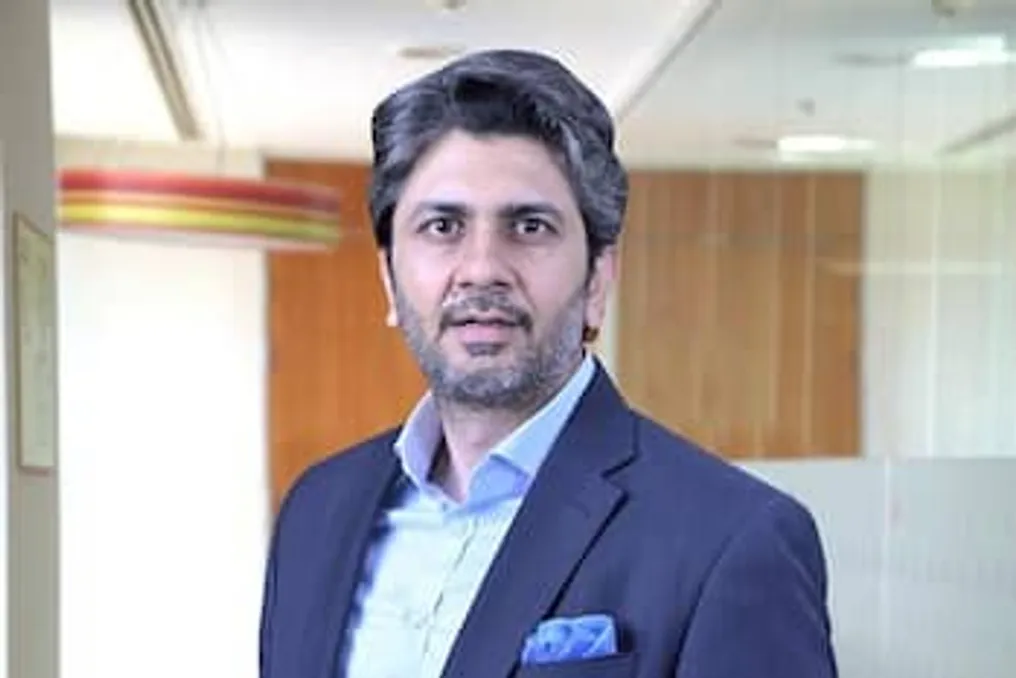
Anuj Kapoor, Managing Director and CEO of Private Wealth at JM Financial Services, stated that given signs of profit recovery in the 2027 fiscal year, the stability of the Indian Rupee, and the expectation of an easing by the Fed rate, there is an attractive entry point for Foreign Institutional Investors (FIIs).
Kapoor noted that family offices are beginning to behave like large institutions, implementing formalized asset allocation baskets, dedicated decision-makers, and disciplined processes. He also emphasized that entrepreneurs and business owners in their 40s and 50s are diversifying their assets across currencies and geographies as their capital grows.
Most Promising Opportunities in Global Markets
In Kapoor's view, the most advantageous opportunities considering risk today lie in sectors with strong fundamentals but moderate market expectations. These areas include certain emerging markets, healthcare, and parts of the energy and infrastructure value chain that benefit from AI-driven investments.
He expresses greater caution in segments where the market has become overheated. A small group of high-performing large companies accounts for a significant portion of index returns, and in many cases, their valuations already assume near-perfect execution for years to come. Therefore, it is preferable to invest in companies that need only to perform adequately to generate attractive returns, rather than those that must deliver exceptional results to meet market expectations.
Despite this, equities remain the largest expense in most company-managed diversified portfolios and remain a key focus for both family offices and High Net Worth Individuals (HNIs) in public and private markets. Only the portfolio structure has changed: they have shifted from a purely alpha-oriented approach to a more balanced one, placing greater emphasis on capital preservation, downside protection, and liquidity. This change is partly linked to events of the last five to seven years, such as the pandemic, credit crises, and global uncertainty, as well as generational differences in capital approach among the younger generation.
There is greater selectivity within equities, with the Nifty 50 index being rated as relatively attractive on a P/B basis. Kapoor believes that with clear signs of profit recovery in the 2027 fiscal year, the stability of the Indian Rupee, and the expected Fed rate cut, an attractive entry opportunity opens up for FIIs. He insists that investing in stocks of different market capitalizations requires a phased approach. Furthermore, interest is growing in structured products, private lending, arbitrage, and long/short strategies, which were previously rare topics in portfolio discussions.
Shifting Investor Mindset Towards International Markets
Kapoor refutes the notion that investors are leaving due to low domestic market returns. He argues that Indian markets have outperformed most global counterparts over the last five and ten years. What has changed is the mindset: if asset allocation used to be opportunistic and cycle-dependent, it is now much more structured, and global exposure has become another diversification tool alongside private lending, structured products, and alternatives. Clients view this as a necessity not to keep all eggs in one basket, rather than a disappointment with India.
Which Age Groups Are Leading These Changes?
These trends are driven not by a single age group, but by two distinct cohorts. Entrepreneurs and business owners in their 40s and 50s are actively diversifying currency and geography as their wealth increases. Of particular note are clients under 40 who grew up in a digital environment; for them, a global ETF or international REIT does not seem extraordinary, as it might have to their parents, but is simply a feature in an app.
Key Changes in Family Office Behavior
The most obvious change he has observed is the transformation of family offices. Previously, a family office represented a single trusted individual quietly managing the owner's personal books in an informal and reactive manner. Today, they function as institutions: they use formal allocation baskets, have dedicated decision-makers, and follow a disciplined process. In some aspects, they act faster than the institutions themselves because they do not require investment committee approval. They participate in IPOs and pre-IPO rounds with the same diligence as funds.
There is also a generational factor: some members of the next generation are starting to manage money earlier than perhaps encouraged before they even build their own wealth. However, Kapoor believes that the entrepreneurial energy that initially built these families' wealth must find an outlet.
How Is AI Transforming Wealth Management?
Artificial intelligence is a powerful enhancer, but it is important to understand what exactly it enhances. It already improves portfolio analysis, report generation, risk monitoring, and routine customer service, freeing up client managers for more critical tasks such as discussing succession, risk appetite, and understanding family dynamics—things the model cannot analyze. In the ultra-high net worth segment, AI, in his opinion, does not change the essence. AI supports the wealth manager but does not replace personal relationships. Trust remains the core product, and clients confirm this: when asked about the most important digital feature, they prioritized cybersecurity and portfolio transparency over the AI-based advice itself.
What Will Be the Competitive Advantage in India's Private Wealth Industry?
Kapoor believes that success will not be determined by any single characteristic—scale, technology, or product access—as all these are becoming easier to acquire or copy. The real competitive advantage is a combination of factors. For JM Financial, this starts with the company acting as a provider of comprehensive solutions, not just a product seller. If the company already advises the owner on their business, capital raising, or mergers and acquisitions, the natural extension is involvement in their personal wealth, family structure, and succession planning. This is a completely different conversation than a cold call from a fund salesperson.
Secondly, the company consciously adheres to an open architecture. The share of proprietary products in client portfolios is intentionally low. The company creates its own products only where it has a real chance of succeeding, such as in lending, where it has gone through several cycles, or in its IPO fund, which directly leverages its investment banking franchise. In all other cases, the company prefers to offer the client the best solution rather than creating a product just to fill a shelf.
Finally, the experience of weathering economic cycles is crucial. Many new, digitally focused players in this field have only operated during one long boom period. The company has been operating for over fifty years, and this experience—knowing how a real downturn affects client behavior, as well as having a culture and senior staff who have survived such periods—cannot be imitated. Combined with real global reach, this constitutes an insurmountable advantage: judgment earned through cycles, delivered through a single trusted partnership.