
Dixon Technologies aims for global growth by expanding production beyond smartphones
Read more
Business Standard
business-standard.com

Dixon Technologies aims for global growth by expanding production beyond smartphones

Dixon Technologies India Ltd. plans to move beyond smartphone assembly, which is its strength, to challenge global electronics manufacturing leaders and enter a new stage of development. Chairman Sunil Wachani told Bloomberg Television in Mumbai that the contract manufacturer is aiming to increase margins by producing electronic components, such as camera modules, while deepening the production of smartphones and laptops.

Currently, the company ranks outside the top ten industry players, where giants like Taiwan's Foxconn dominate. However, Wachani stated that the company's goal is to enter the top five global players within ten years. He also noted that the company's vision is very clear: to reach the top 10 of the global EMS ranking in the next five years, and then the top 5 over the following decade.

Dixon's ambitions align with the Indian government's plans, which seek to attract more manufacturing to the world's most populous country through production subsidies. Although India has achieved early success in attracting brands like Apple Inc. and Samsung Electronics Co., it still lags behind major economies such as China and Taiwan.

Wachani founded Dixon three decades ago, starting the business with borrowed funds in a rented space near New Delhi. Today, Dixon manufactures various goods, including televisions, washing machines, and smartphones for brands such as Motorola, Xiaomi, HP, and Samsung, earning the nickname 'Foxconn of India,' referencing the Taiwanese giant Hon Hai Precision Industry Co.

After listing in Mumbai in 2017, Dixon's shares grew rapidly, but in recent years, they have shown a decline as investors assessed the company's chances of competing with larger rivals; shares fell by 28% over the last year.

Smartphone manufacturing accounts for over 90% of Dixon's revenue, and this segment has shown rapid growth in recent years. This year, the company benefited from federal approval to establish a joint smartphone manufacturing venture with China's local Vivo division, which will hold a minority stake.

Furthermore, Dixon is actively working towards transitioning to high-margin products such as servers and even defense manufacturing. The company has partnered with a Taiwanese firm to manufacture optical equipment used in data centers and plans to strengthen IT equipment production by opening a second plant at the end of November. Wachani emphasized that 'India imports IT equipment worth nearly $15 billion,' representing a huge growth area for the company.
Similar stories

L&T Semiconductor CEO states that India needs hundreds of chip companies to create a global ecosystem
Read more
yourstory.com

L&T Semiconductor CEO states that India needs hundreds of chip companies to create a global ecosystem

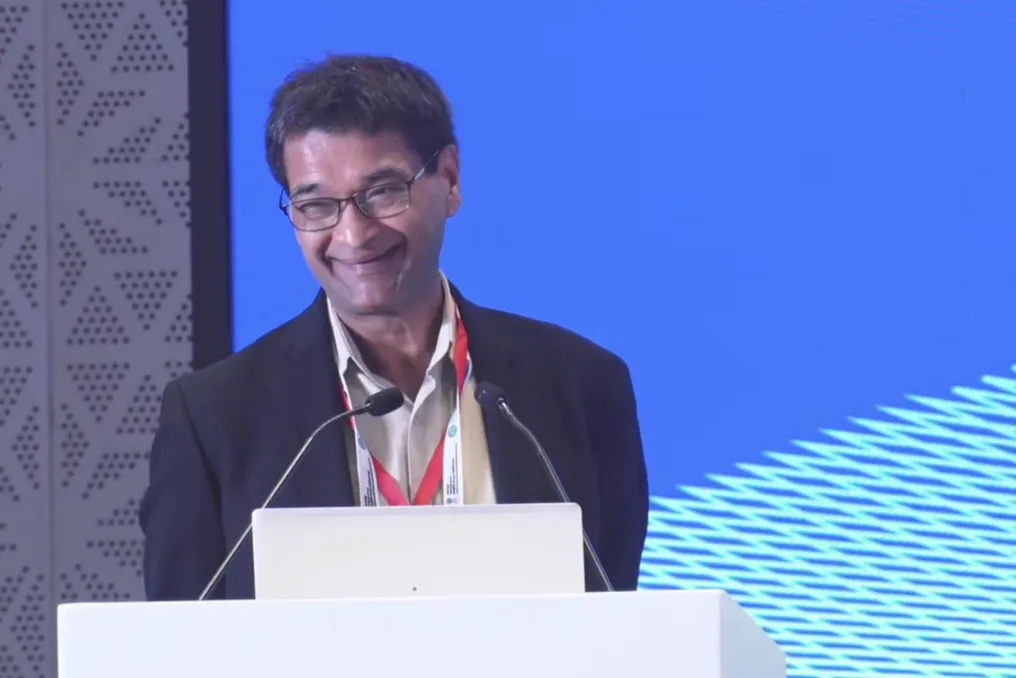
Sandip Kumar, CEO of L&T Semiconductor Technologies, emphasized that forming a globally competitive semiconductor industry in India will require the creation of hundreds of domestic companies.

Speaking at the Semicon 2026 India conference, Kumar noted that due to the enormous scale of the global semiconductor market, it is impossible for one company to cover all product categories. He specified that there are over 20,000 semiconductor products, and no single company can produce even 2,000 of them, thus requiring the emergence of hundreds of enterprises.

Kumar believes that the appearance of more local chip manufacturers should be viewed as a necessary stage in building an ecosystem, rather than merely as competition. He added that part of L&T Semiconductor's efforts is directed towards fostering the development of a broader semiconductor ecosystem in India.

According to Kumar, India already possesses strong capabilities in digital and computing technologies, as well as analog and mixed-signal design, while its competencies in radio frequency technologies are developed to an acceptable level. However, significant gaps remain in the high-power semiconductors, memory, and optics segments, which he described as 'very weak' in terms of India's design and architecture capabilities.

Kumar also identified system architecture as another major deficiency. Unlike chip architecture, system architecture begins with understanding the needs of customers, markets, and the tasks the product must solve. He stated that 'the first macro gap, as far as I know, is system architecture, not chip architecture.'

Kumar explained that much of this knowledge comes through direct contact with customers and markets, something Indian semiconductor engineers have historically had fewer opportunities for because many large end-users are based outside the country. Furthermore, India lacks experience in transitioning from chip design to manufacturing, semiconductor supply chain management, and direct engagement with fabrication plants.

He noted that competition in the semiconductor industry is increasingly determined by the system-level architecture. Kumar stressed that the current boom in the sector is driven precisely by architecture, distinguishing it from previous periods. As individual chips reach physical production limits, the importance of technologies such as chiplets and advanced packaging increases. Demand is also stimulated by AI workloads, which require faster interconnects, co-packaged optics, and more efficient power delivery.

Kumar focused on the economics of the semiconductor business, where high gross margins necessitate significant reinvestment. He reported that gross margins of 50, 60, or 70% can be achieved in this field, but a substantial portion of these revenues must be directed toward developing next-generation products, as chip manufacturers are forced to constantly innovate amidst the replacement of existing products with new technologies.

L&T Semiconductor Technologies itself is expanding in the areas highlighted by Kumar. This company, which does not own its own fabs, has designed and started shipping over 40 products to 15–20 clients in the last year and a half, covering power modules, communications, power conversion, and computing. The company targets sectors such as energy, industrial applications, mobility, data centers, and AI.

The company is scaling its capabilities through acquisitions and partnerships. L&T Semiconductor acquired power module design assets from Fujitsu General Electronics, including intellectual property, design patents, and packaging expertise. It collaborates with Hon Young Semiconductor on silicon carbide wafer development and with Andes Technology on RISC-V processor platforms. A recent partnership was established with Taiwan's Azuremoto Technologies regarding silicon carbide power devices for AI data centers, as well as MOSFET rectifiers and power products. A multi-year agreement was also signed with Synopsys to strengthen power electronics design and modeling capabilities.

Kumar views India's ambitions in the semiconductor sphere as a long-term project that will take about 20 years. While the ecosystem is beginning to form, the next phase will involve deepening the technological base and creating products capable of competing globally. In Kumar's view, differentiation does not just mean being different, but that the product is superior compared to existing alternatives in global markets.

Popular