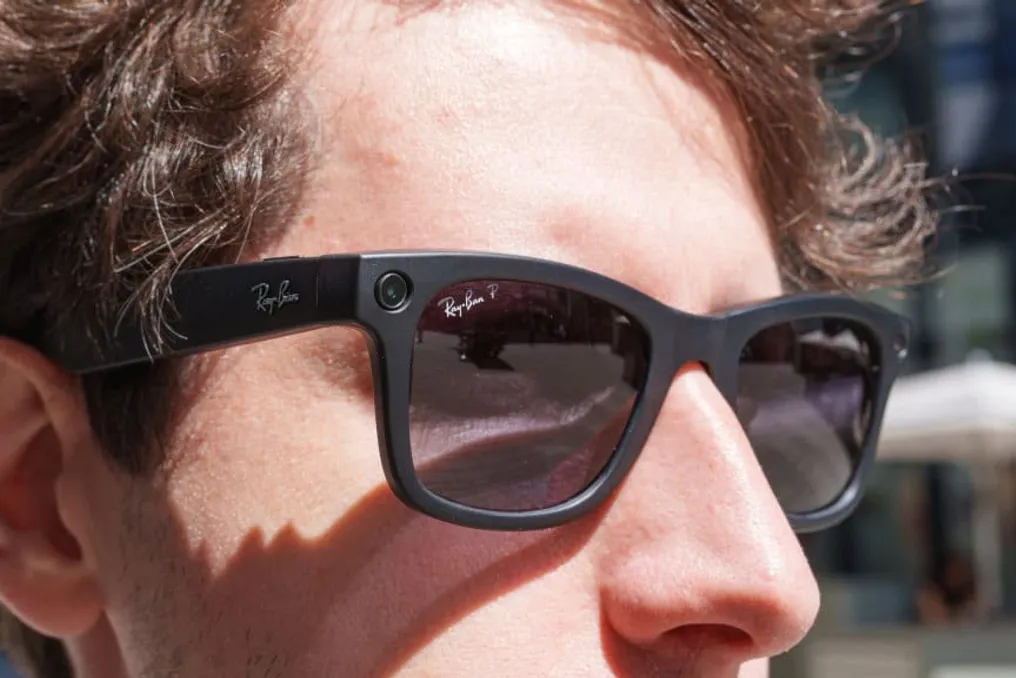
Technology companies view smart glasses and other artificial intelligence (AI) devices as potential replacements for smartphones, but the issue of privacy represents a significant obstacle to this shift. These devices have the ability to monitor, listen to, and react to the user's surroundings, which increases their utility but also raises the risk of capturing images or voices of individuals without permission.
Negative resistance was notably intense regarding Meta's smart glasses, which combine EssilorLuxottica's traditional design with AI functionalities. Such products have begun facing lawsuits, user complaints about non-consensual recordings, and usage restrictions in certain places in the United Kingdom.
According to Reuters, companies like Samsung, OpenAI, and various startups are developing different approaches to overcome this hurdle. Proposed solutions include camera-less glasses, recorders requiring manual activation, and data processing performed directly on the device itself.
Samsung also plans to enter the smart glasses market, albeit with a strategy distinct from completely replacing the smartphone. The company expects to launch its glasses this year, in collaboration with the brands Gentle Monster and Warby Parker.
Jay Kim, Executive Vice President of Samsung's mobile division, told Reuters that successful models will be those that make interaction with technology more reliable, useful, and natural. He emphasized that as AI takes on more functions, users will demand systems that remain secure and under their control.
OpenAI is also exploring the feasibility of devices that continuously monitor the user's environment. In conversations with journalists in December, Sam Altman, the company's CEO, outlined a vision of a device capable of understanding the user's context, knowing when to intervene and when to remain inactive.
For Altman, these devices should, at some point, process data locally rather than constantly transmitting information to the cloud. He stressed: 'You want a device you can trust... that has all the context and knows when to be useful and when not to be.' Furthermore, he argued that most people would not want information from a device that listens and observes their entire life to be processed on a cloud server.
Altman also mentioned that implementing this local processing could take several additional years, depending on OpenAI's processing expansion capacity.
While large corporations seek solutions to the dilemma, some startups opt for products that simply eliminate cameras. Even Realities, founded in Shenzhen (China) by Will Wang, a former Apple engineer, launched the camera-less G1 glasses in 2024, followed by the G2 model in November 2025. Wang told Reuters that consumers are increasingly associating smart glasses with the possibility of hidden surveillance, arguing that cameras should wait until companies offer more robust protections.
The company, valued at US$1 billion (R$5.12 billion) in July, projects reaching hundreds of thousands of users by the end of the year, with about 90% of these sales directed to the end consumer. Another alternative comes from the American startup Pocket, which created a cell phone-connected recorder that requires the user to press a button to start recording conversations, aiming to make recording more intentional and visible, similar to using a smartphone camera.
Plaud markets AI recorders in card format and wearable devices, placing privacy at the core of its products. The Plaud One Explorer Edition model, priced at US$249.99 (R$1,279.95), integrates headphones and a case and only records upon activation, while also alerting nearby people through lights or sound notifications. The company reports having 2.5 million users and over US$100 million (R$512 million) in annual recurring revenue.
Experts interviewed by Reuters indicate that the debate does not necessarily imply a rejection of devices capable of recording audio or video; the primary challenge lies in ensuring that users know when they are being recorded and have clear consent mechanisms. Jitesh Ubrani, director of the consultancy IDC, compared the situation to the apprehensions arising from the popularization of cameras and microphones in smartphones, stating that society must ensure awareness and consent during any recording, which differs from being against recording itself.
The battle for public trust may be decisive for a market that tech companies consider the next major computing platform. Although more useful AI devices require greater environmental data collection, the same features that make them functional—such as always-on cameras and microphones and environmental understanding—may become the biggest barrier to their acceptance.