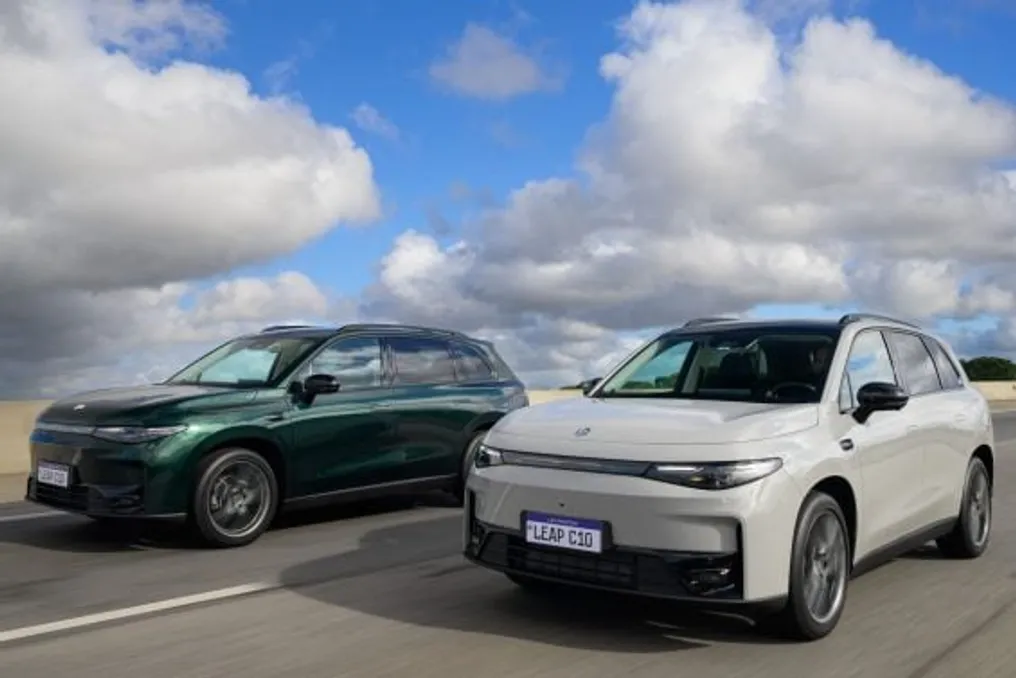
Leapmotor has decided to extend the factory warranty for its entire vehicle lineup in Brazil, establishing a period of six years or 150,000 kilometers, whichever comes first. This new policy takes effect this month and is unusual in the sector because it retroactively covers 2027 model year vehicles that have already been sold and delivered to consumers.
The extended coverage applies to the B10 electric, C10 electric, and C10 REEV models—a version where the combustion engine acts only as a power generator, without moving the wheels—covering all 2026/2027 model year vehicles and newer. Furthermore, the B10 REEV, which the Chinese manufacturer will soon launch in the country, will also have its warranty period extended from the dealership.
The most expensive components of the electrified system receive additional and longer protection. Specifically, the traction battery, the electric motor, and the inverter remain covered for eight years, a period independent of the general vehicle warranty. This is a point of attention for buyers, as replacing the battery pack outside the warranty period can represent a significant portion of the car's resale value.
However, the warranty extension is not automatic. For the coverage to remain valid, the owner must adhere to the contractual conditions, including undergoing periodic maintenance at the authorized Leapmotor network, which must occur every 12 months or every 20,000 kilometers, whichever comes first.
While traditional manufacturers usually offer three years of coverage in Brazil, Chinese brands specializing in electrified vehicles present significantly higher standards; BYD, a leader in this segment, also offers six years of warranty for the vehicle and eight years for the traction battery.
For Leapmotor, this reinforcement occurs at a strategic moment. The brand began operations in Brazil in November 2025, operating under the commercial and after-sales structure of Stellantis, which owns brands such as Fiat, Jeep, Peugeot, Citroën, and Ram, and seeks to build its reputation in a market dominated by competitors with longer operational history.
The C10, which was the brand's first model available in the country, has an initial price starting from R$ 204,990 in the fully electric version. Initially, operations were launched in approximately 36 dealerships distributed across 29 cities, a modest network compared to the capillarity of competitors.
By extending the benefit to those who have already made a purchase, the company avoids a common side effect of such announcements: the recent customer feeling disadvantaged upon discovering a superior condition shortly after acquisition. Restricting benefits only to new units is a frequent industry practice and often generates complaints through customer service channels.