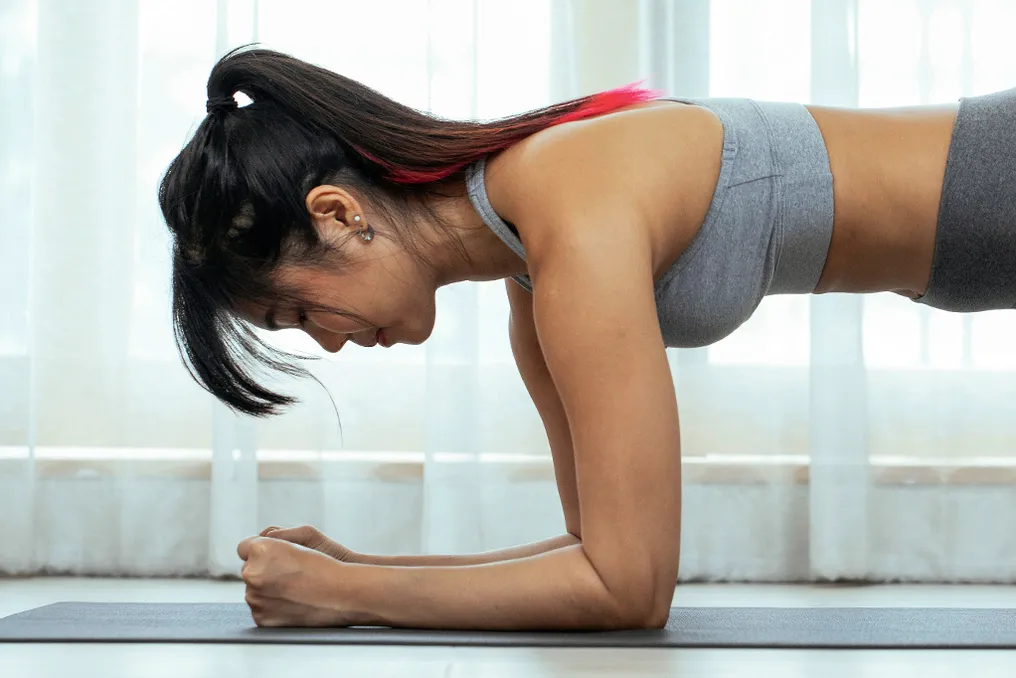
Calisthenics, which is based on using one's own body weight as resistance, has gained enormous popularity in recent years, largely due to social media and the installation of public fitness equipment. Exercises include pull-ups, push-ups, dips, squats, and more complex elements such as the muscle-up, la planche, and front lever.
To understand the effectiveness of calisthenics, it is important to define its essence. Calisthenics is a form of physical training where one's own body weight is primarily used as the load. The name originates from the Greek words 'kalos' ('beautiful') and 'sthenos' ('strength'), although the modern use of the term began in the 19th century, linking movement and strength.
Today, calisthenics includes both well-known exercises like squats, lunges, push-ups, and pull-ups, as well as more acrobatic movements. To start, it is sufficient to perform simple exercises, such as wall push-ups, using the same principle as one-arm push-ups: moving the body against gravity. In this case, the body acts as the actual load; for example, in a standard push-up, the arms can support about two-thirds of the body weight, and changing the position of the hands or feet allows this resistance to be adjusted.
This feature makes calisthenics an attractive option for starting workouts because it does not necessarily require visiting a gym, using specialized equipment, or making large financial investments, allowing practice at home, in the park, or almost anywhere.
Recommendations published in 2026 by the American College of Sports Medicine (ACSM), after analyzing 137 systematic reviews involving over 30 thousand people, confirm this idea: bodyweight training and home programs are also capable of improving physical strength and bodily functions.
Studies have shown that a progressive push-up program demonstrated improvements in strength in both groups compared to a bench press program. Another study, adjusting the difficulty of push-ups to a resistance level comparable to the bench press, revealed similar improvements in chest and triceps muscle density after eight weeks.
The explanation is quite simple: muscles do not care whether the resistance comes from a dumbbell, a machine, or one's own body; they need a sufficient stimulus that increases over time. Here, the concept of progression is key.
Bodyweight training does not only mean increasing the number of repetitions. One can modify the points of support, levers, range of motion, or weight distribution. For example, a push-up can start against a wall, then move to an elevated surface, then to the floor, and evolve into more complex variations. This approach forces the person to learn to control their own body, paying attention to core control, balance, and execution quality.
However, this also holds the main limitation: a push-up can be simple for an experienced athlete and extremely difficult for a beginner. A pull-up might serve as a warm-up for a strong person but might be almost impossible for a novice. Therefore, calisthenics must be individualized, just like any other training. For some, the starting point will be a squat, while for others, it might be simply standing up and sitting down on a chair.
There may be a question about comparing calisthenics and strength training. However, this is likely a false dichotomy. Weightlifting allows for very gradual increases in difficulty by adding kilograms, whereas in calisthenics, progress is often achieved by changing body position or moving to a more complex variation, which is not always as gradual.
This difference is especially noticeable in trained individuals and with leg exercises. When body weight no longer provides a sufficient stimulus, adding external load using dumbbells or weights can become a simpler and more precise way to further progress. Studies show that training with high resistance is useful for improving the ability to move very heavy loads, but it is not necessary to work with heavy weight to increase muscle volume if the exercise is sufficiently demanding.
Thus, calisthenics and weight training are not opposing methods but rather complementary tools. One can start with bodyweight pull-ups, and when they become too easy, add external weight to increase the difficulty. Ultimately, the principle remains the same: calisthenics works not because of some magical property of the body, but because the body itself is a form of resistance, and learning to control this resistance is one of the most accessible ways to start exercising.