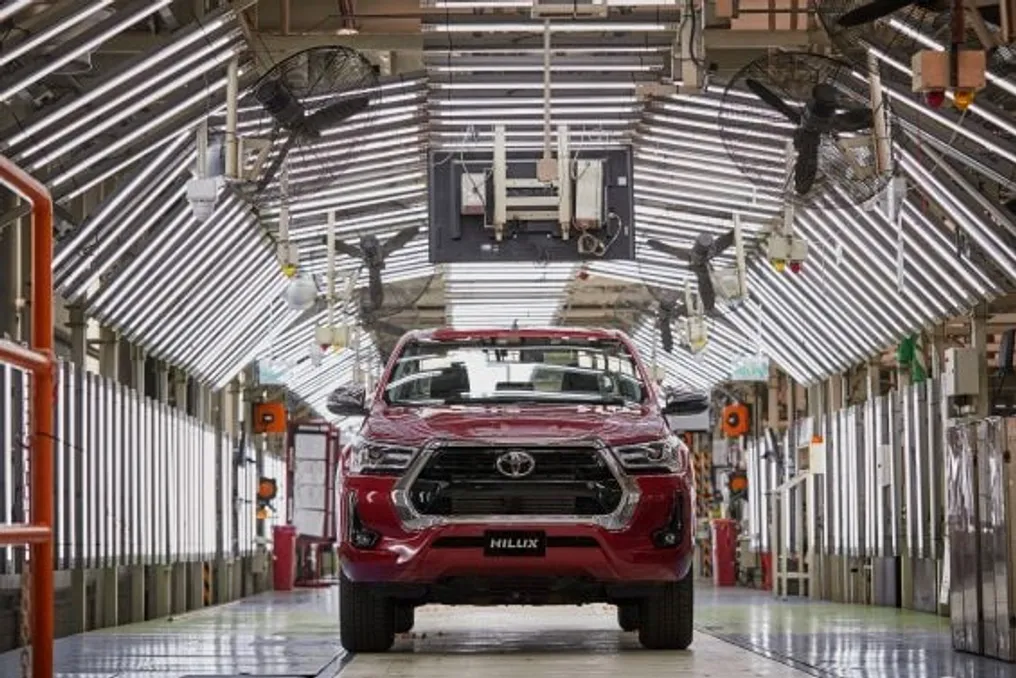
Toyota projects an annual investment of up to ¥1 trillion (equivalent to approximately R$32.8 billion) starting in 2028 to automate its global industrial plants, involving the implementation of about 400,000 robots.
This plan includes installing 150,000 machines in the automaker's own units and the other 250,000 in facilities belonging to group companies and major suppliers. According to the automaker, presented to investors, this amount covers both humanoid and non-humanoid robots, as well as the replacement of existing machinery. However, the company did not specify whether the investment will actually be realized or what the total duration of this program will be.
The central humanoid model in this project is Eley, which weighs 50 kg. Unlike walking, it moves using wheels and can be powered by battery or cable. It uses two-fingered hands instead of a claw that simulates the human hand, thus prioritizing established reliability. This approach contrasts with rivals like Tesla and Figure, which are focusing on bipedal machines for the factory environment.
Eley learns through direct observation of Toyota employees, not through external databases or simulations. Workers use templates molded to the robot's hands while performing routine tasks, allowing the machine to absorb the technique directly from the demonstration. In a presentation held at the automaker's European headquarters in early September, the robot demonstrated folding t-shirts with almost impeccable precision after completing 1,500 training sessions in just two weeks.
Toyota intends to standardize training data across its various factories, ensuring that robots in different countries can acquire the same skills without needing to repeat the process locally. The group operates 60 factories and has 18,000 experienced workers, known as takumi, whose experience will be transformed into a database. Furthermore, the robots will assist in training new employees.