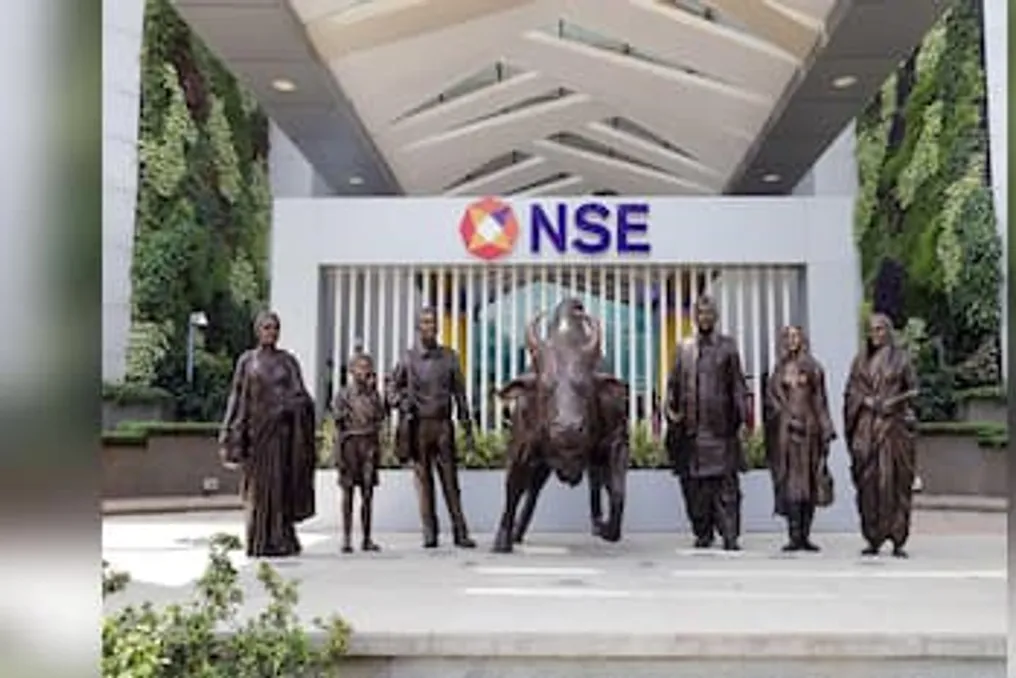
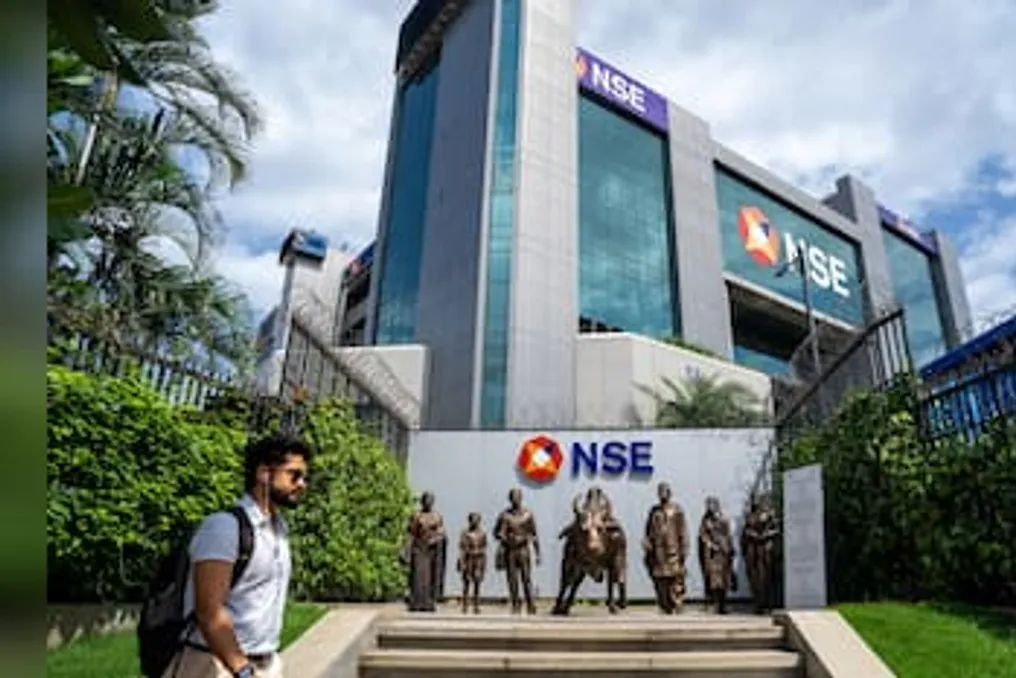
The Initial Public Offering (IPO) of the National Stock Exchange of India (NSE) concluded with a subscription on Monday, September 21. The offering, valued at ₹22,562 crore, received bids for 50.58 crore shares against an offer of 8.86 crore, resulting in an overall subscription of 5.71 times.
However, the overall subscription figure masks a significant divergence between the interest shown by institutional and retail investors. Qualified Institutional Buyers (QIBs) subscribed 12.68 times more than their allocated portion, while Non-Institutional Investors (NIIs) subscribed 6.55 times. Meanwhile, the retail segment received bids for 6.13 crore shares compared to 4.41 crore, leading to a relatively modest subscription of 1.39 times.
The NSE IPO became the second largest public offering in India after Hyundai Motor India's IPO, which was worth ₹27,858.75 crore in 2024. The exchange company set a price band of ₹1,700–₹1,785 per share, with a lot size of eight shares, meaning a retail investor needed a minimum of ₹14,280 at the upper end of the price band.
Reasons for Retail Investor Caution
One of the key aspects of the NSE offering was its sheer magnitude. The total amount of approximately ₹22,562 crore required a substantial volume of capital, even though the minimum retail application was ₹14,280. Furthermore, the offering was entirely an Offer for Sale (OFS), meaning the proceeds would go to existing shareholders selling their stakes, not to NSE itself as new capital.
Another factor was changing expectations regarding listing gains. Market data showed a sharp weakening of the grey market premium during the IPO period. The premium dropped to about 2 percent from a peak of around 20 percent during trading, which could reduce attractiveness for investors focused on short-term listing profits.
Santosh Mina, Head of Research at Swastika Investmart, noted that retail investors are adopting a more selective approach to the NSE IPO amidst a crowded primary market where numerous offerings compete for the same pool of capital. He stated: 'The relatively modest grey market premium also lowered expectations for immediate listing gains. At the same time, the IPO is entirely an Offer for Sale, meaning there is no inflow of new capital for NSE.' Mina added that concerns over regulatory changes affecting F&O, which remains a vital part of NSE's business, might also prompt some investors to remain cautious. He concluded: 'Given the size of the offering at ₹22,561.57 crore, the subscription requirements are also significant, making the retail response relatively restrained compared to smaller IPOs.'
Comparison of NSE Retail Demand with Other Indian Mega-IPOs
The relatively modest retail subscription of 1.39 times becomes clearer when compared to some of India's largest IPOs. According to Prime Database, Coal India showed a retail subscription of 2.21 times, and LG Electronics India showed 3.39 times. LIC, another major IPO, demonstrated a retail subscription of 1.61 times. Compared to these, the retail subscription for NSE at 1.39 times was the lowest of the three.
Nevertheless, several other large offerings also recorded relatively moderate retail demand. HDB Financial Services showed a retail subscription of 1.43 times, and Paytm showed 1.27 times. Tata Capital and Swiggy each registered a retail subscription of 1.06 times.
Prime Database data also indicates that Hyundai Motor India, the country's largest IPO worth ₹27,858.75 crore, had a retail subscription of only 0.44 times. General Insurance Corporation of India (GIC) showed 0.59 times.
Significance of Valuation and Listing Gain Expectations
Abhinav Tiwari, Senior Research Analyst at Bonanza, pointed to the difference between the NSE IPO price and its previous non-listed valuation as another factor influencing retail investor participation. He noted: 'The main concern for investors is the gap between the NSE IPO price and its previous non-listed market price. The upper price band of ₹1,785 is approximately 26 percent below the non-listed peak of ₹2,400 observed in June 2025. Additionally, pre-IPO shareholders face a six-month lock-in period post-listing, which may reduce their willingness to participate further.'
Tiwari emphasized that for new investors, a lower IPO price might not appear attractive. Instead, it might suggest that the previous non-listed valuation was too high. The grey market also shows limited enthusiasm, as the GMP fell to only 4-5 percent above the upper price band. Tiwari also drew attention to NSE's revenue trajectory, its valuation, and its exposure to the derivatives market as factors investors might consider.
He added: 'NSE's financial performance is also a cause for concern. Net profit for FY26 decreased to ₹10,302 crore from ₹12,188 crore, and EBITDA operating margin fell to 66.9 percent from 73.8 percent. At a P/E of 42 times earnings, the valuation remains high, especially considering that NSE's share in industry option premiums decreased from 78.6 percent to 68.5 percent.'
Since the IPO is entirely an Offer for Sale, and other large IPOs may enter the market, retail investors might prefer to wait, as retail demand in India is largely driven by trading aimed at listing gains, and a 3 percent cushion does not justify locking up funds. He concluded: 'Once the valuation and pricing become clearer, we may see retail participation in the long term, as the fundamentals are strong, like any other large-cap stock.'