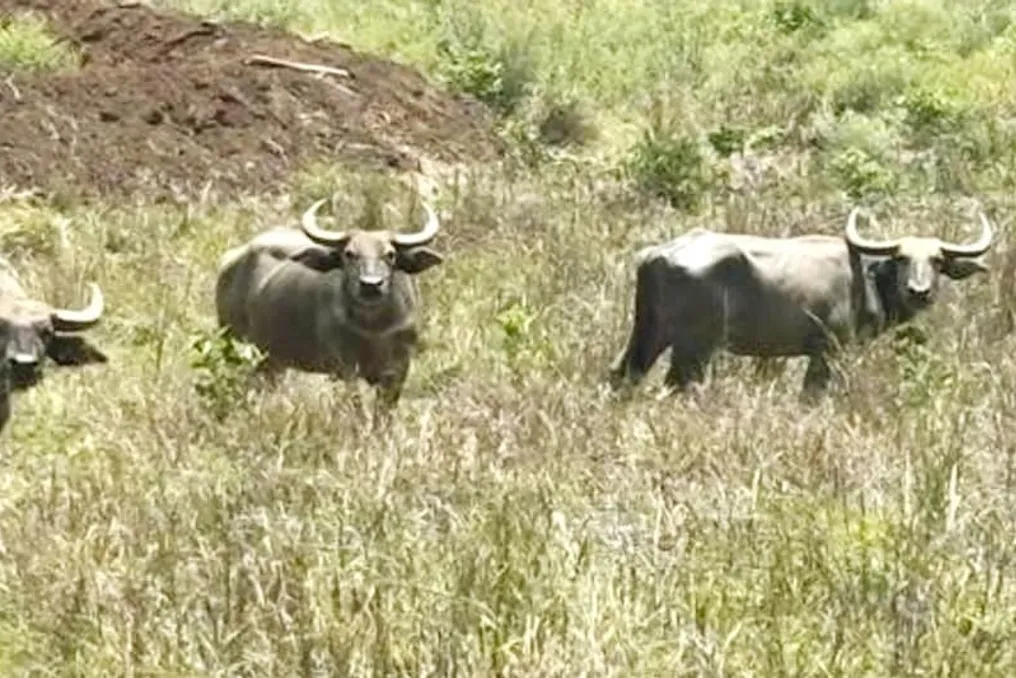
Work is underway in the Bandhavgarh and Kanha reserves in Madhya Pradesh state to conserve and restore populations of large herbivores. In Bandhavgarh, the focus is on increasing the number of gaurs (Indian bison), while in Kanha, the process of reintroducing wild buffaloes continues.
Despite their external similarities, these two species differ in habitat, diet, and biological characteristics.
According to Anupama Sahay, director of the Bandhavgarh Tiger Reserve, the gaur is the largest wild cattle in Asia. The gaur population in Bandhavgarh was wiped out in 1998. Following this, between 2011 and 2012, 50 individuals were brought from Kanha and successfully reintroduced into Bandhavgarh, where their numbers have increased to approximately 170.
To preserve genetic diversity, there are also plans to import gaurs from Satpura. In February 2025, 23 gaurs (18 females and 5 males) were delivered to Bandhavgarh, and in January 2026, another 27 gaurs (22 females and 5 males) arrived in the second phase. Thus, the goal of delivering 50 new individuals has been achieved. VHF collars, leg bands, and ear tags have been fitted to monitor these animals. Currently, the gaur population in the Bandhavgarh landscape is estimated to be between 220 and 240 individuals.
In the Kanha Tiger Reserve, the process of reseeding with wild buffaloes is ongoing. According to P.K. Verma, deputy director of the Kanha Tiger Reserve, it is planned to bring in 50 wild buffaloes over three years. The first batch of wild buffaloes was delivered to Kanha on April 28, 2026. To date, only eight wild buffaloes have arrived in Kanha from two batches.
Initially, the wild buffaloes will be kept in enclosures. As the population grows, they will gradually be released into natural habitats according to needs. It is planned to place some buffaloes in open areas and others in specially designated zones for orderly population increase.
The gaur belongs to the genus Gaur, while the wild buffalo belongs to the genus Buffalo. A gaur can be identified by its massive body, prominent humps on the shoulders, yellowish-white lower limbs, and curved horns.
The wild buffalo does not have such a distinct hump on its shoulders as the gaur. It is usually found in areas with wet grassy meadows, marshy areas, and near water sources. There is also a difference in diet: the gaur eats grass and other plants available in the forest, whereas the wild buffalo is capable of consuming tough and tall grass. Wild buffaloes play an important role in controlling tall grass growing in wet and waterlogged areas.
Large herbivores, such as the gaur and the wild buffalo, perform a critically important function in the forest ecosystem. Their grazing on grass and vegetation helps control excessively tall grass, allowing for the growth of new tender grass and leaves. This, in turn, provides a food base for other herbivores, such as chital and sambar. Thus, large herbivores contribute to maintaining the balance of the forest vegetation cover. This is why gaurs and wild buffaloes are called the 'natural engineers' of the forest. It is expected that the conservation of gaurs in Bandhavgarh and the reintroduction of wild buffaloes in Kanha will help strengthen the biodiversity and ecosystem of the forest regions of Madhya Pradesh.