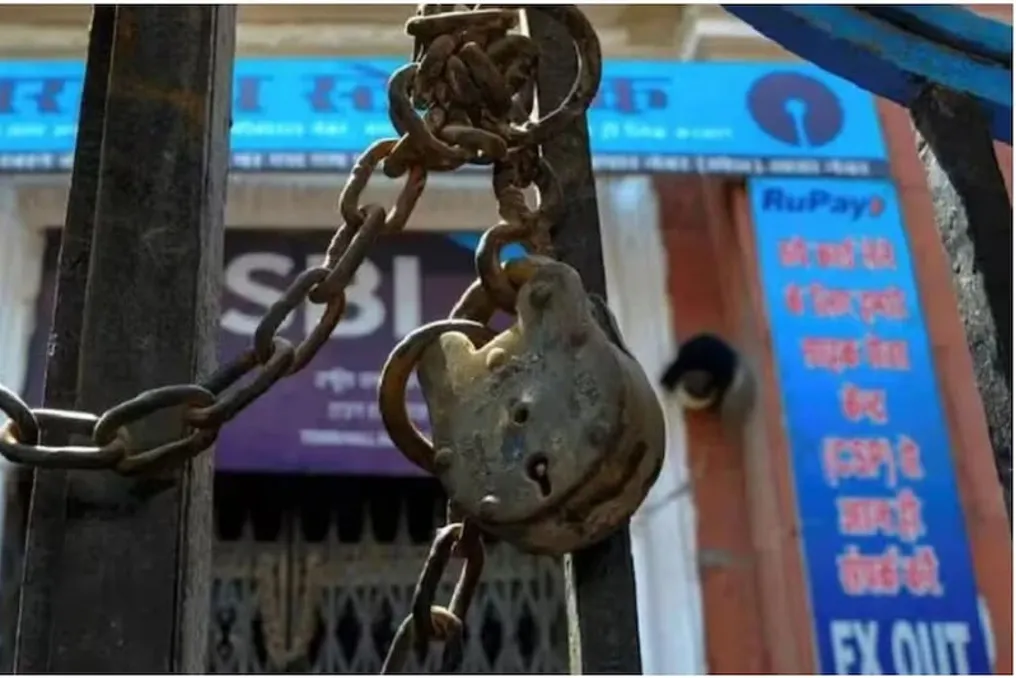
The Unionized Forum of Banking Trade Unions (UFBU) has announced the continuation of a nationwide strike scheduled for three days, starting on September 28. The meeting held on Tuesday with the Deputy Commissioner for Labour did not lead to an agreement, prompting bank employees to decide on the strike.
The Ministry of Finance had previously appealed to bank employees to abandon the strike and resolve their demands through negotiations. However, this meeting, which took place on Tuesday between the Deputy Commissioner for Labour and representatives of bank workers, proved unsuccessful.
The main demand of the banking trade unions is the implementation of a five-day banking service system per week. The union asserts that this issue was discussed and went through a coordination process previously but has not yet been implemented. Other demands include updating and improving pension benefits, applying a unified cost of living index (DA) formula for pensioners, and providing employees in the National Pension System (NPS) the option to switch to the old pension scheme (OPS).
The Unionized Forum of Banking Trade Unions (UFBU) had previously announced a three-day nationwide strike from September 28 to 30. Since September 26 and 27 fall on Saturday and Sunday, it is expected that banking operations will be affected for five consecutive days. Nevertheless, this does not mean a complete closure of all services in every bank during these five days; services such as digital banking, UPI, internet, and mobile banking are expected to remain available, while branch-level services may be more severely impacted.
The timing of the strike is also significant. September 30 is a half-yearly bank closure during which important operations related to account reconciliation, treasury, and the market are carried out. The government notes that the strike from September 28 to 30, combined with preceding weekends, could result in a five-day impact on banking services. This potentially affects customers, businesses, government transactions, and international banking operations.
Given the potential difficulties, the banks themselves advised customers to complete all necessary tasks in advance. The State Bank of India (SBI), Union Bank of India, and some other public sector banks urged customers to complete urgent tasks before the strike begins. Cash can be obtained using ATMs, cash deposit machines, and other digital means if necessary. Services such as UPI, internet, and mobile banking are expected to operate normally, but branch-related work—such as certain money transfers, cheque verification, and loan processing—may be affected.