Tashkent Climbs 128 Positions in the Global Cities Index 2026
Read more
UzDaily
uzdaily.uz

Tashkent Climbs 128 Positions in the Global Cities Index 2026

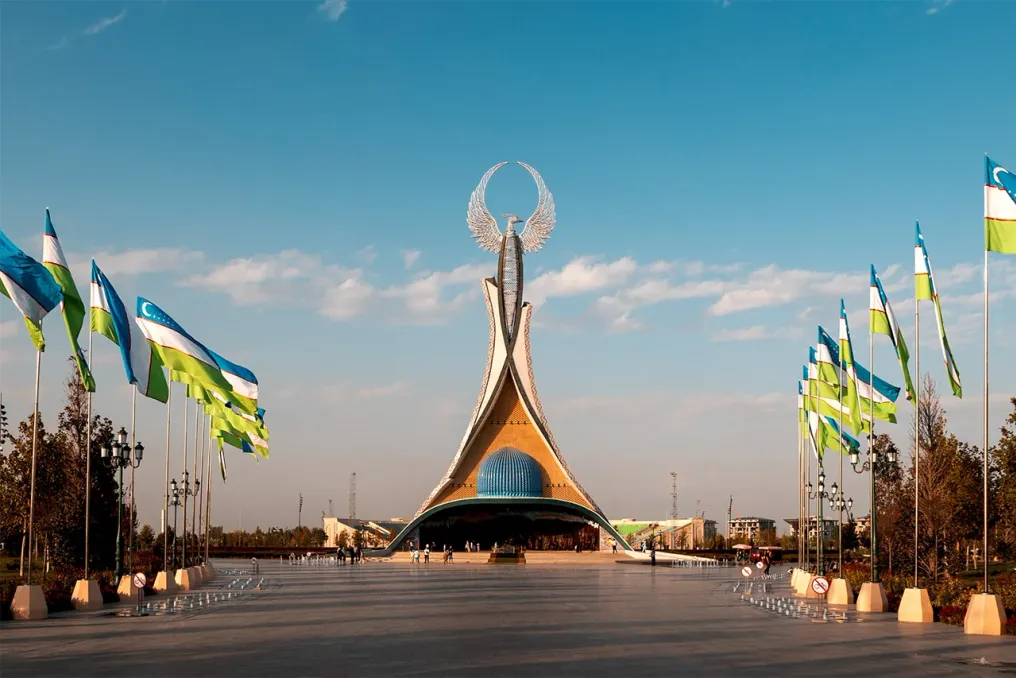
According to the analytical center Oxford Economics, Tashkent, the capital of Uzbekistan, ranked 343rd out of 1000 largest cities in the Global Cities Index 2026. Over the past year, the position of the Uzbek capital improved by 128 points.

Furthermore, Tashkent was included in the list of 28 cities to watch, as the study authors note that these cities are demonstrating significant momentum and possess the potential for further growth in the ranking.

Oxford Economics emphasized that Tashkent is gradually strengthening its position as a promising economic hub in Central Asia. Previously, before the collapse of the Soviet Union, the city was a major industrial center; however, after Uzbekistan gained independence and expanded international ties, its economy became more diversified.

The rating authors also drew attention to the continuous economic growth of the capital, active construction, and increased investment activity across various sectors. Moreover, Tashkent is experiencing steady population growth, which, according to Oxford Economics, distinguishes it from several other cities in Eastern Europe and Central Asia.

Analysts cited the capital's geographical location and skilled workforce as some of its advantages. Nevertheless, the relatively low GDP per capita, according to Oxford Economics, poses a risk of skilled labor outflow to countries with higher income levels. Other challenges include environmental pressure, such as water scarcity.

The Global Cities Index evaluates cities across five dimensions: economy, human capital, quality of life, environment, and governance. Each indicator is measured on a scale of 0 to 100, and the results are then combined to form the overall ranking.

In the economy sector, Tashkent scored 54.7 points, ranking 188th globally, which corresponds to being in the top 20% of the ranking. This category considers the size and structure of the urban economy, its past growth, and prospects for future expansion.

For human capital, the capital received 61.5 points and ranked 108th, also falling within the top 20%. This indicator reflects the scale and quality of the workforce, as well as the city's ability to attract, develop, and retain highly qualified specialists.

Regarding quality of life, Tashkent received 47.5 points, ranking 644th and situated in the lower quartile of the ranking. This metric accounts for residents' well-being and satisfaction, financial status, healthcare, and accessibility of urban infrastructure.

The capital's environmental score was 45.1 points, corresponding to 806th place and placing it in the bottom 15% of the ranking. Oxford Economics assesses both the city's ability to combine economic development with environmental protection and its vulnerability to ecological risks.

Tashkent showed its weakest result among the five categories in governance, scoring 40.2 points and ranking 825th, placing it in the bottom 15% of the ranking. This indicator measures the resilience of urban institutions, the quality of regulation, and the stability of conditions for residents and businesses. Oxford Economics emphasizes that effective governance is critical for planning, investment, and meeting the city's needs.

In the Global Cities Index 2026, New York ranked first with 100 points, London second with 98.8 points, and Paris third with 93.4 points. Seattle, San Francisco, Dublin, Boston, San Jose, Tokyo, and Zurich were also among the top ten leaders.

Among other Central Asian cities, Almaty ranked 265th, and Astana ranked 281st. Bishkek was ranked 461st, Ashgabat 668th, and Dushanbe 672nd.

In November 2025, the President of Uzbekistan, Shavkat Mirziyoyev, instructed ensuring Tashkent's inclusion in the top 300 cities with a sustainable environmental situation in the Global Cities Index. Measures planned to achieve this goal include the creation of artificial water bodies and the expansion of green zones.
Similar stories

Tashkent is renovating Gulsaroy Street, spanning 1.6 km
Read more
uzdaily.uz

Tashkent is renovating Gulsaroy Street, spanning 1.6 km

Journalists and bloggers visited Gulsaroy Street in Tashkent as part of a press tour to familiarize themselves with the improvement and beautification works being carried out there. This was reported by the administration of the city of Tashkent.

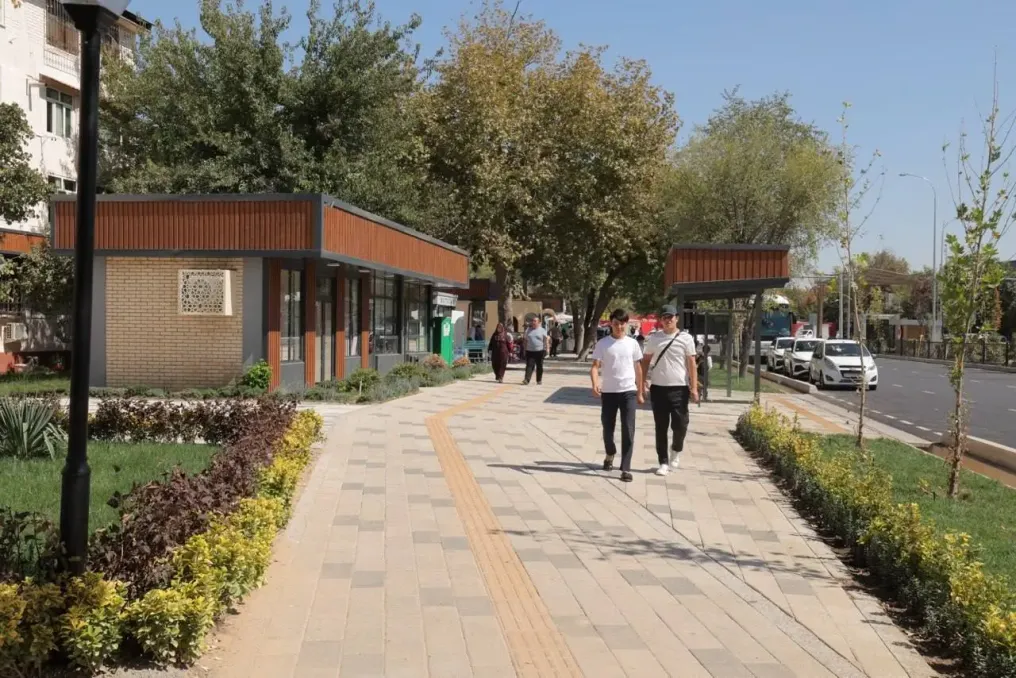
The 1.6-kilometer section of the street is being transformed into a modern area for tourists and gastronomic establishments. As part of the work, pedestrian paths, green zones, and an irrigation system were installed, along with 58 lampposts and 46 benches. Additionally, an extra 1.5 kilometers of concrete fencing was erected.

During the press tour, participants spoke with local residents and entrepreneurs to learn what amenities these changes have created. Specialists presented the completed project and announced further plans for the development of this area.

The city administration noted that the opportunity to personally see the transformations and hear the opinions of local residents became one of the most important parts of the press tour. After inspecting Gulsaroy Street, participants continued their journey to the next point on the route.

100 tourist and gastronomic streets are planned for Tashkent by 2030
Read more
podrobno.uz

100 tourist and gastronomic streets are planned for Tashkent by 2030

It is planned that by 2030, one hundred streets will be formed in Tashkent that will have a tourist, gastronomic, walking, and 24-hour character. These new streets will be distributed across all twelve districts of the capital.

Distribution of new streets by district

The largest number of such streets is planned for Chilanzar district—eleven facilities will appear there. Ten streets are provided for Mirzo-Ulubek, Sergelyi, Yunusabad, and Yangiha'ot districts. Eight streets are planned to be created in Mirabad, Almazar, Shaykhantakur, Yakkasaray, and Yashnabad districts.

In addition, six streets will open in Uchtepinsky district, and three in Bektemir district.

Project financing

175 billion soms have been allocated for the implementation of these projects in 2026, which will be taken from funds saved in the state budget. The total amount that will be directed towards the creation of these streets in stages until 2030 is one trillion soms.

Furthermore, plans were previously announced to extend Taras Shevchenko tourist street in Tashkent by almost 400 meters. This new section will be landscaped and supplemented with public areas intended for recreation, walking, and business.

Tashkent is the center with the largest number of foreign capital enterprises in Uzbekistan
Read more
uzdaily.uz

Tashkent is the center with the largest number of foreign capital enterprises in Uzbekistan

According to the National Statistical Committee, as of August 1, 2026, 20,973 enterprises and organizations with foreign capital are registered in Uzbekistan.

The largest number of such enterprises was recorded in Tashkent, where there were 13,114, significantly exceeding the figures of any other region in the country.

The second place in terms of the number of enterprises with foreign capital was held by the Tashkent region, which had 2,901. This is followed by the Samarkand region with 754 enterprises, the Fergana region with 659, and the Surkhandarya region with 630.

Other regions also have a significant presence: the Andijan region has 519 such enterprises, and the Bukhara region has 449. The Sirtdarya region attracted 341 enterprises, the Navoi region has 335, and the Namangan region has 331.

In addition, the Jizzakh region has 283 enterprises with foreign capital, and the Karakalpakstan Republic has 258. In the Khorezm region, there were 214, and in the Kashkadarya region, there were 185.

Thus, Tashkent maintains its status as the region with the highest concentration of organizations and enterprises with foreign capital. At the same time, the Tashkent region ranks second, while in most other regions, the indicator does not exceed 800.

Popular