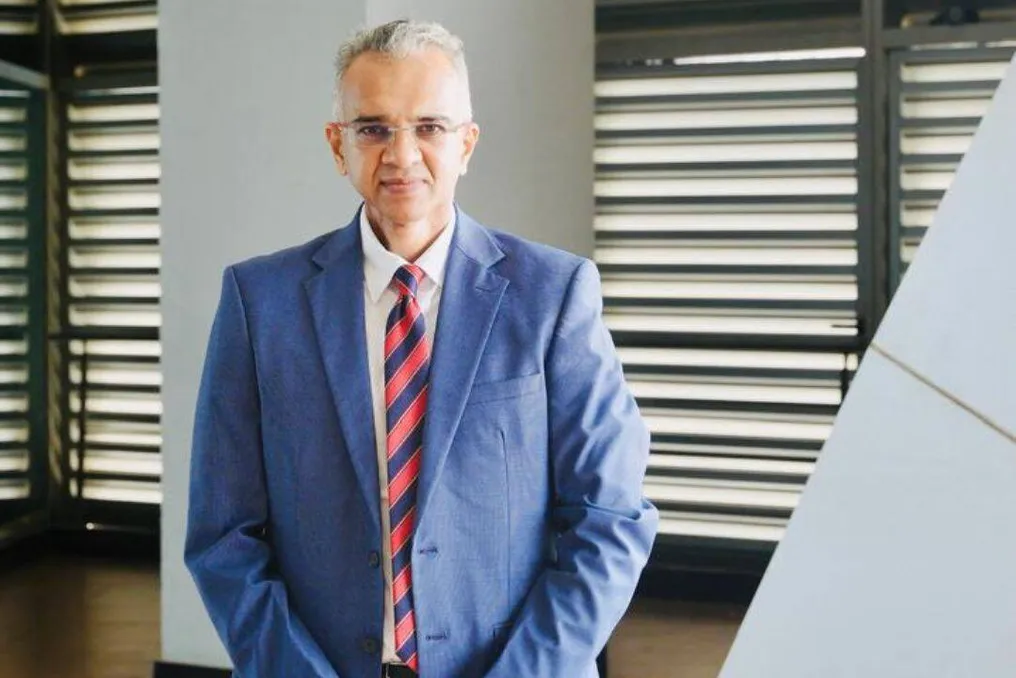
Although waiving fees for UPI sellers accelerated the system's adoption during the Covid pandemic, the growth rate has slowed. In an interview with TOI, Dilip Asbe, CEO and Managing Director, explained how the new commission structure protects small transactions while charging larger merchants who already pay card transaction fees. Furthermore, there are several exceptions designed to protect consumers and small traders.
NPCI forecasts collections of ₹13,000–₹15,000 crore in the first year, with 5% of this amount being allocated to support small traders. The model will be reviewed regularly.
When was the decision made to introduce MDR on UPI, and how was the decision made to set the threshold at ₹2000 and MDR at 0.4%? Will the scheme be periodically reviewed? Previously, P2M transactions were charged from the beginning, and the system followed a global model, keeping P2P free and P2M at reasonable costs, significantly lower than the established MDR for debit and credit cards, internet banking, or wallets. The government's decision for zero MDR in 2020 contributed to the rapid expansion of UPI among sellers during the Covid period.
Over the last four years, the UPI ecosystem—including NPCI, banks, fintech startups, and industry bodies like the Payments Council of India and IBA—has worked towards a review to ensure a self-sustaining system that can create long-term value for the country, citizens, and merchants. UPI growth has slowed, and India remains underpenetrated compared to China and Brazil, where nearly 90% of the adult population uses digital payments daily, whereas this figure is 40% in India.
Therefore, investments are necessary to expand digital payments, especially among low-income groups. The commissions were finalized primarily based on accounting for the costs incurred by various participants in processing UPI transactions. Instead of a fixed fee model, which would penalize low-value operations, a percentage system was chosen so that large margin transactions could constitute the majority of the MDR. Some categories with high bill amounts but low margins were kept with a fixed fee of ₹5 regardless of the bill size to continue stimulating adoption.
Looking at the rates, they are almost comparable to global rates for QR payments, which are charged similarly without exceptions, and these charges remain significantly lower than those levied on large merchants for debit or credit card transactions.
Is a collection of around ₹15,000 crore expected in the first year? The system may require time to stabilize. It is possible that revenue of ₹13,000–₹15,000 crore will be collected in the first year, of which 5% will be allocated to a small merchant fund to stimulate the growth of digital payments among small traders. Management plans to publish relevant guidelines soon.
What is the reason for levying fees when the government could easily cover expenses of ₹20,000 crore, as this is a negligible fraction of its budget, especially when it spends thousands of crores on unmerited subsidies? Why can't banks, NPCI, or RBI bear this burden? The idea is not to burden small players, as over 80% of MDR collections are expected to come from enterprises with turnover exceeding ₹1000 crore. Most of them already accept cards and pay a much higher MDR for cards under the current structure. There are competing demands on public funds, and this is the best way to make the ecosystem sustainable, fostering growth and innovation without dependence on subsidies.
NPCI is a non-profit organization; all profits are reinvested into creating infrastructure, settlement guarantee reserves, innovation, and sustainability. NPCI must not just survive but thrive for the next 100 years.
Banks continue to make significant investments in maintaining and scaling the UPI ecosystem, with the annual expenditure of most large banks often exceeding ₹2000 crore. Moreover, withdrawing ₹5000 in cash can often be replaced by 50–100 UPI transactions, highlighting the scale and efficiency of digital payments. While the shift from cash to digital payments undoubtedly brings savings through reduced costs of handling cash and ATM maintenance, banks also incur significant costs in creating and operating a reliable, secure, and scalable UPI payment infrastructure.
Over the last six years, the entire ecosystem has invested over ₹75,000 crore in maintaining and developing the UPI ecosystem without substantial cost recovery. These investments and innovations will benefit the country in the long run.
What is being done to prevent consumers from bearing the MDR burden? Is NPCI proposing a GST revision? Operating the UPI ecosystem requires about ₹21,000 crore annually, and management aimed to protect small traders and low-value payments to help small businesses attract capital and invest. The goal is also to increase the number of participants and enhance competition. Consequently, person-to-person transactions and seller payments up to ₹2000, without an upper limit on aggregate or repeated transactions, all regular payments or AutoPay, and small individual sellers receiving up to ₹1 lakh per month into their accounts, will not be subject to MDR. Since the majority of MDR will be generated by sellers who already accept card payments, the consumer price is already factored into the MDR charges; otherwise, we would see sellers offering large discounts on UPI and RuPay debit card transactions over the past six years. We have prohibited platform fees and charging sellers from customers. We plan to review this periodically along with the ecosystem. Regarding GST, I have no comments, as this decision will be taken by the Ministry of Finance and the GST Council. However, large merchants will be able to claim input tax credit on GST.
How do you propose using these funds for market development? Do you foresee banks and other service providers offering bonus points for UPI transactions, as happens with credit cards? The purpose of these charges is to ensure the prosperity and self-sufficiency of the ecosystem and its capacity for innovation and value creation, which in turn will boost UPI growth. Today, we observe that payment methods with good cost recovery have better innovations and features. For example, EMIs, rewards, and discounts help boost seller sales, especially in categories like electronics. Once cost recovery begins, the ecosystem will create a powerful incentive to attract new consumers and sellers, install more terminals, and increase activity in underserved geographical regions and categories through digitalization. In changing times and landscapes, this will also allow the ecosystem to proactively invest in cybersecurity and resilience.
Will there be control over sellers and consumers splitting transactions to avoid MDR above ₹2000? Any policy with a ceiling or floor has these secondary effects. If a consumer is willing to participate in transaction splitting at the seller's request, we do not see harm in it, and consequently, no upper limit is set for such transactions. We believe this may be, at best, a short-term phenomenon, and ultimately, the consumer experience will prevail. What we have seen globally and in India is that consumer choice primarily drives digital payments.
The new system caused confusion regarding several aspects of the scheme... Yes, but we are working with industry bodies and ecosystem participants to clarify. For instance, some people interpreted the limit of MDR below ₹2000 as a daily limit rather than a per-transaction limit, which is incorrect.
How do you respond to accusations that the decision was made under US pressure? USTR refers to the 30% market share limitation of UPI and NCMC's access to other competing international schemes, which is a fair and factual point, and we believe it should be the prerogative of the country to make such a decision. We found no references to charges or MDR, and as I mentioned above, it is beneficial for competing companies to keep it free.