A journey on a train carrying iron ore represents one of the most unusual routes in the world, traversing the Sahara Desert. Initially, the trip often begins with waiting at the railway line in the Sahara, where an observer sees the desert stretching in all directions, without platforms, cafes, or clear schedules—only sand, rocks, heat, and a line of steel receding into the distance.
Then, the iron ore train arrives. It differs from a regular consist because locomotives tow hundreds of freight wagons loaded with iron ore, creating a moving industrial giant that can stretch for several kilometers. For local residents, this is a means of transport and infrastructure, but for tourists, it is an exceptionally intimate way to experience the Sahara. As soon as the train starts moving, the landscape becomes part of the journey itself.
Mauritania's railway network was completed in 1963 to connect the iron ore mines in the Zouérat area with the Atlantic port of Nouadhibou. Today, this line, which spans over 700 km, crosses the Sahara and remains a key element of the country's mining industry.
Viewing such a massive train moving across such a vast and empty landscape evokes a sense of strangeness. For long stretches, almost nothing happens outside the window. The desert slowly transforms—from rocky plains to sand and distant ridges, while the tracks continue their path to the coast.
Small details begin to emerge: the color of the earth, changes in lighting, and the silence existing between the movement of the train. A feeling of remoteness from any familiar place grows.
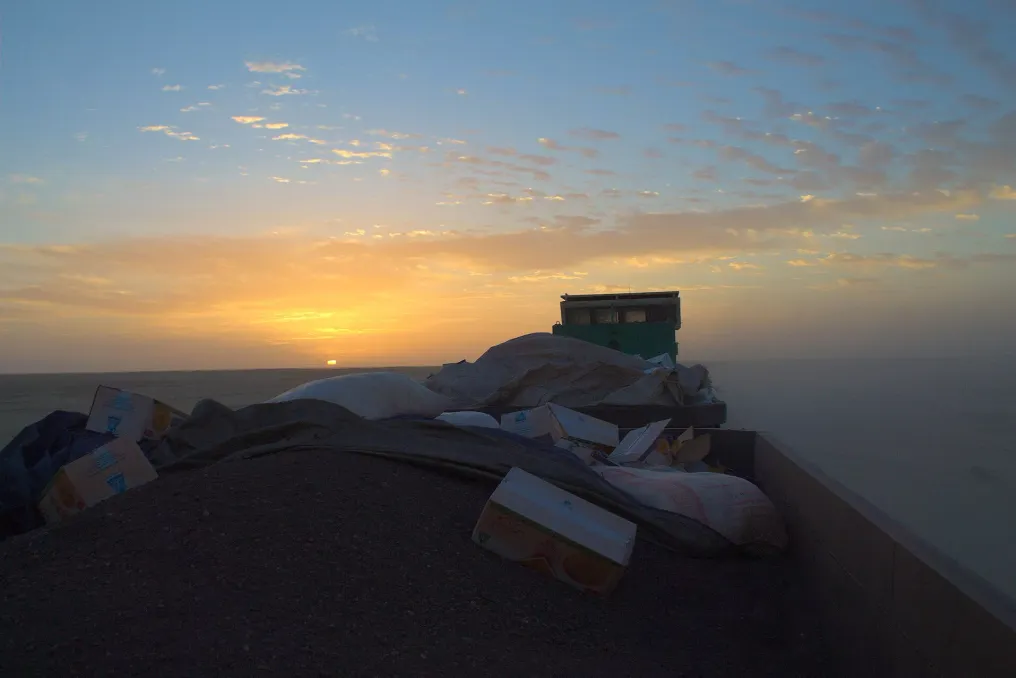
For years, the Train with Iron Ore gained fame among adventure enthusiasts for another reason. People climbed into the open ore wagons and crossed the Sahara, sitting directly on the iron ore. Images of travelers covered in black dust, protected from the elements and surrounded by the desert, helped turn this railway into one of Africa's most unique tourist experiences.
This experience felt wild because it was. The journey could be accompanied by intense heat during the day, cold after sunset, and dust clouds from the iron ore. It lacked the comforts of traditional rail travel; the experience was about enduring the environment, not just seeing it. However, this version of the journey is no longer what tourists should attempt.
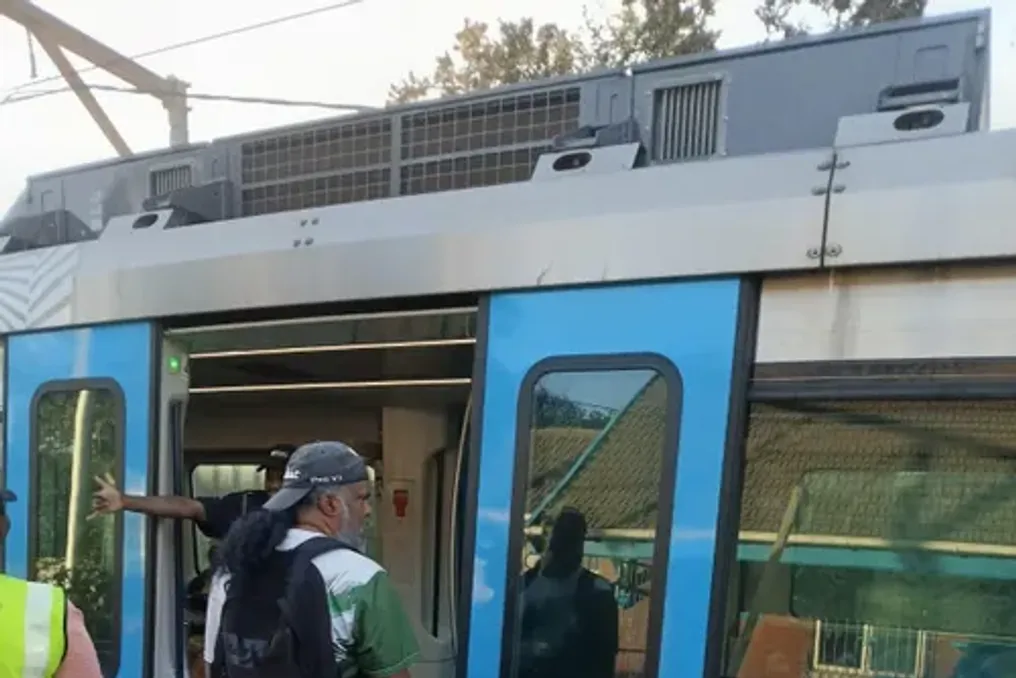
The railway is operated by the Société Nationale Industrielle et Minière (SNIM), Mauritania's state mining company, which manages the main iron ore extraction operations in the country. In December 2024, SNIM officially warned about health and safety risks, prohibiting travel in ore wagons or on the ore itself. Special passenger carriages are available instead.
This does not make the trip any less interesting. On the contrary, it allows one to see the train as it truly is: an operational railway passing through one of the world's most outstanding landscapes. The most fascinating part of the journey may be the people who share it. This railway was not built for tourism; it exists because Mauritania's mining industry needs to transport iron ore from inland areas to the coast.
In 2025, SNIM sold over 14.7 million tons of iron ore and continues to invest in expanding its rail operations. This changes the perception of being on board: you are not just passing through the Sahara as a spectator, but traveling along a route that is practically significant for the country and its communities. There is something fundamental about this. The desert may seem empty from afar, but the railway tells a different story—it serves as a link between remote mining areas and the sea. People move on it, goods move on it, and for over six decades, the railway has been part of daily life in this corner of Mauritania.
Eventually, the light fades. The daytime heat gives way to desert cold, and the external landscape becomes indistinct. Without city lights, the sky takes over. It is at this moment that the journey feels most detached from ordinary life. There is little to do except sit, watch, and listen. The rhythm of the train becomes almost hypnotic: metal against metal, wheels keeping pace with the rails. Outside, the Sahara disappears into darkness.
For the traveler, this slowness can be surprisingly pleasant. There is no route to follow, and no attraction demanding attention. There is only the sensation of moving through immense space. The romance of the Train with Iron Ore should not obscure the reality: it is a basic journey through a harsh environment, not a luxurious rail experience. Conditions can be uncomfortable, information can change, and arrangements should be confirmed on site, not based on old travel reports.
General safety conditions must also be considered. Current traveler warnings from the UK and the US point to risks in certain parts of Mauritania, with some regions under stricter restrictions. The journey also requires respect for the railway itself. Ore wagons are not a playground, and the most recognizable photos from old travel accounts should not be taken as instructions. The experience is thrilling, but not at the cost of unnecessary risk.
There are simpler ways to see the Sahara: organized desert tours, comfortable camps, and off-road excursions that can take you from one impressive landscape to another. The Train with Iron Ore offers something different—it forces you to slow down. There may be nothing to photograph or nowhere to stop for hours. You simply watch the desert pass by, sharing the train with people for whom this railway is not an adventure, but part of life. Perhaps that is what makes it memorable. The Train with Iron Ore is not beautiful in the conventional sense; it is noisy, dusty, industrial, and sometimes uncomfortable. But somewhere between the first glimpse of the locomotives and the last stretch disappearing into the desert, you begin to understand its appeal. The essence is not so much about riding an unusual train as it is about being transported across a vast landscape slowly enough to feel its scale. Across the Sahara, with views only of steel, sand, and sky around, the journey becomes the destination itself.