Iran to Showcase Tourism Potential at International Tourism Exhibition in Dushanbe in 2026
Read more
Tehran Times
www.tehrantimes.com

Iran to Showcase Tourism Potential at International Tourism Exhibition in Dushanbe in 2026

Iran intends to demonstrate its tourism potential at the International Tourism Exhibition in Dushanbe in 2026. The goal of participation is to expand cooperation between Iranian and Tajikistani tourism enterprises, as well as open new channels for attracting visitors from Tajikistan and the entire region.

Mehdi Babaei, General Director for Central Asia, Caucasus, and Russia at the Iranian Trade Promotion Organization, noted that the participation of Iranian companies in the exhibition provides an opportunity to promote the country's tourism opportunities and establish direct ties with Tajik tourism enterprises.

According to Babaei, companies from several Iranian provinces, including Fars, Khorasan Razavi, Tehran, and Hormozgan, will participate in the exhibition, presenting their tourism products and services. Delegations consisting of representatives of provincial authorities and the private sector from Khorasan Razavi, Isfahan, Fars, and Tehran will also attend the exhibition to participate in business meetings and negotiations with their Tajik counterparts.

Babaei emphasized that Iran and Tajikistan possess significant potential for cooperation in the field of tourism. He added that expanding tourism exchange can contribute to strengthening broader economic and trade relations between the two states.

In addition to cultural and historical tourism, he identified areas such as medical, pilgrimage, ecological, urban, and business tourism as having potential for bilateral interaction. The exhibition provides Iranian private sector with key opportunities to hold business meetings and establish direct contacts between travel agencies, tour operators, hotels, and other industry enterprises.

These contacts can help Iranian and Tajik companies develop joint tourism packages, increase tourism exchange, and form new business partnerships. Babaei stressed that the participation of Iranian provinces and private companies is aimed not just at being present at the exhibition, but at creating business ties and transforming Iran's tourism potential into practical and sustainable cooperation with Tajik partners.

The International Tourism Exhibition in Dushanbe 2026 (DITE 2026) will take place from September 24 to 26 at the Dushanbe Exhibition Center, where tourism companies and industry representatives from several countries will participate.

Similar stories

Iran's Ministry of Tourism focuses on domestic tourism, neighboring countries, and the implementation of artificial intelligence
Read more
www.tehrantimes.com

Iran's Ministry of Tourism focuses on domestic tourism, neighboring countries, and the implementation of artificial intelligence

Anushiravan Mohseni-Bandei, Deputy Minister of Tourism of Iran, stated on Tuesday that the country is concentrating on developing domestic tourism and travel to neighboring states as part of efforts to revive the tourism industry following military actions by US forces.

Speaking at a press conference for National Tourism Week, Mohseni-Bandei announced that the Ministry of Tourism has developed various scenarios for managing trips during periods of peace, conflict, and uncertainty. He emphasized that the industry remains vulnerable due to its impact on employment and foreign currency earnings.

Currently, the main focus is on domestic tourism, but in international tourism, priority is given to countries sharing a land border with Iran. The primary direction is Iraq, where nine areas of cooperation have been defined to boost tourism between the two neighboring states. Tourism offices have also been launched in Afghanistan and Pakistan, and participation in international exhibitions is used to stimulate external demand.

Mohseni-Bandei assured that the ministry will continue to support travel despite difficult conditions. He cited ministry data showing that approximately 23.8 million trips were made to Iran during the 12-day war and the subsequent 40-day war. Furthermore, only about 4% of travelers stayed in official hotels; the majority preferred to stay with relatives or in country houses.

The Deputy Minister also praised tourism enterprises, hotels, and medical centers for assisting people traveling to safer areas during the conflict. He noted that some hotels in Tehran and service providers in provinces, including Golestan, offered free services to travelers, which he called an important demonstration of social solidarity.

Additionally, the deputy minister highlighted the need to accelerate the digital transformation of tourism and the practical application of artificial intelligence. He mentioned that this year's UNWTO theme is 'Digital Agenda and Artificial Intelligence for Tourism Redesign,' adding that Iran must evaluate and apply this technology considering its own circumstances and cultural requirements.

Mohseni-Bandei stated that aspects such as destination choice, trip planning, marketing, booking, and the tourist experience itself require revision in light of technological changes. He clarified that Iran has already begun the process of increasing the intelligence of its tourism industry and will develop it according to national conditions, aiming to preserve cultural identity and improve the management of visitor and destination experiences.

Seyed Mostafa Fatemi, Director General for Domestic Tourism Development, reported that artificial intelligence is already being used daily to influence traveler decisions and determine tourist destinations. As part of National Tourism Week, over 650 tourism events named 'Mehr Jonub' (Southern Location) are planned across 31 provinces of Iran, with special attention to southern provinces.

Fatemi also noted that the ministry aims to diversify tourist destinations and stimulate demand through events, social media management, and discounts. While trips last year were concentrated in the northern provinces of Gilan, Mazandaran, and Ardabil, they are now spreading to provinces such as Khorasan Razavi, Semnan, Golestan, Zanjan, Qazvin, East and West Azerbaijan, Kurdistan, and Hamadan.

Meanwhile, Ahmad Tajari, another ministry employee, announced the planned opening of 246 tourism projects, which will increase the country's tourism capacity by 1,855 rooms. These projects include 16 hotels and aparthotels, 71 eco-lodges, 26 traditional restaurants, 16 tourism complexes, 71 tourism service offices, and 46 other tourism infrastructure facilities.

Among these projects are three five-star hotels in Isfahan, Rasht, and Mashhad, as well as one four-star, five three-star, and one two-star hotel. Tajari emphasized that the private sector remains active in developing tourism infrastructure, and state and parliamentary incentives have contributed to investment in the sector.

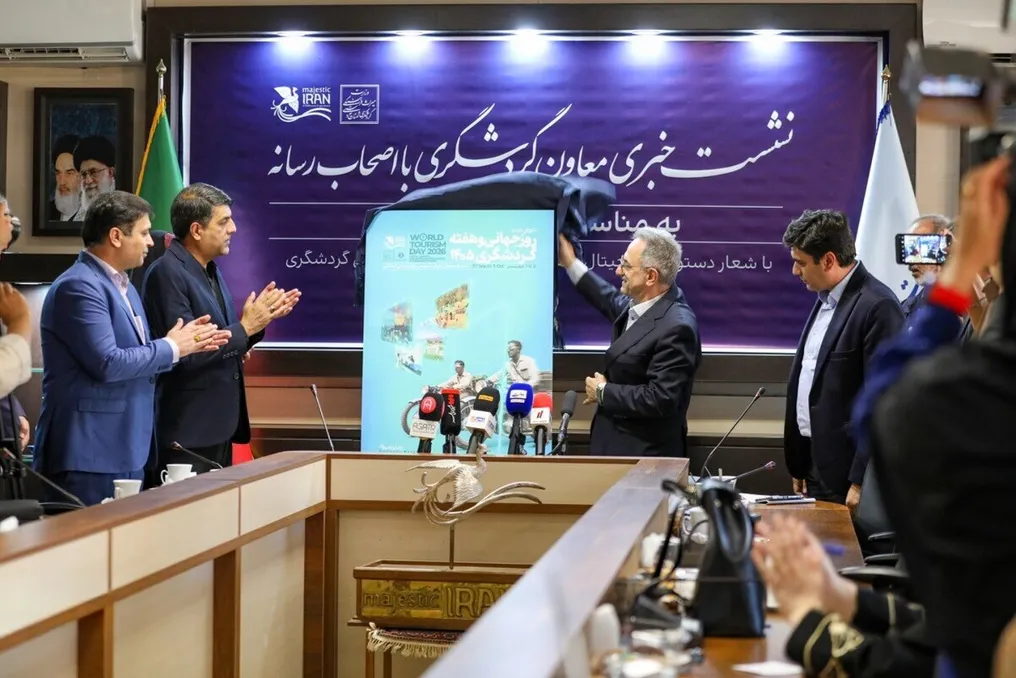
The press conference also featured a poster for World Tourism Day and Iran's National Tourism Week. The 'New Tourism Year' is named after Iranian researchers Issi and Abdolhossein Omidvar, known as the Omidvar Brothers.

Railway Tourism in Iran: Connecting Historical Cities, Landscapes, and Cultural Heritage
Read more
www.tehrantimes.com

Railway Tourism in Iran: Connecting Historical Cities, Landscapes, and Cultural Heritage

Railways have always played a significant role in connecting various regions of Iran, but today they can offer much more than just transportation services. Thanks to its rich cultural heritage, historical cities, and diverse natural landscapes, Iran possesses enormous potential for developing railway tourism. Traveling by train allows tourists to discover the country in a completely new way, making the journey itself an integral part of the experience.

Growing Potential of Railway Tourism in Iran

The development of the railway industry in Iran began in the 19th century when it was used for various purposes. Currently, this industry is striving to occupy a new niche in the field of tourism. Iran is a country with magnificent nature and scenery, and the railway network passes through these landscapes, crossing forests, rivers, mountains, and many other places. This goes beyond simple transit; it is a tourist experience in itself. Both locals and foreigners are aware of this, which contributes to the growth of railway tourism in Iran.

Why Explore Iran by Train?

As in many other countries, there are several modes of transport for exploring Iran, and trains are one of them, possessing several advantages. Firstly, Iran's railway network can take tourists through very different environments—from the untouched northern forests and mountains of Iran to the southern coast of the Persian Gulf, which cannot be fully explored by other means of transport. Secondly, rail travel is a more environmentally friendly mode of transport due to reduced energy consumption and less environmental pollution. Thirdly, among other modes of transport, trains can be a safer choice for travelers. The next factor is price: train tickets in Iran are cheaper than airfare. They cover the same distance at a lower cost, which is an attractive criterion for those wishing to see large areas of Iran. Finally, railway tourism can attract a large number of visitors to small towns and suburbs, providing economic benefits and creating jobs for the local population, especially in accommodation, restaurants, and crafts.

Historical Cities Connected by Iran's Railway Network

One of the factors that makes railway tourism an interesting choice is the connection between historical cities provided by Iran's railway network. There are four main railway corridors for the tourism industry. The first is the northwest corridor, which connects Tehran, Qazvin, Zanjan, and Tabriz. All four cities have played an important role in Iranian history and remain significant centers in modern Iran. The second corridor, perhaps known as the best route for railway tourism in Iran, connects Tehran, Kashan, Isfahan, Yazd, and Kermanshah. All these cities are major Persian heritage sites with rich histories from different eras of the country. Furthermore, this route includes many unique desert landscapes.

The third route passes through Tehran, Mashhad, and Neyshabur. This route is predominantly used for religious purposes; people wishing to visit the holy site of Imam Reza can use this railway. The 'Fadak' train is a famous luxury train that carries passengers on this route. Although this route is known for its religious focus, it can also be used to visit historical cities of Iran that were once connected to the Silk Road. Finally, the last route connects three cities: Tehran, Ahvaz, and Shush. This section has great potential to become an archaeological railway route of Iran. This part of Iran was home to early civilizations, and the region is now rich in archaeological monuments such as Susa, Choghang Zanbil, and Haft Tappeh.

From Deserts to Mountains: Landscapes Along the Way

As mentioned earlier, Iran's railway corridors connect different parts of the country. This network offers an amazing journey from northern Iran, where the Alborz mountain range and its forested slopes are located, to southern Iran with its pristine desert landscapes. Buying train tickets in Iran gives travelers the fantastic opportunity to experience such geographical diversity simultaneously.

Iran's Railway Heritage and Cultural Tourism

The significance of railways in Iran increases when we understand that they serve not only as a means of transport but also as a tool for cultural tourism. Buying train tickets in Iran provides travelers with two opportunities. Firstly, they get to see different types of landscapes during the journey. Secondly, they pass through cities with rich historical pasts. These historical cities allow tourists to visit archaeological sites, traditional villages, museums, cultural attractions, local and traditional markets, and ancient monuments. Through these places, people can discover ancient Persian culture, architecture, and beliefs. This process promotes the development of cultural tourism through Iran's railway heritage.

Planning a Railway Trip Across Iran

Planning a train trip across Iran is an excellent way to combine the most essential aspects of travel: transport, cultural tourism, and eco-tourism. This planning does not require much effort. First, travelers must decide which route they want to choose, which depends on their personal interests and preferences regarding the desired experience and places to visit. The second step is buying tickets. Train tickets in Iran can be purchased online on the Raja website, through travel agencies, and at authorized ticket offices at railway stations. Undoubtedly, this railway journey will be an unforgettable experience for tourists.

Train Tours and New Ways to Experience Iran

Unlike conventional tourism worldwide, railway tours in Iran do not force travelers to think only about the final destination; they turn the journey itself into part of the experience. In recent years, many trains, such as 'Fadak', provide passengers with first-class amenities during the trip, creating a sense of home comfort. Meanwhile, passengers can enjoy the various and wonderful landscapes of the country along the route. These changes have transformed the role of the railway industry in Iran and continuously contribute to the growth of railway tourism.

The Future of Railway Tourism in Iran

As mentioned, there is huge potential for railway tourism in Iran. This country boasts well-developed railway corridors, rich cultural heritage, and diverse landscapes, enough to change the future of this industry in Iran. In the future, train tickets in Iran will become not just a means of transport, but gateways to the depths of history and hidden natural wonders.

Discovering Iran Beyond the Destination

Railway tourism allows travelers to experience Iran beyond the endpoint. The journey itself is an opportunity to feel different landscapes, cultural heritage, and historical cities, and to interact with local people while traveling between destinations. It is a chance to appreciate the stories and hidden treasures that lie between them. Moreover, train travel is a slower experience. Instead of rushing from one place to another, travelers have time to observe and interact.

In conclusion, Iran's railway industry has all the factors for developing railway tourism in the country. Iran's historical cities, unique landscapes, and cultural heritage can turn a train ride into an unforgettable experience. By developing railway amenities and planning attractive tours, Iran can attract many domestic and international tourists.
Iran's Ministry of Tourism Instructs All 31 Provinces to Hold National Tourism Events
Read more
www.tehrantimes.com

Iran's Ministry of Tourism Instructs All 31 Provinces to Hold National Tourism Events

The Iranian Ministry of Tourism has called upon all 31 provinces of the country to organize national tourism exhibitions and events in the second half of the current Iranian calendar year. This measure is aimed at stimulating domestic tourism and supporting the industry amid ongoing difficulties, stated Minister Seyyed Reza Salehi-Amiri.

This statement was made on Saturday during a meeting attended by the Deputy Minister of Tourism, Anushirvan Mohseni-Bandepi, provincial directors, and other tourism officials from across the country.

Salehi-Amiri emphasized that tourism plays a significant role in strengthening the nation's vitality and remains an important part of Iranian households' lifestyle. He noted that 'Tourism Week represents a valuable opportunity to demonstrate Iran's strength and dynamism in the field of tourism,' urging all provinces to participate in hosting national events.

According to plans approved by the ministry, all provinces will hold specialized tourism exhibitions in the second half of the year. This initiative is intended to send a positive signal about the viability and development of Iran's tourism industry.

Furthermore, the minister announced that the government will support the sector and cooperate with economic institutions to strengthen the foundations of its growth. Deputy Minister Mohseni-Bandepi described tourism as a significant factor for development, foreign currency earnings, job creation, and the promotion of Iran's cultural and religious heritage.

He also mentioned that the ministry is working on developing a comprehensive tourism document as part of its supportive policy. Among the measures highlighted by the deputy minister were the introduction of a 'travel pass' and new payment platforms to simplify and enhance travel convenience for tourists.

In the area of international tourism, the ministry is focusing on three strategic directions: religious tourism, medical tourism, and 'integrated regional tourism.' Iran's tourism sector experienced a sharp decline following the start of the war on February 28, 2026, when the United States and the Israeli regime conducted joint military strikes on Iran. This conflict disrupted regional aviation, causing mass flight cancellations and airspace closures, which affected travel to and through West Asia.

Popular