Anushiravan Mohseni-Bandei, Deputy Minister of Tourism of Iran, stated on Tuesday that the country is concentrating on developing domestic tourism and travel to neighboring states as part of efforts to revive the tourism industry following military actions by US forces.
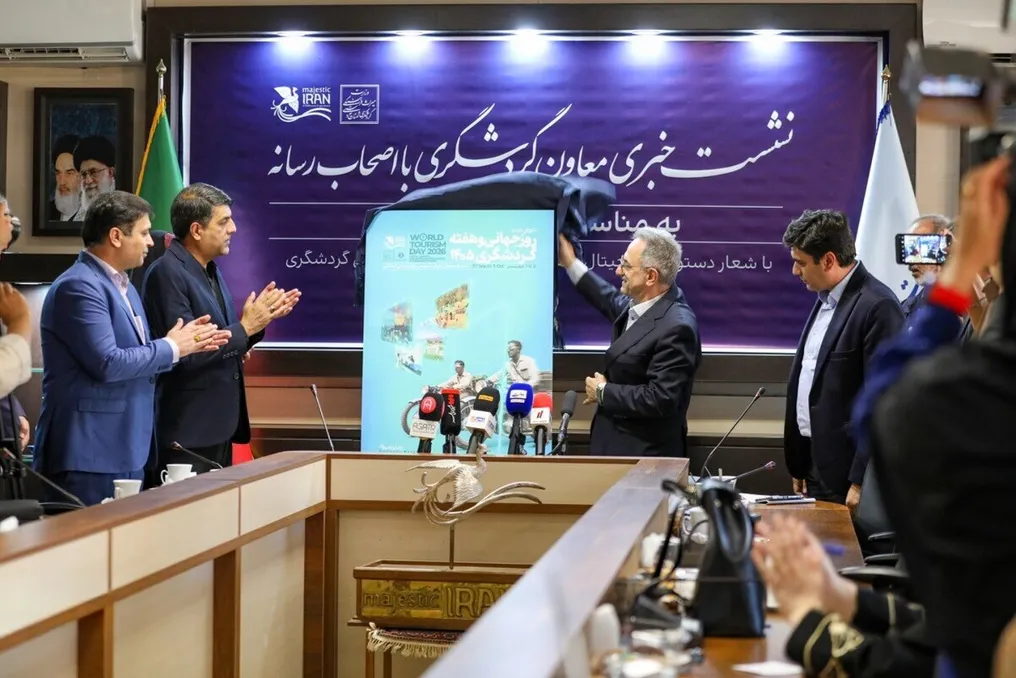
Speaking at a press conference for National Tourism Week, Mohseni-Bandei announced that the Ministry of Tourism has developed various scenarios for managing trips during periods of peace, conflict, and uncertainty. He emphasized that the industry remains vulnerable due to its impact on employment and foreign currency earnings.
Currently, the main focus is on domestic tourism, but in international tourism, priority is given to countries sharing a land border with Iran. The primary direction is Iraq, where nine areas of cooperation have been defined to boost tourism between the two neighboring states. Tourism offices have also been launched in Afghanistan and Pakistan, and participation in international exhibitions is used to stimulate external demand.
Mohseni-Bandei assured that the ministry will continue to support travel despite difficult conditions. He cited ministry data showing that approximately 23.8 million trips were made to Iran during the 12-day war and the subsequent 40-day war. Furthermore, only about 4% of travelers stayed in official hotels; the majority preferred to stay with relatives or in country houses.
The Deputy Minister also praised tourism enterprises, hotels, and medical centers for assisting people traveling to safer areas during the conflict. He noted that some hotels in Tehran and service providers in provinces, including Golestan, offered free services to travelers, which he called an important demonstration of social solidarity.
Additionally, the deputy minister highlighted the need to accelerate the digital transformation of tourism and the practical application of artificial intelligence. He mentioned that this year's UNWTO theme is 'Digital Agenda and Artificial Intelligence for Tourism Redesign,' adding that Iran must evaluate and apply this technology considering its own circumstances and cultural requirements.
Mohseni-Bandei stated that aspects such as destination choice, trip planning, marketing, booking, and the tourist experience itself require revision in light of technological changes. He clarified that Iran has already begun the process of increasing the intelligence of its tourism industry and will develop it according to national conditions, aiming to preserve cultural identity and improve the management of visitor and destination experiences.
Seyed Mostafa Fatemi, Director General for Domestic Tourism Development, reported that artificial intelligence is already being used daily to influence traveler decisions and determine tourist destinations. As part of National Tourism Week, over 650 tourism events named 'Mehr Jonub' (Southern Location) are planned across 31 provinces of Iran, with special attention to southern provinces.
Fatemi also noted that the ministry aims to diversify tourist destinations and stimulate demand through events, social media management, and discounts. While trips last year were concentrated in the northern provinces of Gilan, Mazandaran, and Ardabil, they are now spreading to provinces such as Khorasan Razavi, Semnan, Golestan, Zanjan, Qazvin, East and West Azerbaijan, Kurdistan, and Hamadan.
Meanwhile, Ahmad Tajari, another ministry employee, announced the planned opening of 246 tourism projects, which will increase the country's tourism capacity by 1,855 rooms. These projects include 16 hotels and aparthotels, 71 eco-lodges, 26 traditional restaurants, 16 tourism complexes, 71 tourism service offices, and 46 other tourism infrastructure facilities.
Among these projects are three five-star hotels in Isfahan, Rasht, and Mashhad, as well as one four-star, five three-star, and one two-star hotel. Tajari emphasized that the private sector remains active in developing tourism infrastructure, and state and parliamentary incentives have contributed to investment in the sector.
The press conference also featured a poster for World Tourism Day and Iran's National Tourism Week. The 'New Tourism Year' is named after Iranian researchers Issi and Abdolhossein Omidvar, known as the Omidvar Brothers.