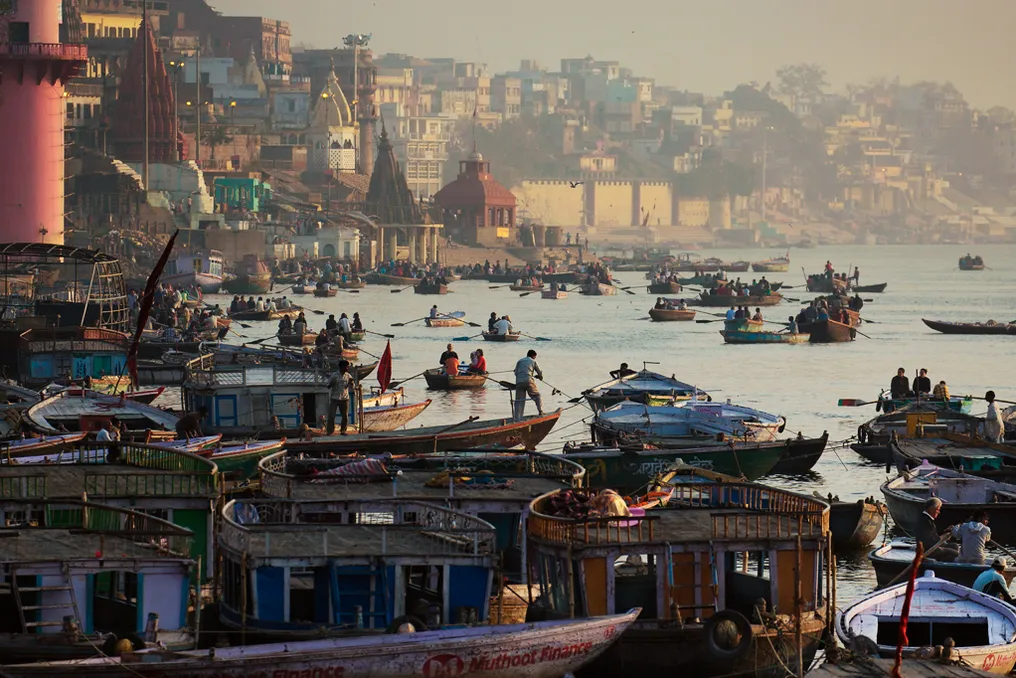
Varanasi: Indian City Considered Sacred in Hinduism, Located on the Banks of the Ganges River
Read more
Super Abril
super.abril.com.br

Varanasi: Indian City Considered Sacred in Hinduism, Located on the Banks of the Ganges River

The Ganges River, which flows through India and Bangladesh, is often perceived by Western observers as one of the most polluted rivers on the planet. In fact, nearly five billion liters of sewage are discharged into the river daily, much of it untreated, along with industrial effluents and waste from body cremations.

However, for the Hindu religion, the Ganges transcends the definition of a mere waterway. According to Hinduism, one of the world's oldest beliefs, the Ganges is personified as the deity Ma Ganga, the 'Mother Ganges.' It is said that she descended to Earth using the hair of the god Shiva with the purpose of purifying the ancestral souls of Bhagiratha, a Hindu sage and king. Thus, Ma Ganga formed the Ganges River, which possesses unique characteristics of healing and purification.

Bathing in the waters of the Ganges symbolizes the abandonment of negative energies and impurities. Dying in this river is equally auspicious, as it represents achieving moksha, or spiritual liberation. For this reason, followers of Hinduism have performed such rituals for centuries, attracting devotees from all over the world to come into contact with the water, which some individuals even consume.

Although the entire stretch of the Ganges River is considered sacred, there is a place of particular prominence: the city of Varanasi, located in India, on the left bank of the river, recognized as the holiest within Hinduism. Also known as Benares or Kashi, this city has a rich religious history, based on the Hindu belief that it was created by the god Shiva. Varanasi is one of the oldest continuously inhabited cities in the world and has served as a commercial center and capital at various points in its history.

Residents and pilgrims use the river for a wide range of activities, including personal hygiene, laundry, religious practices, and economic purposes, utilizing boats for tours. However, these activities are organized and segregated through dozens of ghats, which are steps providing access to the river, and each of these locations has a specific function.

The Manikarnika ghat is notorious for being the site designated for cremations. This location continuously burns bodies, 24 hours a day, seven days a week, for several decades, processing over a hundred bodies daily at that single point. The challenge arises with population growth in India, causing the practices carried out on the Ganges to exceed the river's physical capacity. Besides the more than one million residents of Varanasi, millions of visitors arrive at the site annually; in 2025, over 72 million tourists were recorded. Consequently, about 32 thousand bodies are deposited in the river annually, either as ashes or wrapped bodies.

Due to its extreme importance, the segment of the Ganges in Varanasi ranks among the most polluted, showing a bacterial concentration 150 times higher than what is considered safe for bathing. The environmental problem generates constant debate among the faithful and part of the Indian population. While some advocate for sanitation projects for the Ganges River, fulfilling long-standing political promises, other individuals have opted to suspend their religious practices in the river due to the water's health risks. Conversely, certain Hindus resist the idea of cleaning, maintaining their conviction in the inherent healing power of the water.
Similar stories

Priest spent ten years cleaning Jodhpur ponds after pollution during festivals
Read more
thebetterindia.com

Priest spent ten years cleaning Jodhpur ponds after pollution during festivals

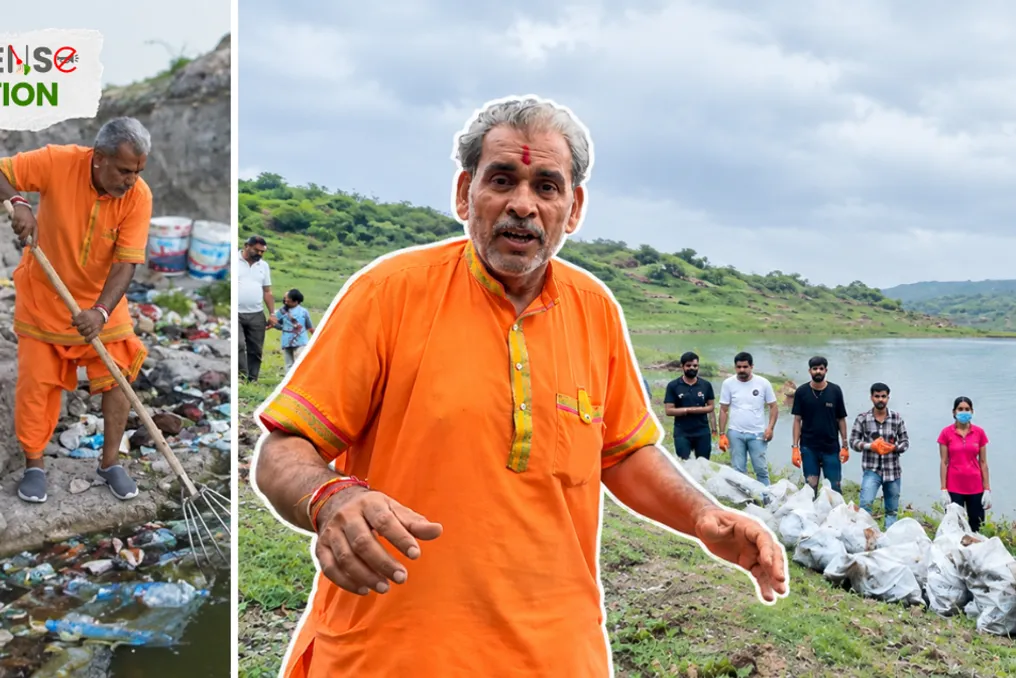
By 2016, the Guruo Ka Talab pond in Jodhpur had turned into a dump where flowers, idols, books, photographs, plastic, and other items were thrown away. Jivradh Shrimali observed this in the city, where the desert heat makes every drop of water precious, and decided to intervene.

What started with one pond ten years ago has turned into a decade-long campaign to restore five abandoned water bodies in Jodhpur. Shrimali began by studying how people dispose of these materials. He started talking to pond visitors about the need not to pollute the water and collaborated with the Jodhpur Municipal Corporation on cleanup drives. Separate containers were installed for collecting flowers, fabric, and plastic instead of throwing them into the pond.

He also installed CCTV cameras around the pond and, noticing people dumping trash, asked them to clean it up. The goal was to make responsible waste disposal part of maintaining the pond's cleanliness. Biodegradable materials, such as flowers, could be processed separately, while fabric and other items were sent for reuse or recycling; for example, old fabric was converted into small bags.

However, changing disposal habits was only part of protecting the pond. Preventing re-pollution also required civic and legal intervention. In 2018, Shrimali and other residents filed a public interest lawsuit in the High Court of Rajasthan, demanding the protection of the pond. The petition specifically raised issues regarding the bathing and dumping of glitter, clothes, coconut shells, bamboo, plastic, and gypsum into the pond. Restrictions on bathing with soap and washing clothes there were also demanded.

In May 2019, the court dismissed the case after the Jodhpur Municipal Corporation reported that it had cleaned the pond and taken measures to prevent idol bathing.

How one pond turned into a decade-long campaign

For Shrimali, every cleanup operation had to prevent the return of the same waste. Over approximately 10 years, this approach expanded to five abandoned ponds in Jodhpur, combining cleanup efforts with waste sorting, recycling, awareness raising, and measures to prevent new pollution.

According to published data, more than five tons of waste were removed from the five ponds, and reportedly, over 350 trees were planted around them. These figures have not undergone independent auditing, so they should be considered stated general indicators rather than verified measurements. Separate reservoirs were created near the water bodies for idol bathing so that the material would not go directly into the ponds. This allowed the work to focus on preventing new pollution parallel to periodic cleanups.

Shrimali also continues to fight other sources of pollution around the pond. In 2023, he filed another public interest petition regarding illegally constructed absorption wells on the pond premises and a street drain leading into the water body.

Turning clean ponds into a common habit

Shrimali's work focused on a practical idea: the pond's cleanliness depends on changing the habits around it. In August 2026, Shrimali received the Vir Durghadas Rator award in recognition of his environmental protection work and efforts to clean natural water sources.

He also collaborated with the Jodhpur Municipal Corporation's initiatives for cleanliness and environmental education. His decade of experience shows the practical challenge of restoring water bodies: machines can remove trash, but for it not to return, people need to change their behavior near the water. Across the country, civic participation in water conservation has shown that revival often depends on sustainable community involvement.

The same principle has shaped several community efforts to restore lakes and grassroots water conservation in other parts of India, where residents took responsibility for water sources long after the initial cleanup. For Shrimali, this responsibility begins with how discarded materials are handled after use. Flowers, fabric, and other materials do not necessarily have to become pond waste or end up in the same water that people hope will sustain them. After ten years, five ponds, and many conversations, his work returns to the same civic choice: once a water body is cleaned, its protection depends on what people do next.

Thanks to the 'Water Supply to Every Home' scheme, permanent water access has appeared in the village of Mirjapur
Read more
www.aajtak.in

Thanks to the 'Water Supply to Every Home' scheme, permanent water access has appeared in the village of Mirjapur

The village of Lahuriadah, located on hills in the Drammandganj area, Mirjapur district in Uttar Pradesh state, long suffered from a severe shortage of water. The residents of this village struggled for water even after gaining independence.

The total population of this mountain village is about 1500 people, and it has 100 houses. Previously, residents collected water from a spring near the mountain and had to queue; a family would only receive the right to water after three days.

During periods of intense heat, the water problem worsened, and the district administration organized water delivery by tankers. In this case, each person was given 15 liters of water for three days. To obtain water, local residents traveled five kilometers to springs under the mountains in Bhaisod Balai and Hanuman in Madhya Pradesh state. Due to water supply problems, weddings among the village youth ceased.

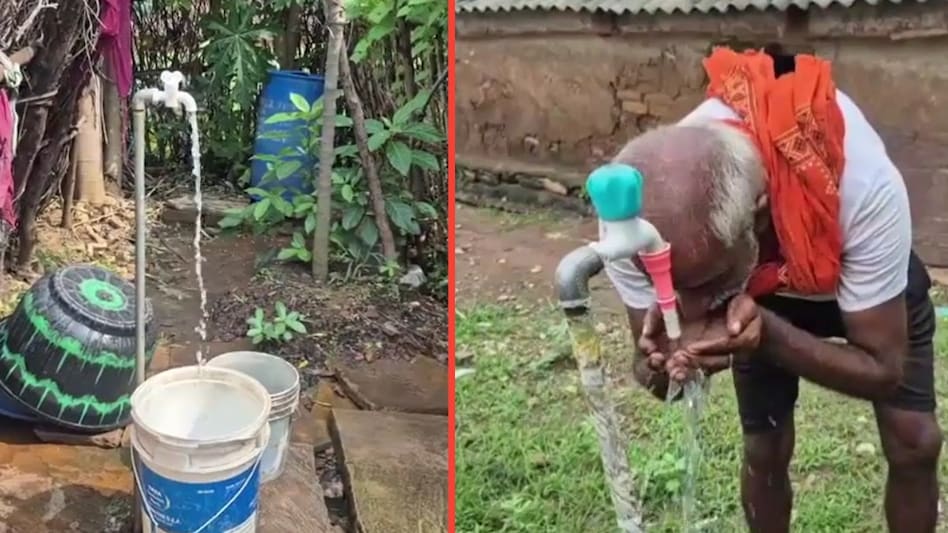
However, the situation has drastically changed thanks to the 'Water Supply to Every Home' program, implemented as part of the state's Water Security Mission. On August 31, 2023, water first reached the village from taps.

From that moment on, every house gained free access to water. Almost every house has a tap that supplies water in the morning and evening. Now, the villagers no longer have to fight for water in the forests and mountains.

Villagers note that there are no water problems today. They say: 'Open the tap, and the water will flow. Our ancestors fought hard for this water, but the government provided it to us. Water appeared during Yogi's rule.'

Sughari Devi, a resident of the village, recalls that they used to sleep near the mountain spring, and queues formed there day and night. She says: 'But today it is Yogi's gift; just open the tap, and the water flows.'

Chhama Devi, another resident, shares that when she got married and came here, she faced the problem of water scarcity. She had to walk far from the village to the mountain spring to cook food. Now, with a tap connected to the house, she has freedom, and water comes directly to her home.

Popular