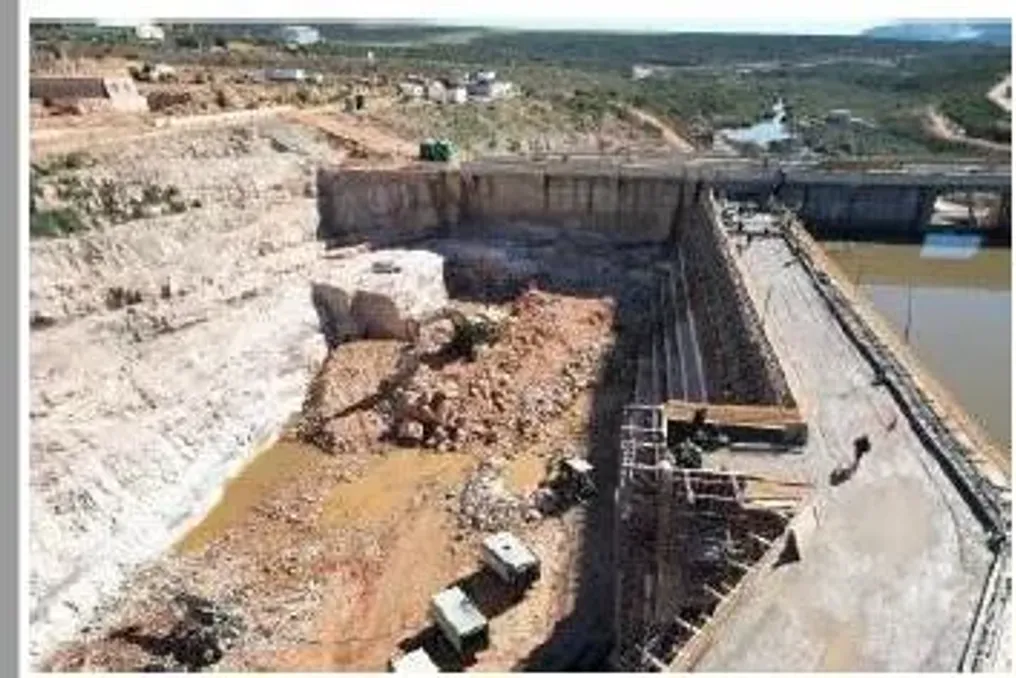
The Department of Water Resources and Sanitation (DWS) presented a report on six large-scale national water resource projects, highlighting existing challenges related to delays, procurement processes, and insufficient funding. These projects are intended to support agricultural development and meet domestic and industrial water needs.
During a session of the National Assembly this Tuesday, DWS provided the Portfolio Committee on Water Resources and Sanitation with an update on strategic infrastructure projects. The department detailed the progress, initial and current budget estimates, reasons for setbacks, revised completion timelines, and financial gaps.
Work Disruptions
The Director-General of DWS, Dr. Sean Phillips, noted that projects are often disrupted by actions from community groups. To mitigate this risk, DWS consults with local communities and, where necessary, traditional leaders, informing them about project goals, expected benefits, and employment opportunities.
Regarding interference from local business forums, Phillips stated that DWS requires main contractors to subcontract part of the work to local suppliers and contractors. He added that the department engages with these forums by providing information on participation opportunities and access procedures, and also organizes training for local contractors and suppliers on submitting bids to main contractors.
Phillips also mentioned that in cases of non-performance or difficulties from local suppliers and contractors, DWS and the main contractors resolve these issues, for example, through cession agreements. He emphasized that while landowners whose land is affected may challenge expropriations, the department interacts with them in a timely manner both before and during the project implementation as standard practice.
Dr. Phillips also pointed out deficiencies in the department's construction unit performance, which are largely linked to procurement issues. Work is currently underway to implement a series of three-year framework contracts, which will allow for faster and more efficient material acquisition. Furthermore, he addressed weaknesses in project management by the implementing agent, noting that the department requires information on its implementation capacity before appointing an agent.
Polikhali Dam Project
The construction of the Polikhali dam is part of the Lesotho Highlands Water Project, which will provide additional water supply to the Vaal River Integrated System and supply water to municipalities in Gauteng.
Lesotho Highlands Water Project
DWS reported that the Lesotho Highlands Water Project is being executed by an international contractor appointed by the Lesotho Highlands Development Authority (LHDA). This project will increase the volume of water in the Vaal River Integrated System by 490 million cubic meters annually, allowing Rand Water to draw more water from the Vaal Dam and supply water to municipalities in Gauteng. The project started in November 2018 and is forecast to be completed by December 2029. Currently, construction has reached 56.8%, but there are delays in the Polikhali dam construction due to weather conditions, technical complexity, permits for operation and extraction, and low contractor productivity. Delays in constructing the tunnel from the Polikhali dam to the Katse dam are related to complex geology.
Klanville Dam Project
Raising the level of the Klanville Dam in the Western Cape will increase agricultural production in the region, including new allocations for smallholder farmers, and will supply water to municipalities for domestic and industrial use. DWS stated that the project began in 2014, with completion expected by May 2028; construction is currently 47% complete. Dr. Phillips noted that the project was postponed for a long time due to indecision within DWS, but the situation was resolved, and the project returned to schedule in 2021, although progress on developing the right and left banks remains slow.
Tzane Dam Project
The raising of the Tzane Dam level is 66% complete. DWS indicated that the critical area for advancement is the construction of the labyrinth spillway, which is complicated by frequent flooding. The project started in February 2016 and is planned for completion by December 2026. Phillips attributed the delays to abnormally heavy rainfall causing the dam to overflow and a temporary suspension of spillway works, as well as procurement issues, including a delay in appointing a tower crane service provider.
Mzimvubu Water Supply Project
The Mzimvubu Water Supply Project—the Ntabelanga dam project and associated works in the Eastern Cape—is 15% complete. Work commenced in February 2015, with completion scheduled for March 2030. Upon completion, DWS stated that the project will have a storage capacity of 490 million cubic meters and an annual yield of 241 million cubic meters. Phillips explained the delays as a lack of suitable construction materials due to low supplier efficiency, as well as work disruptions by the business forum and community, which led to site closure. The latest community intervention resulted in a four-month site shutdown.
The Mokolo and Crocodile River (West) Phase 2A project in Limpopo involves the abstraction and pumping of 75 million cubic meters of water annually from the Crocodile River (West) system into the Lefalale area to supply municipalities and large enterprises, including Eskom and the mining industry. The project started in 2019, with a completion deadline set for January 2030. Phillips reported that delays were caused by water users' appeals in the Crocodile River (West) system regarding environmental permits, which were subsequently rejected. The COVID-19 pandemic also negatively impacted project phases, and delays occurred in securing commercial financing.
The Olifants River Management Programme aims to supply water to mines and 390,000 people in the community. The project, which began in October 2022, is 14% complete.
Water Crises
Vusiwane Reddy, a Member of Parliament from the uMkhonto weSizwe MKP party, spoke of a severe water crisis in the country, where communities go weeks and months without tap water. Reddy expressed concern over some project timelines, which he said began ten years ago. He questioned whether normalizing failures would result in people seeing billions in expenditure while remaining unemployed and local businesses receiving no benefit. Reddy demanded clarification on how much money reaches businesses in the communities where projects are being built and who will be held responsible for the delays.
Professional Engineers Hired
Deputy Minister of Water Resources and Sanitation David Makhubo stated that the department is demonstrating transparency regarding its projects. Makhubo, who joined DWS in 2021, noted that the projects were initiated by the previous administration before his arrival. He expressed satisfaction with the current work of various DWS structures. Makhubo added that DWS has hired professional management engineers to improve the department's situation. He stated that when they arrived, the department was bankrupt, had billions in debt, and could not do much. They developed a transformation plan and understand Reddy's frustration. During their tenure, it was decided to revitalize these projects. After a planning cycle, he concluded that if people are going to judge them, let them judge based on the progress achieved.