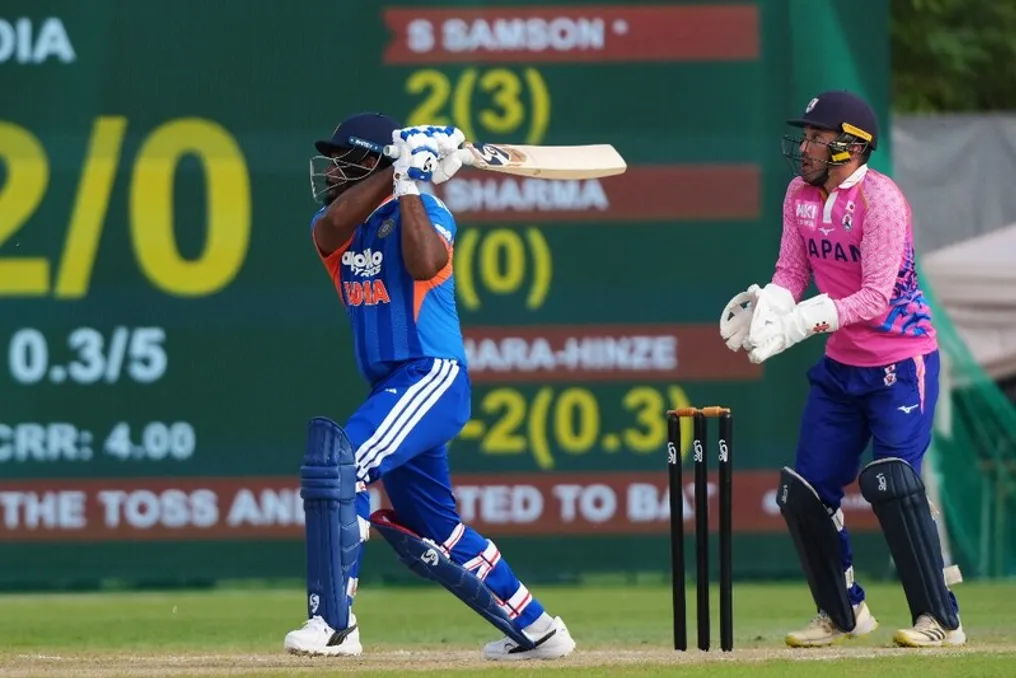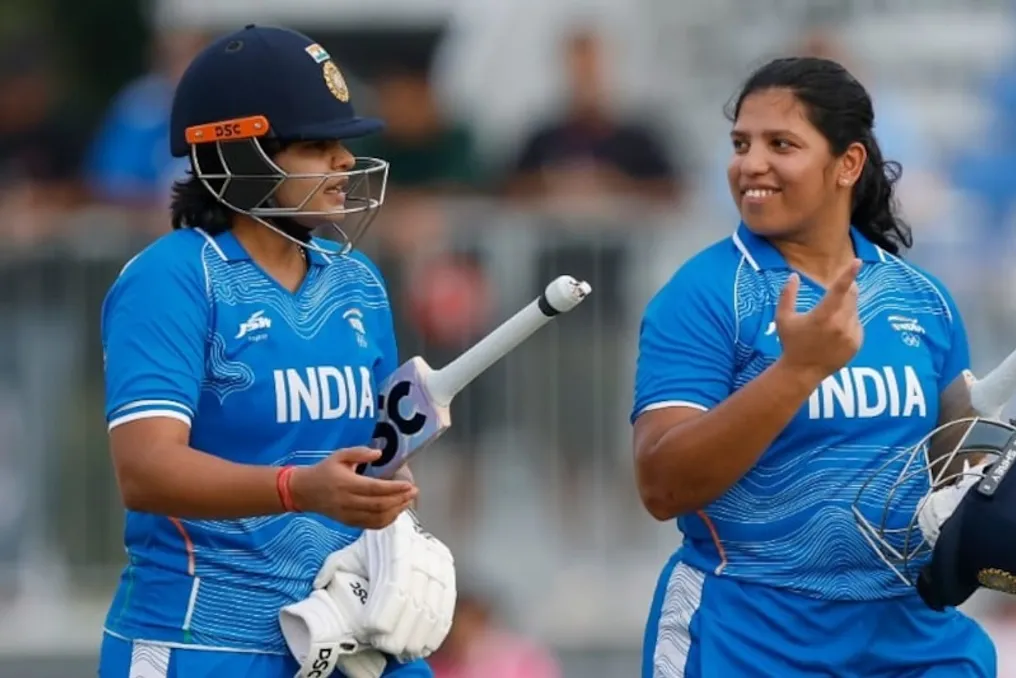
The T20I friendly match between India and Japan, held on Tuesday, featured a combination of intense action, disputes, and incidents. Despite the influence of rain, which interrupted play, India secured a narrow victory over Japan by a margin of two runs. However, the decision to overturn the wide in the final over raised serious questions regarding the officiating.
The match took place on September 22nd. Japan needed to score 8 runs in the last over to win. Akshar Patel was bowling. On the third ball of the over, he bowled it towards the left side of Alexander Shiraishi-Patmore. The batter attempted a reverse swing shot but missed.
The local umpire, Chris Thorpe, initially called this delivery a wide. India's captain, Shreyas Iyer, was dissatisfied with this decision and discussed the situation with the state umpire, Chris Brown. After discussion, both umpires changed their initial decision, declaring the ball dead, and returned an extra run that had been awarded to Japan. This decision proved critically important for the match outcome, as the Japanese team ultimately fell short of the target by only two runs.
Due to rain and humidity on the field, the match was shortened to five overs. The moisture on the pitch contributed to more spin on the ball, which the Japanese spinners exploited. They managed to restrict India's strong attacking line to just 32 runs in 4 overs. In his innings, India scored only three fours. Key players for Japan were left-arm spinner Charlie Hara Hinge, who took 2/17, and off-spinner Ibrahim Takahashi, who gathered 1/13.
Abhishek Sharma failed to score runs; when attempting a slog sweep against Hara-Hinge, he missed. Takahashi guided Sanju Samson to the flight, and he was caught at mid-wicket, scoring 10 runs. Next, Benjamin Ito-Davis dismissed Ishan Kishan for 3 runs. Ishan tried to play against the consistent spin but was caught at mid-off.
Shreyas Iyer scored 16 runs and hit one four, but playing cross-line shots on a wet pitch was difficult. With a small target of 32 runs, Japan made the task very difficult for India. In the third over, Ravi Bishnoi conceded 10 runs, and Sundar Washington gave up 7 runs in the penultimate over. Sundar performed with figures of 2/13.
After this, Japan needed 8 runs in the final over. Akshar Patel used his experience to effectively counter Shiraishi-Patmore and Benjamin Ito-Davis, preventing them from playing a frank shot. Since the outfield slowed down due to the rain, India gained an advantage. Ultimately, the Japanese team could not reach the target, falling short by only 2 runs, and India won a very tense match.