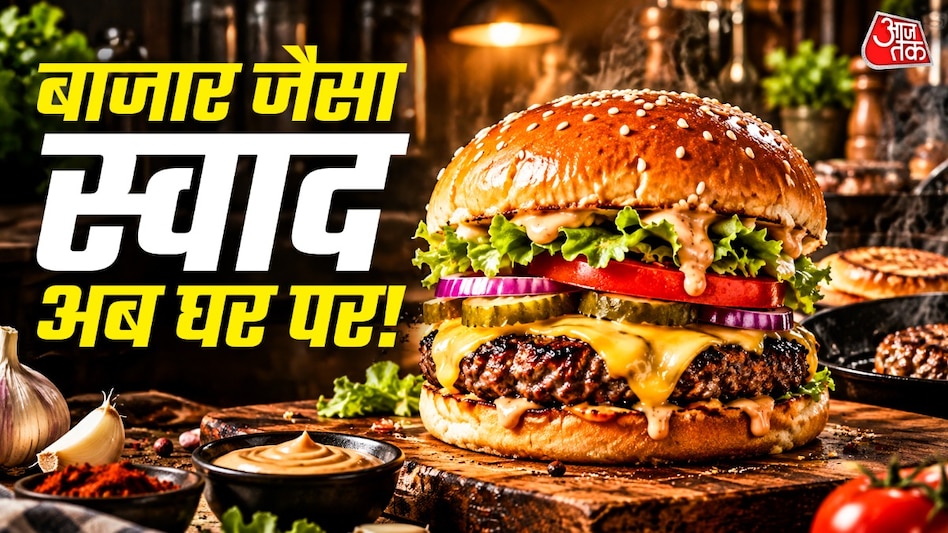
Making slash burgers at home turns out to be a surprisingly simple process, especially when comparing their cost to buying them in restaurants, particularly when you need to feed a family. Turning this burger into a homemade version is not difficult; the secret lies not in complex seasoning or a long list of ingredients, but in the mince itself, a very hot cooking surface, and the ability to lay down a thin patty on the pan without overworking it.
If you are trying to recreate this burger with crispy edges at home, you should pay attention to several key points.
What kind of mince should be used for a slash burger?
Fat is your ally when making a slash burger. Mince with a fat content of about 25% is ideal, giving a meat-to-fat ratio of approximately 75/25, if you can purchase it from a butcher. Mince with an 80/20 ratio will also work well, as it is often easier to find. Additional fat helps keep the thin patty juicy and also contributes to the formation of a brown crust that distinguishes the slash burger from a regular burger.
Do not choose lean mince just because it seems like a healthier option. Very lean mince can result in a dry burger, especially when cooked very thinly over high heat.
Don't turn the mince into a regular patty
This is one of the most common mistakes. For a slash burger, you should divide the mince into loose balls instead of tightly compacting it into patties. Balls weighing between 85g and 115g work well, depending on whether you want one burger or plan to stack two thin ones.
Handle the mince as little as possible. Gently form it with your hands and stop as soon as it starts to hold its shape. It is important that the meat spreads easily when placed on a hot pan. Excessive compaction negates the 'slash' technique itself.
How hot should the pan be?
Very hot. A heavy cast iron skillet, a flat grill plate, or a solid kitchen surface is best. You must give it enough time to heat up before placing the mince in it. The guide for this technique recommends using a surface with a temperature of around 230°C or higher, with temperatures in the range of 245°C – 275°C often applied to achieve a particularly strong sear.
At home, you do not need to obsess over the exact reading if you do not have an infrared thermometer. The main thing is to ensure that the pan is properly heated before starting to cook. This is also a good time to turn on the extractor hood, as slash burgers can emit quite a bit of smoke due to the high cooking temperature.
Is oil needed for a slash burger?
Generally, no. If you use appropriately fatty mince and a well-heated heavy pan, you can place the beef directly onto the surface. The fat will render during the burger's cooking. Adding a layer of oil can reduce the likelihood of the meat sticking to the pan, which is undesirable when trying to achieve a deeply browned crust.
If your pan tends to stick, you can use a very thin layer of neutral vegetable oil, but do not flood the pan with it.
How to properly flatten the burger?
Place the loose ball of beef on the hot surface and immediately press it with a sturdy, flat metal spatula or burger press. A small square of parchment paper between the meat and the spatula can make the process easier if the mince sticks. Flatten the beef as thinly as possible while avoiding overworking it. The edges should be thin and uneven, not perfectly round. These uneven edges are part of what gives the slash burger its characteristic crispy texture. After flattening, leave it alone. Now is not the time to constantly move the burger around the pan or press on it again.
When should the slash burger be flipped?
Wait until the bottom side has developed a deep brown crust and the edges are crispy. Depending on the pan temperature and patty thickness, this may take about two minutes. When flipping, use a sturdy spatula and scrape the entire patty from underneath. Do not just lift it from one edge. This scraping motion helps keep the crust on the burger rather than leaving it stuck to the pan. Add the cheese immediately after flipping so that it has time to melt while the second side cooks.
What cheese is best for a slash burger?
American cheese is traditionally associated with the classic slash burger because it melts quickly and creates a smooth, creamy layer over the thin beef patty. For shopping in South African supermarkets, you can use burger cheese slices as a simple substitute if American cheese is unavailable. Cheddar will also work if you prefer a richer cheese flavor, although the result will be different. For a double slash burger, place a slice of cheese on each patty before stacking them on top of each other.
Which buns are best for slash burgers?
Do not choose overly crunchy or dense buns. Since the burger is thin and crispy, you need a soft bun that will not conflict with it. Good options include: soft white hamburger buns, potato buns, brioche, and soft sesame seed buns. Brioche gives the burger a slightly richer, sweeter taste, while a soft white hamburger bun maintains the resemblance to a classic diner burger. Regardless of the bun you choose, lightly toast the cut sides before assembling the burger. A little oil can help with browning, but do not turn the bun into toast.
What toppings are served with a slash burger?
You can stick to a simple version or create your own variation. For a classic burger, try sliced or finely chopped onion, pickled cucumbers, shredded lettuce, tomato, mustard, tomato sauce, and mayonnaise. Caramelized onions are another good option, and crispy bacon, jalapeños, or a fried egg can make it a more substantial burger. A simple burger sauce made from mayonnaise, tomato sauce, mustard, and finely chopped pickles is also a light addition. It is important not to overload the burger. Too many wet toppings can ruin the crispy meat and make the bun soggy. You can keep the toppings simple.