
Functions of the Agency for Knowledge and Skills Assessment Approved in Uzbekistan
Read more
Podrobno.uz [uz]
podrobno.uz

Functions of the Agency for Knowledge and Skills Assessment Approved in Uzbekistan

The rules for the functioning of the Agency for Knowledge and Skills Assessment have been officially approved in Uzbekistan. According to the new regulations, this agency will oversee the conduct of exams, the issuance of national certificates, and the process of recognizing foreign diplomas.

The main tasks of the Agency include organizing various competitions and entrance examinations, as well as qualification tests. Corresponding national certificates will be issued based on the results of these tests. Agency specialists will also be responsible for developing assessment methodologies and criteria, as well as updating the database of test questions.

Special attention is paid to verifying knowledge of the state language among individuals applying for managerial or responsible positions. Furthermore, the Agency is authorized to accept educational documents obtained outside the country and to issue apostilles on diplomas and certificates.

The list of duties also includes conducting customized exams and strengthening ties with international structures. It was previously announced that the Agency will organize exams for primary school teachers, who, after receiving a national certificate, can expect a monthly salary increase.

Similar stories

Master's programs in Uzbekistan will be divided into practical and scientific-pedagogical tracks
Read more
podrobno.uz

Master's programs in Uzbekistan will be divided into practical and scientific-pedagogical tracks

Starting from the current academic year, the master's program in Uzbekistan is being divided into two separate tracks: practical and scientific-pedagogical. This new procedure is established by Government Decree No. 500.

The duration of study depends on the chosen track: the program focused on production or practice will take at least one year, while the scientific-pedagogical program will require at least two years of study.

Students can complete their master's degree in various formats—full-time, part-time, or distance learning—depending on the requirements of the specific specialty. Graduates of the practical track are exempt from writing a dissertation; instead, they may submit a design or engineering project, a startup, an innovation idea, a practical creative work, or another type of final product.

For those who choose the scientific-pedagogical track, the requirement to defend a master's dissertation remains. Before defense, the work will undergo plagiarism checks and be subjected to 'blind expert peer review.' Additionally, students whose articles have been published in scientific journals will receive incentives.

Some educational institutions are excluded from these new rules. These include the Academy of Justice, the Academy of State Policy and Management, the Banking and Finance Academy, the Higher School of Business and Entrepreneurship under the Cabinet of Ministers, Tashkent State Law University, as well as all higher military and paramilitary educational institutions.

Qualification categories for guides and tour guides are being introduced in Uzbekistan
Read more
podrobno.uz

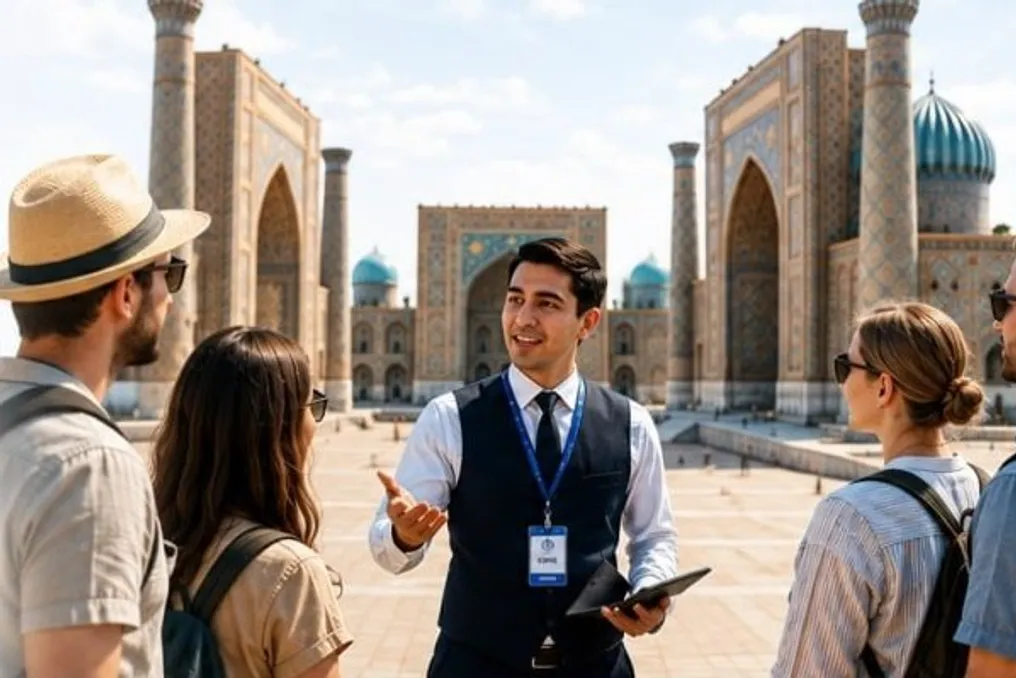
Qualification categories for guides and tour guides are being introduced in Uzbekistan

Starting December 1st, guides and tour guides in Uzbekistan will have the option to voluntarily obtain qualification categories. These categories will be assigned after successfully passing a professional exam that assesses knowledge, practical skills, and the ability to interact with tourists.

The implementation procedure of this system is stipulated by a Cabinet of Ministers resolution. The Scientific Research Institute for Tourism Development under the Committee on Tourism is responsible for assigning the categories.

It is important to note that obtaining a category is voluntary. The absence of this category does not deprive a guide of the right to practice their profession, provided they possess a valid qualification certificate previously obtained in accordance with established rules. This certificate is valid indefinitely.

The specialist level is determined by the results of the exam, which takes into account aspects such as professional knowledge, practical abilities, skills in organizing and conducting excursions, awareness of tourist sites, manner of communication with visitors, knowledge of foreign languages, and adherence to professional ethics.

The system provides for four levels: 'amateur guide', 'specialized guide', 'professional guide', and 'golden fund guide'. Passing scores are set for the first three levels: from 56 to 70% for amateur; from 70 to 85% for specialized; and from 86 to 100% for professional. The threshold for the highest category, 'golden fund guide', has not been specified.

There is a special condition for those who have not worked in the tourism sector for a long time: if a guide has not been employed for more than two years, they will need to retake the exam.

The same document also approved a list of key tourist attractions in the country, based on which excursions will be conducted using a single, approved text. Previously, Uzbekistan demonstrated high growth rates in the tourism sector, ranking first in the region according to the World Travel & Tourism Council (WTTC) report, which also noted Central Asia as one of the fastest-growing tourism markets globally.

Popular