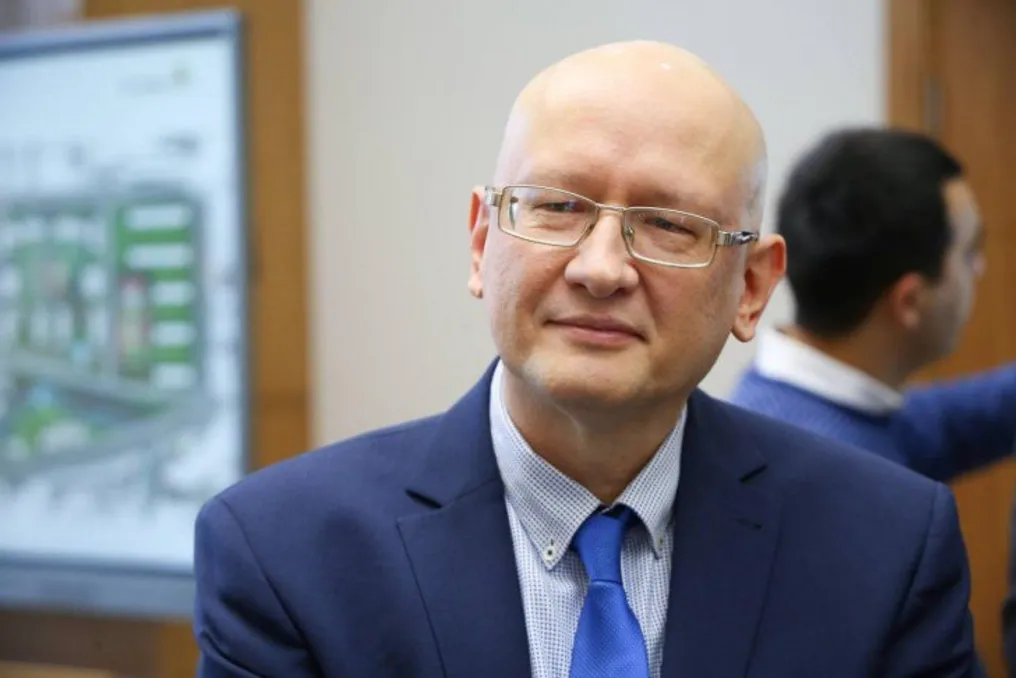
Social institutions in Uzbekistan are allowed to provide paid services and rent out property
Read more
Podrobno.uz [uz]
podrobno.uz

Social institutions in Uzbekistan are allowed to provide paid services and rent out property

A decision has been made in Uzbekistan allowing social institutions to provide paid services and rent out their property. According to the new document, such institutions can now charge for services related to rehabilitation, medical diagnostics, treatment, and care, as well as for the services of defectologists and psychologists.

It is emphasized, however, that state-guaranteed free services cannot be converted into a paid format. It is also established that the personnel of the institutions cannot be forced to provide paid services.

In addition, social facilities gain the right to sell products produced by themselves and to rent out their property. State customers have the opportunity to purchase this product directly from the institutions, provided that the annual volume of purchases from one organization does not exceed 1.5 thousand basic calculation units (BRV), which currently amounts to 660 million soms.

Income generated from this commercial activity will be directed towards the further development of the social institutions themselves. Employees who participate in providing paid services or other income-generating activities will be able to receive additional payments reaching 300% of their official salary. Furthermore, top employees are entitled to a quarterly bonus of up to five salaries.

The National Agency for Social Protection will monitor the fulfillment of the institutions' revenue plans, which are formulated annually based on data on paid services and other activities.

Similar stories

Uzbekistan proposes mandatory social tax for self-employed and abolition of corporate benefits
Read more
uzdaily.uz

Uzbekistan proposes mandatory social tax for self-employed and abolition of corporate benefits

Uzbekistan has presented a draft to introduce mandatory social tax payments for self-employed individuals starting from January 1, 2027, and also provides for the cancellation of existing social tax benefits for organizations and enterprises from 2030.

These measures are outlined in a draft presidential decree concerning pension system reform, which was published by the Ministry of Economy and Finance on September 15. Public discussions on this document will continue until September 30.

Details of the tax introduction for the self-employed

According to the draft, self-employed citizens will have to pay a social tax amounting to one basic calculation unit, which is 440,000 UZS, starting from September 2026. They will be allowed to repay this amount in installments over the year, with a monthly payment of 36,600 UZS.

Currently, the payment of social tax by the self-employed is voluntary and is taken into account when calculating work experience. The proposed changes aim to ensure that the self-employed have access to state social insurance and pension provision.

It is proposed that 10% of the social tax paid by the self-employed will be directed to the State Social Insurance Fund. Payments for maternity and temporary disability benefits will be made from the funds of this fund according to established procedures.

Changes in budgetary financing and operation

Starting from 2027, it is also proposed that the state budget covers expenses for periods counted as work experience but for which social tax and contributions to the Pension Fund were not paid. The budget will be used to increase pensions up to the minimum level, as well as to pay pension benefits and additional pension payments.

For older workers, the project provides for a reduction in working hours while maintaining the average salary level. This measure is aimed at women over 55 years old and men over 60 years old.

When distributing financial assistance to low-income families, the presence of official income will not be considered for women over 55 and men over 60 years old.

Abolition of benefits for businesses

Furthermore, starting from January 1, 2030, the draft provides for the abolition of existing social tax benefits for enterprises and organizations, with the tax rate set at 12%. It is planned that no new benefits for this tax will be introduced.

Working mothers in Uzbekistan will start receiving benefits for the first year of a child's life from 2027
Read more
podrobno.uz

Working mothers in Uzbekistan will start receiving benefits for the first year of a child's life from 2027

Starting in 2027, working mothers in Uzbekistan will receive benefits until their child reaches one year of age. These funds will be distributed through the Social Insurance Fund.

These payments are integrated into the existing state social insurance system, which already provides funding for sickness and maternity benefits.

President Shavkat Mirziyoyev previously emphasized the importance of additional assistance for families with infants at a meeting on September 3. He noted that the poverty rate among families with children under three years old in the country is 3.9%, compared to an average of 6.5% for this indicator. Furthermore, authorities plan to create conditions that allow parents caring for children to combine work and income, whether at home or directly in the mahalla.

At the same meeting, it was announced that benefits for working mothers included in the Social Register would be paid from the Social Insurance Fund until the child reaches one year of age. Thus, the new decree formally enshrines this previously announced support measure.

It was also previously reported that starting in 2027, families registered in the Social Register will begin receiving expense compensation through vouchers. These vouchers will cover costs for state and private kindergartens, educational centers, as well as travel and accommodation expenses for children in university dormitories. The validity period of such a voucher will be 12 months.

Yuli Yusupov states the necessity of privatizing state assets in Uzbekistan to improve economic efficiency
Read more
podrobno.uz

Yuli Yusupov states the necessity of privatizing state assets in Uzbekistan to improve economic efficiency

Independent economist and scientific director of the Center for Promoting Economic Development, Yuli Yusupov, believes that continuing the privatization process of state property is critically important for Uzbekistan. The expert also insists on significantly increasing the level of transparency and competitiveness during public auctions.

According to available information, under the new privatization program, state shares in 84 business associations, 1,242 real estate objects, and about eight thousand hectares of land are planned to be put up for auction. The total estimated value of these assets is 100 trillion soms. Among the assets the state intends to sell are 98.9% of Turonbank shares, 91.83% of 'Uzexpocenter', and 79.27% of the International Cooperation Center. Furthermore, enterprises such as the Xalq Sug’urta insurance company, the Tashkent Passenger Car Construction and Repair Plant, the Andijan Mechanical Plant, and others are subject to full privatization.

Emphasizing the scale of the upcoming sale, Yusupov noted that the state currently holds shares in many financial institutions and enterprises operating in sectors that potentially allow for competition and which should function as private commercial entities. He stated that the current state ownership harms economic development because the state often acts as an inefficient owner and manager, especially in the absence of proper public control over officials managing state enterprises. The expert stressed that 'property must have a true owner who is deeply interested in the effective use and increase of this property.'

In Yusupov's opinion, the presence of state companies hinders the formation of a healthy market environment. He recalled that competition is the main stimulus for economic growth and ensuring its competitiveness. Therefore, as long as the state's share in ownership and business processes is not significantly reduced, the economy of Uzbekistan cannot be considered market-based, which gives continued privatization enormous importance for the country.

The Importance of Improving Sales Rules

The economist separately drew attention to the need to improve the rules for conducting sales. Although the proposed benefits may be useful as they simplify access to auctions and reduce costs for potential buyers, the key issue remains ensuring their fairness.

Lessons from the Past

Yusupov links the need for reforms to negative experiences recorded in previous stages of privatization, when serious questions arose regarding the transparency and terms of transactions. As an example, he cited the sale of a state share in Coca-Cola Uzbekistan. Initially, the asset was expected to be sold for approximately 70 million dollars, but after reviewing the terms and holding open auctions, the share was acquired by the Turkish company Coca-Cola İçecek for $252.28 million, demonstrating the potential for price growth with real competition.

Other examples that raised questions include the sales of state shares in Perfectum and Uzcard, which were transferred to private owners at their appraised value despite initial plans to put them up for public auction. The privatization of 85.58% of the shares of JSC 'Photon', which was sold for 151 billion soms through a public invitation to negotiate, was also noted. Yusupov believes that given past experience and emerging problems, additional mechanisms must be introduced to enhance the transparency and competitiveness of public auction processes.

Five Rules for Fair Auctions

To prevent abuses, the expert proposes implementing a number of fundamental measures. Firstly, auction rules must be established in advance and remain unchanged throughout the entire process. Secondly, the maximum bid price must be the sole criterion for determining the winner. Furthermore, Yusupov opposes granting buyers additional investment and social obligations, as this creates corruption risks and grounds for revising transaction results. It is also necessary to completely exclude the transfer of state property to private co-owners outside of a tender based on appraised value. Finally, a crucial condition for fair auctions is constant public oversight—from the approval of regulations to the review of appeals—by representatives of parliament, experts, business associations, and civil society. Yuli Yusupov concluded his remarks with hope for the successful conduct of privatization in an atmosphere of complete transparency, equal access for all potential buyers, and fair competitive struggle.


Popular