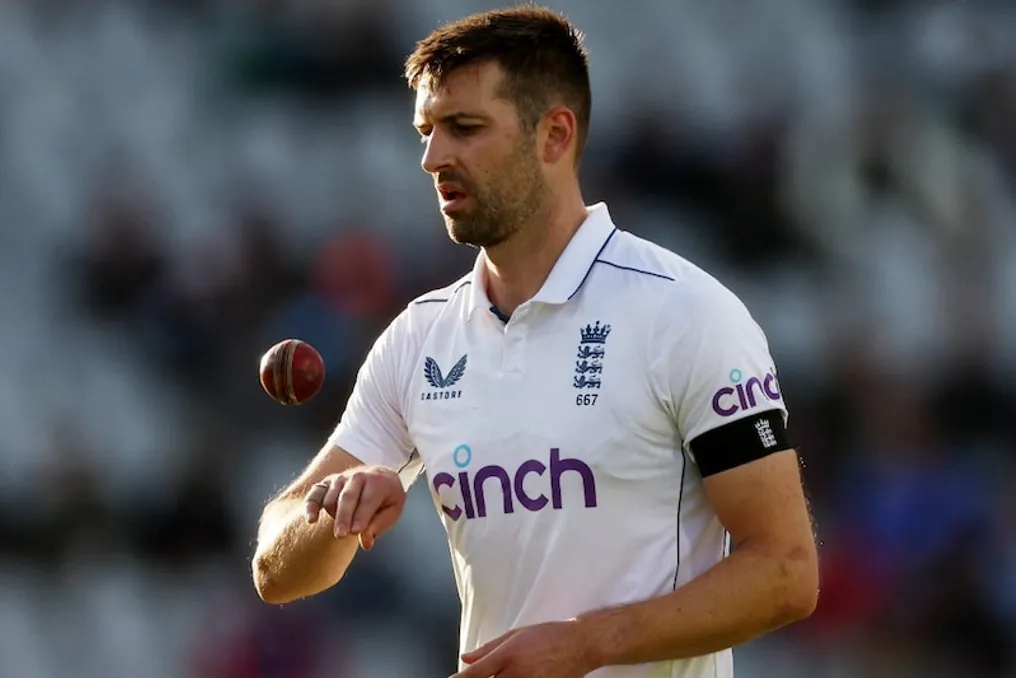
Fast English bowler Mark Wood announces retirement after victories in two World Cups
Read more
Aaj Tak
www.aajtak.in

Fast English bowler Mark Wood announces retirement after victories in two World Cups

Fast English bowler Mark Wood has officially announced his departure from international cricket. This concludes his 11-year international career, which began in 2015. During his time playing in three formats, he was part of a team that won two World Cups (one in ODI format and one in T20).

Mark Wood debuted in the Test series against New Zealand at Lord's in 2015. Throughout his career, he played 38 Test matches, taking 119 wickets. In ODI matches, he played 70 games, taking 80 wickets, and in T20 Internationals, he played 38 matches, collecting 54 wickets. He is the sixth player in England's history to take the most wickets in T20 Internationals.

Mark Wood was a key member of the England team that won the ODI World Cup in 2019. During this tournament, held on home soil, he took 18 wickets. His deliveries, which reached speeds over 95 mph, constantly attracted attention. Despite an injury, he participated in the match against New Zealand in the final at Lord's. This match ended in a draw and went into super over, where the score remained level. Ultimately, England won the ODI World Cup title for the first time based on the method of counting outs.

In 2022, Wood also contributed to England's victory in the T20 World Cup, which was held in Australia. In this tournament, he took 9 wickets across four matches.

Mark Wood represented England in four Ashes series. During the 2015 series, his performance in the Test match at Trent Bridge was the final piece in England's victory and capture of the Ashes. His return in 2023 was particularly significant. His fast spells against Australia in Headingley helped England begin their comeback in the series. Although Australia led 2-0, England managed to balance the series to 2-2 in subsequent matches.

Commenting on his decision, Wood stated: 'I have decided to leave international cricket. Considering the last year, perhaps this decision is not shocking, but now seems like the right time as my contract is coming to an end.' Mark Wood noted that he always tried to prove his worth by returning after injuries, but this time he could not win his battle. He called playing for England the greatest honour and dream of his life.

England's men's cricket manager, Rob Key, recalled Mark Wood's career, noting that he was a player capable of having a significant impact on the team in major matches. Rob Key emphasized that achievements such as winning the Ashes, the World Cup, and entertaining spectators on the field are things very few players can achieve in their careers.
Similar stories

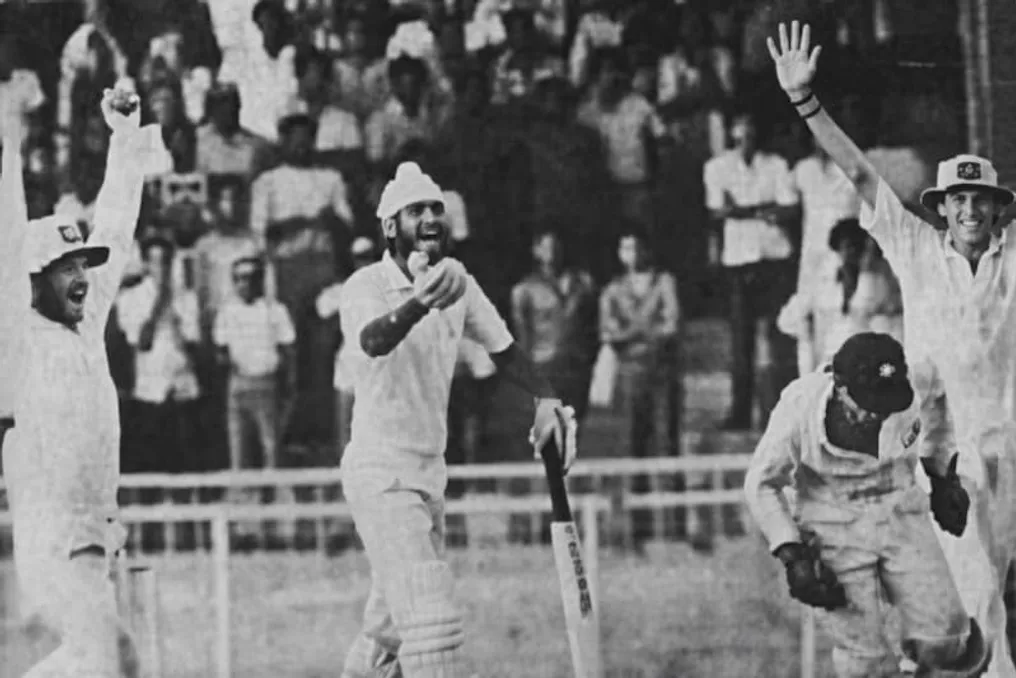
Test match between India and Australia in Chennai in 1986 ended in a draw after dramatic final moments
Read more
www.aajtak.in

Test match between India and Australia in Chennai in 1986 ended in a draw after dramatic final moments

There are matches in cricket whose tension lasts until the very last ball. One such moment occurred 40 years ago, on September 22, 1986, when the second Test match of the series between India and Australia, held in Chennai (then Madras), ended in a draw, and the drama of the final days is still vivid in the memories of cricket fans.

Australia took the initiative first by winning the toss and secured a substantial victory in the first innings, scoring 574/7 runs. Among the Australian players, David Boon stood out with 122 runs, Dean Jones with 210 runs, and Allan Border with 106 runs. In response, the Indian team managed to score only 397 runs in the first innings. The best player for India in this innings was Kapil Dev, who scored 119 runs. Additionally, Mohammad Azharuddin (50 runs) and Krishnamachari Srikkanth (53 runs) reached half-centuries.

In the second innings, Australian captain Allan Border declared the innings closed, adding another 170 runs, setting a target of 348 runs for India. India needed to reach this target in 87 overs.

Initially, the Indian team pursued the target confidently. At tea, India's score was 190 runs for the loss of two batsmen. After that, the team approached victory. India lost 6 batsmen at a score of 330 runs, and only 18 runs were needed for victory.

At that moment, it seemed that India would easily win. However, Australian bowler Ray Bright drastically changed the course of the match. In the next over, Bright dismissed two batsmen, and suddenly the possibility of all possible outcomes arose: victory, defeat, a draw, or a tie.

After this, Shivlal Yadav helped India get closer to victory by hitting a powerful six off Greg Matthews' bowling. But Bright got him out. India's score reached 344/9. Only 4 runs remained, and there were 8 overs left.

Ravi Shastri and Maninder Singh were on the field. Maninder Singh was the last batsman in India's batting order. He faced Bright's over, and the right to bat passed to Ravi Shastri in the final over.

India needed 4 runs to win. Ravi Shastri scored 2 runs off the second delivery of the final over. Then, on the third delivery, he scored one run and passed the strike to Maninder Singh. With this single run, the possibility of India losing disappeared, but 3 more runs were still needed for victory. Greg Matthews was bowling, and Maninder Singh was on strike. Matthews had three deliveries to finish the match.

Matthews dismissed Maninder Singh. Matthews got him out LBW on the penultimate delivery of the match. India's hope of victory faded, and the match ended in a draw. In the second innings, the Indian team showed better play, with Sunil Gavaskar scoring the most runs—90.

Players from both teams were awarded 'Player of the Match' awards. Kapil Dev received this award for scoring 119 runs for India, while Dean Jones from the Australian team received it for his double century in the match.

Thus, in the history of Test cricket, a match was recorded where the scores of both teams were absolutely equal. This thrilling finale in Chennai is still considered one of the most memorable moments in cricket.

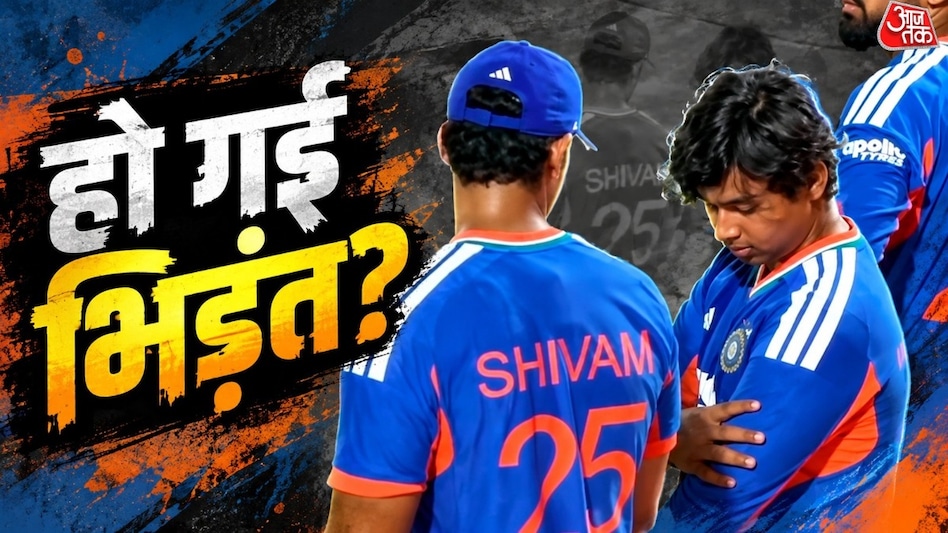
Vaibhave Suryavanshi joked about Shivam Dube, comparing their arms on the field
Read more
www.aajtak.in

Vaibhave Suryavanshi joked about Shivam Dube, comparing their arms on the field

Despite not being in the starting lineup during the first two matches of the three-match T20 series against Afghanistan, Vaibhave Suryavanshi attracted everyone's attention with his amusing gesture.

Before the game, as all players lined up, Vaibhave Suryavanshi's gaze fell upon the broad and muscular arms of Shivam Dube, who is the tallest and strongest all-rounder on the team. Without hesitation, Vaibhave held up his slender arms in front of Shivam Dube's massive arms, beginning to compare them. This innocent and humorous gesture was liked by the other players present on the field.

Shivam Dube is known for his powerful physique and long shots, which made him an ideal target for jokes from Vaibhave. The video demonstrates the excellent friendship and understanding between both athletes.

In addition to his explosive attacking style, Vaibhave Suryavanshi wins fans' hearts with his relaxed personality. Prior to this funny incident, while queuing on the field, he also pulled the cheek of a small child, whose photos and videos also went viral on social media.

Since the Indian team won the series against Afghanistan, and captain Shreyas Iyer had previously spoken about possible changes in the squad for the third match, fans hope that Vaibhave Suryavanshi will get a chance to be in the starting lineup for the third match.

Experts advise Vaibhav Suryawanshi not to let fame influence his cricket career
Read more
www.aajtak.in

Experts advise Vaibhav Suryawanshi not to let fame influence his cricket career

Vaibhav Suryawanshi's batting has amazed the world, as he demonstrated incredible success against bowlers in T20 cricket at a very young age, leading to inflated expectations. Now that he steps onto the field, spectators expect not just good play, but explosive moments.

However, this is where another chapter of the story begins. Players who aim to hit every ball for a four or a six eventually encounter a situation where bowlers begin to use that same haste against them. An example of such risk was Vaibhav's elimination in the Dalip Trophy final in Chennai after a delivery by Vijay Tripura, which served as a warning about this danger.

With a score of 8 runs off 16 balls, while Vaibhav tried to send the ball outside the boundary, he himself fell into a trap due to his haste. Vijay nudged the ball slightly back, and Vaibhav stepped out of his defensive zone, intending to send the ball over the boundary. But this time, the ball bypassed not the bat, but the batsman's mind.

The ball spun in the air, Vaibhav missed, and Jagdishan bowled him out. This moment should prompt Vaibhav to pause and ask himself questions. What he sent far yesterday, the same player read today.

This dismissal is particularly interesting because he was facing the same Tripura Vijay, who had previously conceded three fours and one six from Vaibhav in his debut IPL match. At that time, Vaibhav managed to read Vijay. This time, Vijay read Vaibhav. In cricket, victory is not always achieved with words; sometimes one ball is enough.

Perhaps an image of the previous confrontation remained in Vaibhav's mind. Perhaps he thought Vijay would again be an easy target, so he stepped out of his defensive zone to reach the ball. But in Red Ball Cricket format, the bowler shows you not only the ball but also illusions. Vijay did the same: he allowed Vaibhav to come closer and then stopped the ball in the air in such a way that the batsman's entire mathematics was disrupted. Last time, Vaibhav taught the bowler a lesson; this time, the bowler taught Vaibhav a lesson.

T20 helped Vaibhav gain fame due to his fearless style of play, which is his main asset. However, first-class cricket tests this fearlessness. Here, it is not necessary to hit every ball. Sometimes the best shot is simply not hitting the ball. Sometimes the right play is not scoring runs for ten balls. It is also important to show the bowler that the batsman will not fall into his trap.

Vaibhav needs to learn this. He is not lacking in shots, power, or confidence. He needs to learn when 'not to hit'. This is what distinguishes an explosive batsman from a great batsman.

Popular