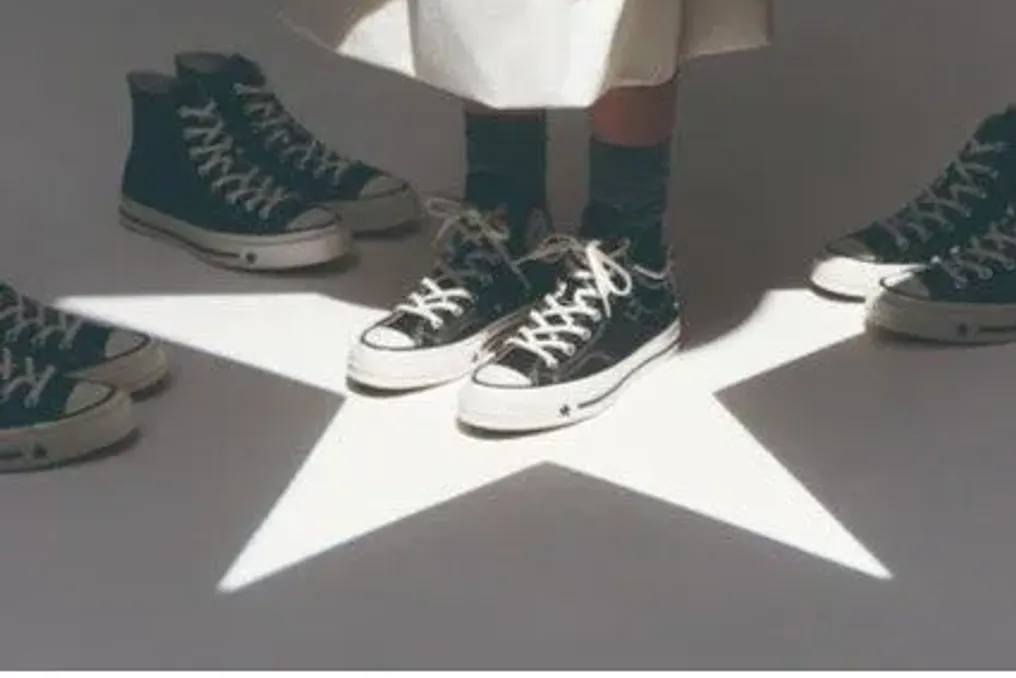
Converse, a brand owned by Nike, withdrew its sneaker advertising campaign after critics claimed that the visuals evoked associations with lynchers and the Ku Klux Klan (KKK), an American white ultranationalist group.
The campaign featured pop singer Karina from the group Aespa, dressed in a long white skirt and holding a pair of black high-top sneakers under a spotlight. Critics noted that the lighting made them perceive her outfit as a KKK hood, and the dangling shoes reminded them of the feet of a lynching victim.
Democratic Congressman Troy Carter issued a statement on Friday, calling the campaign 'racist, reckless, and deeply offensive,' asking, 'Nike and Converse, what were you even thinking?'
On Saturday, Converse apologized, admitting that the image was 'deeply disturbing' and that they had 'made a mistake.' The company stated: 'We have removed it from our channels and are working to remove it wherever it appeared. This should not have happened, and we will do better.'
Civil rights lawyer Lee Merritt countered that a simple apology does not resolve the issue of how the advertisement passed checks at all levels—legal, marketing, and executive. He wrote on Instagram that the apologies 'do not negate the fact that it slipped past the legal department, marketing, and management at every stage,' and that 'doing better' means preventing the release of material, not reacting to it after someone has been offended.
Converse CEO Aaron Kane informed employees that the company is reviewing internal processes that allowed this campaign to be published. According to a memo reviewed by Bloomberg, Kane stated that 'management and I are closely examining our internal review process and the critical lens we apply to our work,' and promised to 'make necessary changes.'
The KKK, founded after the American Civil War, gained notorious infamy for terrorizing racial and ethnic minorities, primarily Black people, through murder and various forms of intimidation. Membership peaked at an estimated 4–5 million nationwide in the mid-1920s, when there were only 10–11 million Black Americans.
Criticism was also directed at a separate Converse campaign with the Danish brand Palmes, released last week. In it, models are depicted climbing stairs toward sneakers hanging from a tree branch. Some social media users also suggested that this image resembled a lynching.
Previously, Nike and its subsidiaries have faced criticism regarding advertising. In April 2025, the company apologized for a billboard at the London Marathon reading 'NEVER AGAIN. UNTIL NEXT YEAR,' after critics linked the phrase to Holocaust remembrance. Nike then stated that it referred to runners promising not to participate again before eventually returning.
In April of this year, the sports giant faced new criticism over a Boston Marathon ad with the slogan: 'Runners welcome. Walkers tolerated.' These scandals occur as Converse's parent company, Nike, attempts to reverse a prolonged decline in its business and stock prices. Since its peak in 2021, the sports giant has lost over $200 billion in market value due to increased competition, weakening demand in China, and criticism of a lack of product innovation. Nike, which has owned Converse since 2003, is also preparing to leave the S&P 100 index after nearly 18 years, although it will remain part of the broader S&P 500.