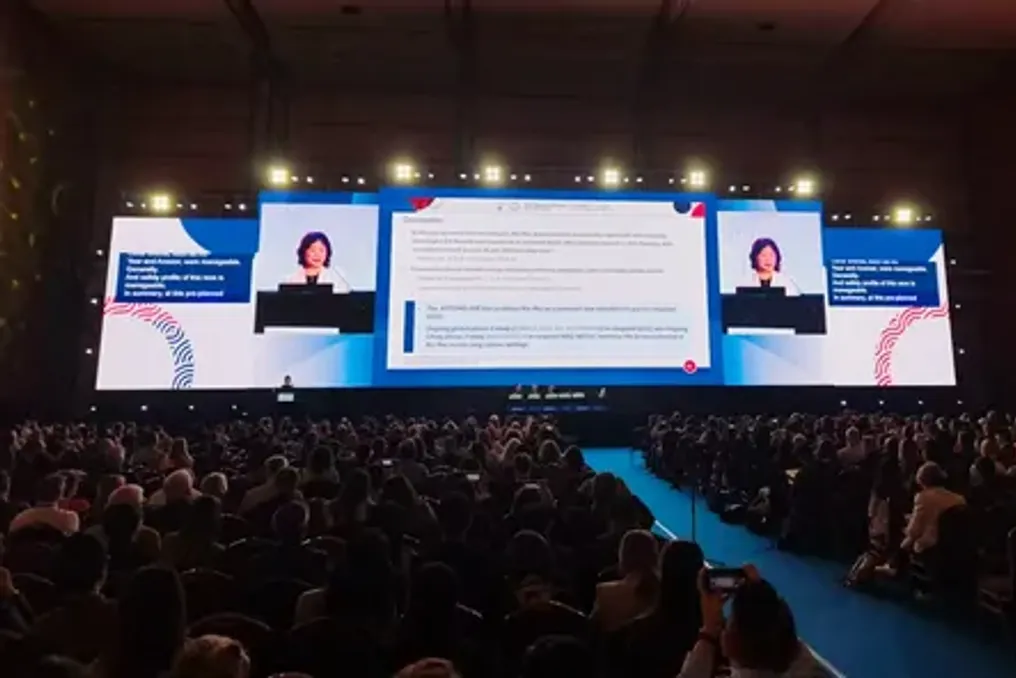
At the 2026 World Conference on Lung Cancer held in Seoul, South Korea, Wang Ze presented a report on the achievements of Chinese research. She shared her vision of breakthroughs in the treatment of small cell lung cancer (SCLC), the successes of Chinese clinical trials, and the pathways for developing biopharmaceutical innovations.
This was her third presentation at the WCLC plenary session after participating in 2023 and 2025. Wang noted that the most significant change lies in the role of Chinese researchers: they have moved from being mere observers to actively contributing their data and questions to the discussion, presenting work for review, and proposing solutions. She characterized this as reflecting China's broader transition from a 'spectator' role to a 'participant' and even 'contributor' in international clinical trials, emphasizing that scientific data knows no borders, and the impact of any study extends beyond China.
Small cell lung cancer remains an aggressive and rapidly progressing disease. Wang reported that over the last decade, standard treatment has primarily relied on traditional chemotherapy, which has shown limited effect and survival benefit, especially when used as second-line therapy.
Trial Results and Future Directions
At the presidential forum, Wang presented interim results from the Phase III trial ARTEMIS-008. This study evaluated the drug HS-20093, an antibody-drug conjugate targeting B7-H3. Positive results, where the primary endpoint was overall survival, indicate that this drug extends the life of SCLC patients on second-line treatment who have long lacked effective treatment options. Wang called this compelling evidence for further investigation of this target.
She outlined future plans: implementing the drug at earlier stages in combination with immunotherapy or chemotherapy, conducting in-depth translational research on this target, expanding its application to other solid tumors, and studying combined strategies with targeted therapy or radiotherapy.
Referencing China's 'Five-Year Plan,' which designates biopharmaceuticals as a strategic developing industry, Wang highlighted 'innovation in sources, systems, and leadership' as key words for the future sector. She stated that Chinese drug developers, who have long excelled at quickly following proven targets, now need to be willing to pioneer unproven targets, supporting high-risk, highly original projects through patient capital.
Furthermore, she stressed that the criterion for a strong international trial is not the size of the participant pool but the precision of the scientific question posed. Wang called for boldness in target selection, more thoughtful combination strategies, and the execution of rigorous, internationally recognized trials, expressing hope that more Chinese developments will reach patients worldwide.