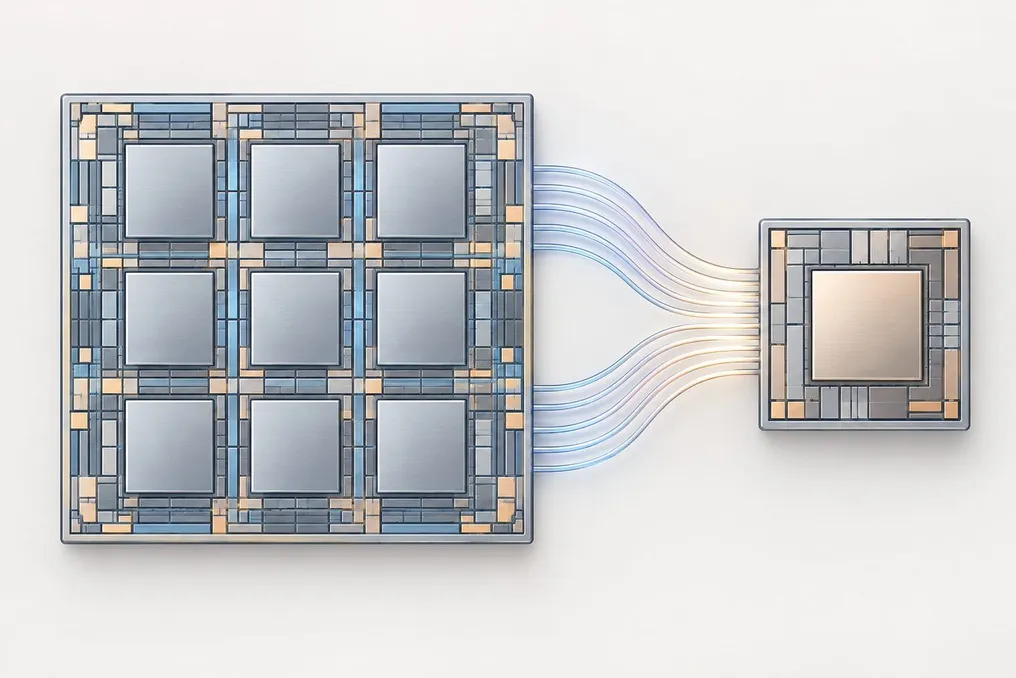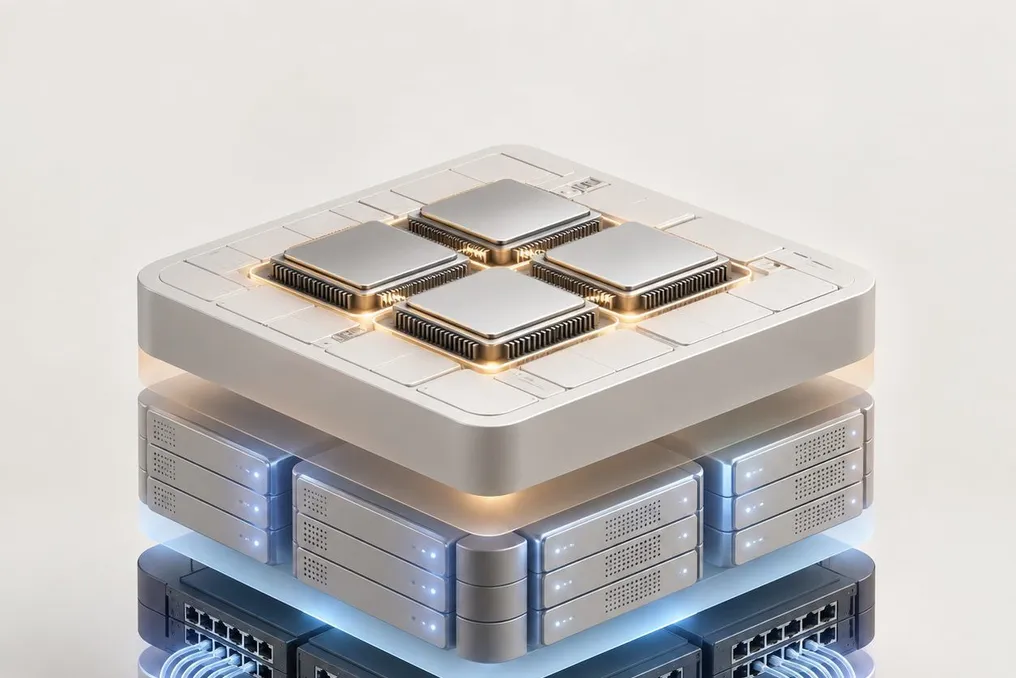
At the Apsara Cloud and T-Head conference, an updated supernode stack was demonstrated. This stack integrates the Zhenwu V900 artificial intelligence accelerator with ICN Switch chips from T-Head, the Pangu NIC intelligent network card, and the Zhenyue SSD controller.
The main goal of the presentation was not to showcase an individual accelerator, but to demonstrate the coordinated operation of computing, networking, and system components at the entire supernode level. The official product branding is defined as Alibaba Cloud / T-Head.
According to QuDong's Apsara report, the Zhenwu V900 accelerator features 216 GB of memory and provides an inter-chip connection speed of 1200 GB/s. Its performance is approximately three times higher than that of the Zhenwu M890, and it supports native FP8/FP4 formats. Mass production of the Zhenwu V900 is planned to begin in the first quarter of 2027.
Thanks to the connection via ICN Switch, the supernodes achieve unified addressing and native memory semantics, allowing approximately one thousand V900 cards to function as a single large accelerator. Using Alibaba Cloud's repurposed intelligent computing network, the company states that one cluster can scale up to about 500,000 cards.
Previously, M890-based supernodes were used on a large scale and, according to the company, processed models such as Qwen3.8 and Kimi K3, which have over two trillion parameters, although this has not been independently verified.
This development is significant because T-Head now positions AI accelerators, Yitian processors, ICN interconnects, Pangu NIC network cards, and Zhenyue storage controllers as a unified set of chips for domestic data centers.
Although subsequent generations of Zhenwu and supernode SKUs are planned for 2029, the information from September 22 specifically concerns the V900-based supernode and the potential of a 500,000-card cluster.
For cloud service and cluster buyers, this news means that Alibaba is packaging the accelerator, switch, network card, and silicon SSD components into a single Apsara supernode concept with a clear scalability metric.
The delivery speed of the V900 (stated as Q1 2027) and the actual behavior of the multi-stack factory connection will determine whether the 500,000-card path is an engineering reserve or a near-term plan.