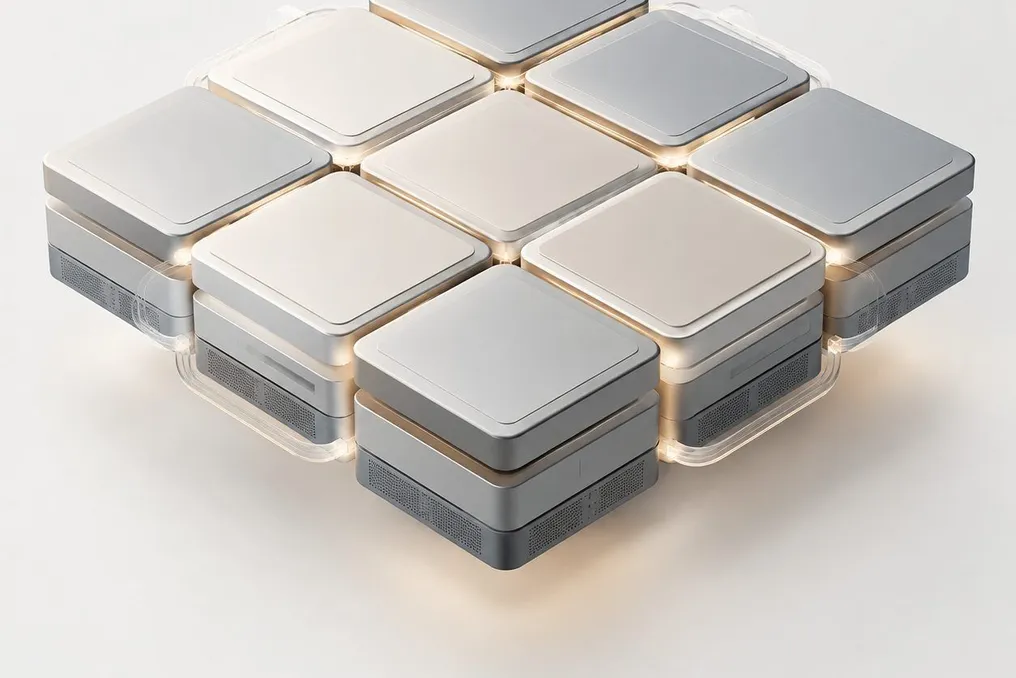
Huawei has announced the development of the Peerium computing architecture. This system is designed so that processors on the scale of approximately one million can function as a single computer through the use of nested parallelism, unified memory addressing, and a peer-to-peer interconnect bus.
According to a press release from Huawei in English dated September 17, 2026, released from Shanghai, the brand of this technology is Huawei / Peerium. The company positions Peerium as an implementation of Nested BSP (Nested Bulk Synchronous Parallel), which extends the existing Von Neumann architecture for a single machine rather than completely abandoning decade-old assumptions about master-slave type clusters.
This distinction is important for readers comparing Peerium with already discussed solutions like Ascend SuperPoD and Lingqu interconnect. The key element that, according to Huawei, enables Peerium's operation is the UnifiedBus (UB).
The UnifiedBus is a single high-speed, open-protocol bus designed for scaling between CPUs, NPUs, memory, SSDs, network interfaces, and switches. This allows compute, storage, and networking components to connect as equal participants.
The first products based on this architecture include the Atlas 950 SuperPoD and SuperClusters built upon the SuperPoD. Huawei reported that the Atlas 950 SuperCluster with 256,000 cards is already in deployment, while the Atlas 960 system, which uses nearly packed optics, is undergoing testing.
Chairman of the Board Eric Xu linked the development of Peerium to the continued production of SuperPoD and SuperCluster to meet demands for training and inference. The Peerium architecture sits one level above individual Ascend SKUs because its essence lies in architectural features: Nested BSP planning, unified addressing, and the peer factory UB. This allows a large number of cards to be programmed more like a single machine than a hierarchy of masters and workers.
The accompanying documentation for the architecture did not present independent tests on latency, throughput, or software stack; the deployment status of Atlas 950/960 remains information provided by the company itself.
For infrastructure buyers, the news is significant because Huawei named Peerium the computing architecture behind SuperPoD at the million-processor scale, using Nested BSP and UnifiedBus as technical foundations, while clearly emphasizing that it extends, rather than discards, the single Von Neumann machine design.