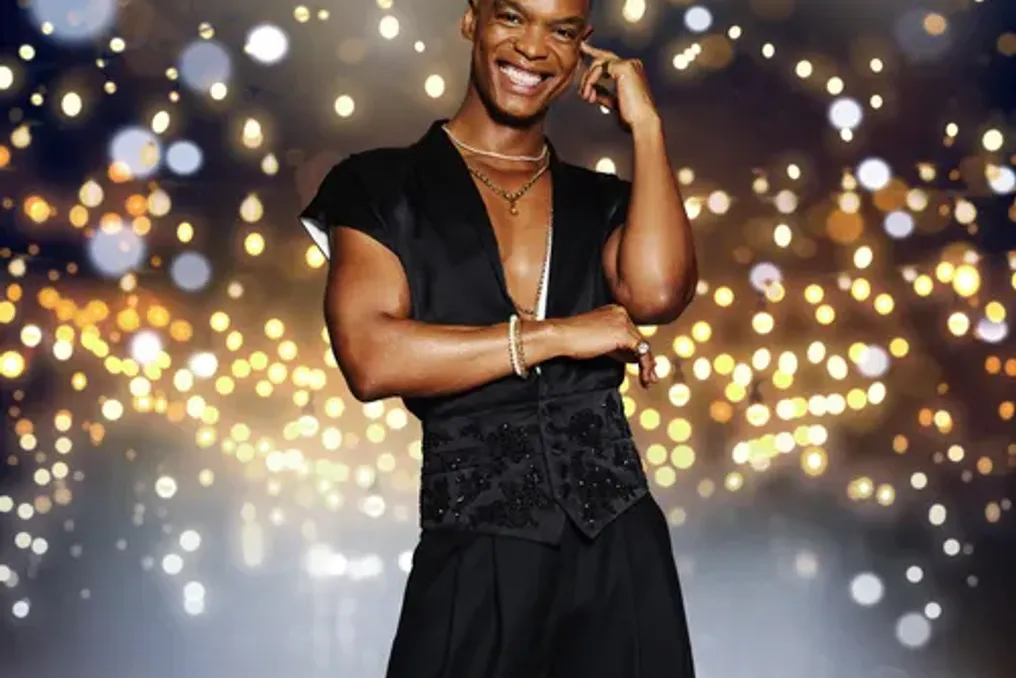
Hojanes Radebe, who has performed for audiences worldwide for years, maintains a close connection with the community that shaped him, regardless of how far his career progresses. This professional dancer from South Africa grew up in Zamdela, located in the Free State province, where pursuing a dance career was neither simple nor traditional.
Today, he is a recognizable face of one of the world's largest entertainment shows, yet his path to the international stage was built on self-sacrifice, resilience, and the determination to make his dream a reality. The new season marked a new chapter for Radebe, who debuted as one of the three new hosts of Series 24 of Strictly Come Dancing alongside Emma Willis and Josh Widdicombe.
This transition allowed Radebe to take on a new role in the program, where viewers first recognized him as a professional dancer—another milestone in a career that took him from Zamdela in the Free State to the global stage. When the new season of Strictly Come Dancing began in the UK, Radebe told IOL that viewers could expect the familiar show to return with some unexpected changes.
He stated: 'Viewers should be assured that everything is going as usual, but there will definitely be more dancing than ever before in the history of Strictly.' Radebe added that the new season would feature twists and surprises, including a different approach to revealing the show's couples. He noted: 'It will just be wonderful—the same, but in a different way.'
Nevertheless, behind the excitement of another Strictly season is a dancer who understands how unlikely his journey seemed. For Radebe, memories of the past are not about dwelling on the old, but part of understanding his path and maintaining a connection with the person he was before stepping onto international stages, television appearances, and global recognition. He emphasized the importance of reflection, telling IOL: 'I think it's important to reflect. Because I don't think you learn anything if you don't do it. But most importantly, it grounds you in where you are if you remember where you come from.'
The place Radebe comes from is never far from his thoughts. Having grown up in Zamdela, he believes the character and energy of his community have become part of his identity as a performer. He links his expressive dance style, which viewers often notice, partly to the people around him. Radebe stated: 'I carry the spirit of my people wherever I go.' He added: 'People always say I am a very expressive dancer. And I always say: 'You haven't met my people yet!' '
However, the path to becoming a professional dancer was not without obstacles. For Radebe, the biggest barrier was money. He recalls times when he had ambitions but lacked the financial means to realize them, especially since his family could not afford the opportunities that dance required. He honestly shared: 'And that is my truth. Lack of funds. I always say it's hard for a little boy who has dreams or aspirations, and you can never achieve them because mom and dad cannot afford it. I think that's the hardest thing any child can go through.'
Dance forced him to confront this reality at an early age. He also candidly discusses the impact this had on him during his teenage years and the pressure his ambitions put on his mother. The opportunity to dance as a full-time profession only became tangible when he got his first international job on a cruise liner. This opportunity came with immense responsibility, as Radebe was the breadwinner for his home, and he knew that leaving South Africa meant more than just following a personal dream. He said: 'I didn't have a plan B; I really needed to succeed. When I stepped on that ship, I thought: 'Okay, I'm not coming back. I have to do this.'
His journey eventually led him to the UK, where Strictly Come Dancing became an important part of his career and introduced his talent to an international audience. However, Radebe's success placed him in a position he never intentionally sought—that of a role model. He told IOL that he never planned to be a role model; his approach was much simpler: work hard, stay focused, and move forward. He explained: 'I wasn't planning to be anyone's role model. I just thought: keep your head down, Hojanes, do your job, and nothing will threaten you.'
Now he understands the significance of young South Africans seeing someone from a working-class background on the world stage. He wants his story to assure them that the circumstances they are born into should not dictate the scale of their dreams. He wishes to tell them: 'I just want them to look at me and feel confident in whatever they do, that they are worthy, and that they can achieve their dreams, no matter how wild they may be.'
Radebe's personal journey has also changed his understanding of resilience. Traveling the world introduced him to different people and cultures, but instead of distancing himself from his roots, this experience made him more aware of them. He thanks the community he grew up in for teaching him to keep moving even when circumstances make the destination uncertain. He told IOL: 'The community I come from also instilled in me, you know, that no matter what happens, you have to keep moving and see where you get to.'
Radebe hopes to pass on this resilience in the next chapter of his career. His ambitions are increasingly extending beyond performances. He intends to use the platform he has created to support charitable causes and ultimately teach dancers who may lack access to the resources and knowledge available to him. Previously, he declined teaching opportunities because he did not want to take on students without being able to give them the necessary time and attention. Now that his career is developing, he sees an opportunity to change that.
He observed: 'I realized there is a world and people who need help.' For someone who has spent so much time away from South Africa, home remains an important part of his identity. Radebe speaks of South Africans with particular warmth, pointing to their ability to find joy despite difficult circumstances. He carries this resilience, passion, and love of life wherever he goes. And travel has only strengthened his pride in his origins. He stated: 'First of all, I am an African child. And I think I'm proud of that. I'm proud of that to the world.'
For Radebe, stepping onto the international stage never meant leaving South Africa behind. On the contrary, it gave him a broader platform from which he can bring things home. He concluded: 'This is my home, you know.'
Perhaps the clearest reflection of his journey is the advice he would give to his younger self and to young South Africans watching him now. His message is simple: do not let your circumstances convince you that your dreams are too big. He advised: 'If I could tell young Joji something, I would say: trust the process, believe in yourself. In yourself. And the world will adapt.'
}} , {