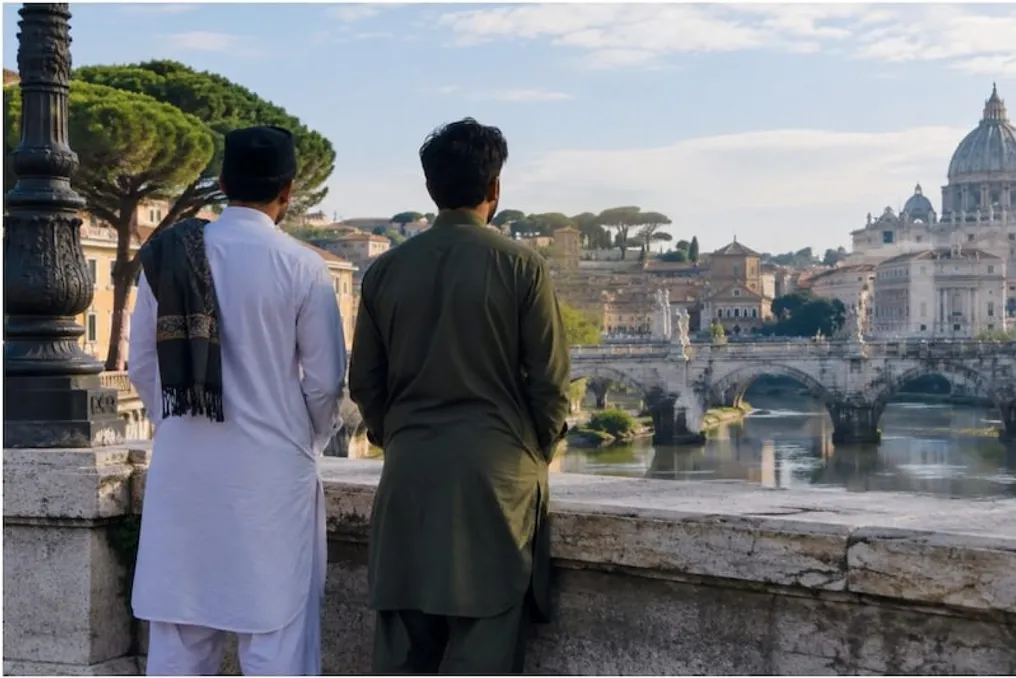
In Italy, discussions are underway regarding the introduction of a ban on wearing burqa and other face-covering items in schools. Prime Minister Giorgia Meloni announced plans to impose restrictions on such clothing and to introduce new rules concerning the number of international students. Following Meloni's statement, discussions about the Muslim community residing in Italy have reignited, whose numbers have increased in recent years.
Particular attention is drawn to the growth in the number of migrants from Pakistan, who have significantly increased their presence in Italy. The question arises as to the reasons for this mass influx of Pakistanis and the types of activities they engage in in the country.
A significant population from various Muslim countries resides in Italy, including citizens from Morocco, Bangladesh, Pakistan, Tunisia, and Senegal. The size of the Pakistani community has shown rapid growth over the last two decades. According to a report by the Italian Ministry of Labour and Social Policies (Ministero del Lavoro e delle Politiche Sociali) for 2025, there were officially 32,546 Pakistani citizens living in Italy in 2005.
However, approximately 20 years later, by December 31, 2024, this number had risen to 159,680 people, representing an increase in the Pakistani community by 390.6 percent, or almost 4.9 times. Furthermore, only during the period from 2023 to 2024 was an increase of 13.2 percent observed.
It is noted that migrants first arrive and settle in Italy, after which their families are invited. This leads to an increase in the population not only due to new workers but also due to women and children. As a result, the number of Pakistani children in Italian schools is also growing.
The Pakistani community is not concentrated in one region of Italy; about 65.5 percent of Pakistani citizens live in Northern Italy. Lombardy accounts for the largest share, followed by Emilia-Romagna and Tuscany. In 2025, these regions housed about 1.7 million Muslims of various nationalities, the majority of whom are migrants.
One of the reasons is pressure on the labor market in Pakistan itself. The population of Pakistan is growing rapidly, but the country's economy cannot provide enough jobs for everyone. Consequently, a large number of people are leaving their homeland. According to reports, the number of people leaving Pakistan abroad was about 3.7 million in 2005, and by 2024, this figure exceeded 6.9 million. This is what prompts many to head to Italy.
Another major reason for the increase in migrants in Italy is the country's need for foreign labor in various economic sectors. Migrants work in agriculture, construction, the hotel and restaurant business, and other industries. Additionally, people come to Italy through channels such as family reunification and seeking asylum. A number of new rules concerning migrants are currently being implemented in Italy.
Pakistanis who have arrived in Italy are employed in diverse fields. According to official reports, the largest share among Pakistani workers belongs to industry/manufacturing, accounting for about 32.9 percent of employment. In addition, they work in the transport, trade, hotel and restaurant business, agriculture, fishing, construction, personal services, and healthcare sectors. A significant portion is also engaged in agricultural work and casual labor.