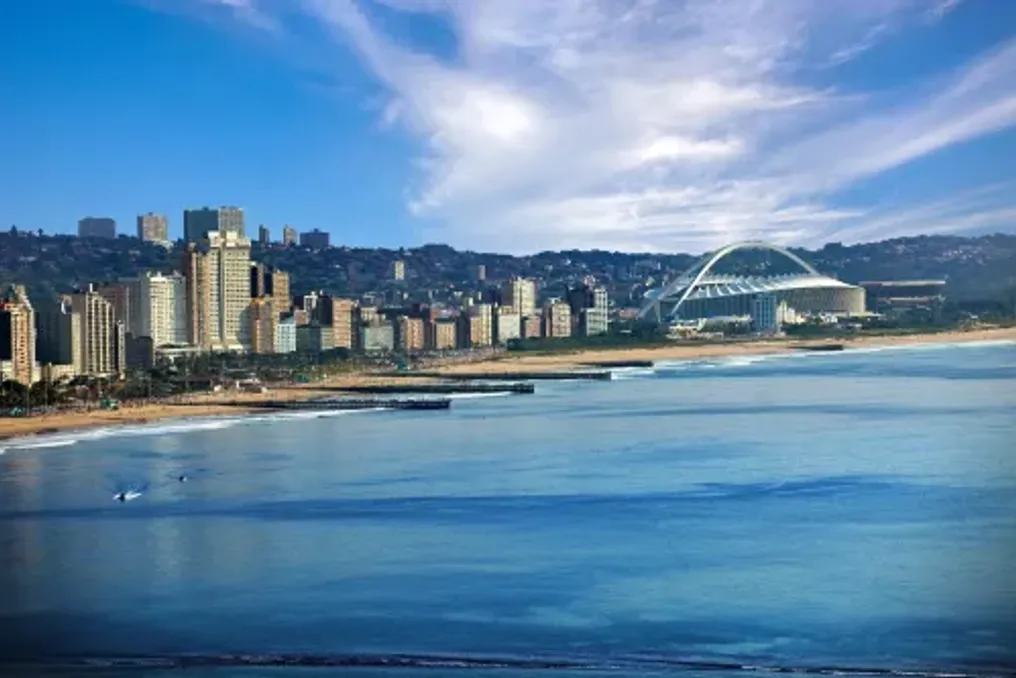
Despite having magnificent coastlines, warm waters, and rich natural resources that give eThekwini a significant advantage in the tourism sector, years of inefficient municipal management and poor infrastructure have led the city to miss opportunities for economic growth and job creation, according to the author.
Although the latest employment data from StatsSA shows some positive aspects for the ANC-managed eThekwini municipality, the report contains a crucial indicator—the labor underutilization rate. This indicator, revised and expanded by Statistics SA, records not only unemployment but also the number of discouraged job seekers—people capable of working but who have lost hope of finding suitable employment after numerous rejections.
According to StatsSA data, the labor underutilization rate in the eThekwini metro is 37.8%, compared to 24.3% in Cape Town, which is a significant decrease of 13.5%. The key to Cape Town's ability to maintain a low unemployment rate is that the city managed to leverage its tourism potential and become a world-renowned destination. This was the result of years of stable and clean governance focused on infrastructure development and strategic promotion through agencies like WesGro.
Furthermore, the city's spending on maintaining and developing infrastructure stimulated further investment and business growth, revitalizing areas and attracting visitors thanks to good management by the Democratic Alliance. eThekwini possesses not less, but possibly greater, tourism potential. The question arises: why is a city with one of South Africa's most outstanding coastlines not realizing its full potential?
Currently, Cape Town has eight 'Blue Flag' beaches for the 2025/26 season, while eThekwini has none. The 'Blue Flag' status is not merely an external sign; it demonstrates a functioning municipality capable of controlling water quality. In the KZN province, where tourism is one of the easiest ways to turn natural assets into jobs, how has this gold mine been missed?
Cape Town's tourism economy generated approximately 24.5 billion rand in direct tourist spending in 2025 and supported over 106,000 jobs. Its airport received 11.1 million one-way passengers in a year, including 3.3 million international travelers. During the 2024/25 cruise season, 83 liners visited Cape Town, including 11 first-time visits.
The author emphasizes that this is not accidental but the result of targeted work: Cape Town invests billions in modernizing sewage collection systems and reducing leaks. The city commits to replacing or reconstructing about 100 kilometers of sewer pipes annually. It uses digital telemetry for early warnings at pumping stations, has specialized leak response teams, and has implemented digital incident management systems to track response measures. Only in 2025/26 were about 92 million rand allocated for sewage treatment, aiming to clean 300 kilometers of sewer lines.
Although sewage leaks still occur in Cape Town, as in any large city, the difference lies in the level of investment, readiness, and responsiveness to prevent recurring failures. KZN, and especially eThekwini, must learn from this experience and apply it in their own region. The eThekwini municipality itself recognizes obstacles to tourism development. Its Spatial Development Framework for 2025/26 names 'crime and dirt' and the need for infrastructure investment among the challenges facing Durban as a tourist destination.
For KZN to succeed, eThekwini needs correction. It is important to remember the thousands of people who have lost hope of finding work, as well as the fact that eThekwini has lost all its 'Blue Flag' beach status, which has damaged the tourism sector. However, the situation is not hopeless: eThekwini has enormous potential if local authorities and infrastructure start functioning again. Voters in the provincial metro are key to realizing this potential during the local government elections on November 4th.