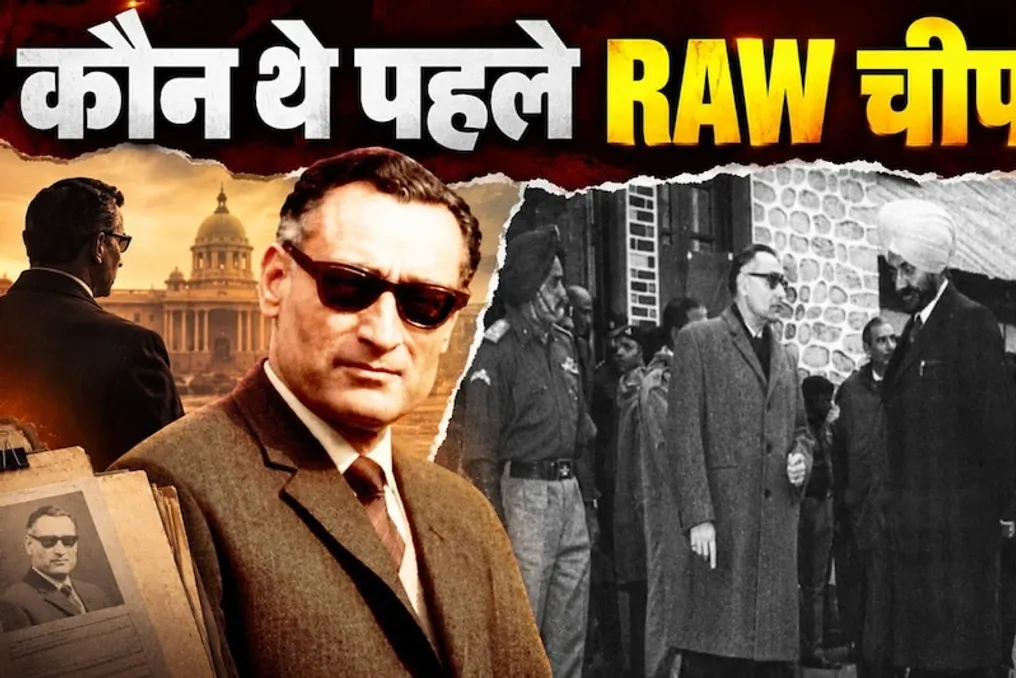
The story of Rameshwar Nath Kao, known as the father of India's intelligence agency RAW and the country's greatest spy, will soon appear on the big screen. Film director Karan Johar announced the creation of this film to mark the 58th anniversary of RAW's formation on September 21.
This currently anonymous film will be made with the participation of Dharma Productions and Leo Media Collective and is based on the well-known book by journalist Nitin Gohle titled 'RN Kao: Gentleman Spymaster'. The plot of the movie will focus on the period from 1955 to 1971, when the foundation of the country's external intelligence system was laid. The film is scheduled for release on August 11, 2028, although information about the cast and director has not yet been revealed.
Rameshwar Nath Kao was born in 1918 in Bonaras. He received higher education at Lucknow University and Aligarh University. After his studies, he successfully passed the civil service examination in 1940 and joined the Indian Imperial Police, which later transformed into the Indian Police Service (IPS) after independence.
After independence, Kao was appointed to the Intelligence Bureau (IB), where he handled many important matters related to national security and the intelligence system. In the early stages, his duties included ensuring the security of then Prime Minister Jawaharlal Nehru. Later, Kao played a key role in institutionalizing India's external intelligence system and became the first head of the Research and Analysis Wing (R&AW) after its establishment in 1968.
In the 1950s, Kao led several important and secret international operations. At the request of the Government of Ghana, he played a major role in establishing the first intelligence and security service in that country. Furthermore, when the Air India 'Kashmir Princess' plane was bombed, Kao, along with Chinese and British officials, successfully investigated this sensitive incident.
The Indo-Chinese War of 1962 exposed serious gaps in the country's intelligence system. Following this, Kao was appointed head of the Central Aviation Research, which was then part of the IB. When the government realized the need for a separate agency to gather foreign intelligence in 1968, RAW was established. R.N. Kao became its first head and served in this position for about nine years until 1977, giving the agency a professional structure.
The most historic period in R.N. Kao's career was the India-Pakistan War of 1971. Under his leadership, RAW secretly trained the fighters of the Bangladesh liberation movement (Mukti Bahini), providing them with weapons and strategic support. It is believed that Kao's intelligence strategy played a decisive role in the partition of Pakistan and the attainment of Bangladesh's independence.
In 1950, when the Queen of the United Kingdom first visited India, Kao was responsible for her security. During one event, when a supporter threw a bouquet towards the Queen from the crowd, Kao instantly mistook it for a bomb, caught it in mid-air, and threw it away. The Queen was so impressed by his vigilance and remarkable resourcefulness that she praised him, calling him a 'good cricketer'.
Kao maintained very strong professional relations with former Prime Minister Indira Gandhi. After the change of government in 1977, he left his post at RAW but returned to public service in 1980 after Indira Gandhi's return. He worked as a security advisor for Indira Gandhi, and later for Rajiv Gandhi. In the 1980s, he also made significant contributions to the training of the National Security Guard (NSG), or the 'Black Cat' team. Kao fully retired in 1989 and passed away in 2002 at the age of 83.