There are moments when culture is not just observed, but deeply felt within oneself. The author experienced one such moment last Monday evening in Kampala, Uganda, during the final day of a cultural festival at Kuch Temple as part of the celebration of the 100th anniversary of Shree Sanatan Dharma Mandal.
Thanks to his hospitable host, Pranesh Mehta, chairman of the Indian Association of Uganda, the author had the opportunity to attend a gathering that brought together a wonderful multitude of people from the Indian community in Uganda. The sight of about 800 attendees served as a reminder of how deeply culture can bring people together.
What was most striking was not the number of attendees, but the sense of community surrounding the gathering. There was music, conversation, laughter, and a wonderfully prepared, lavish meal. People sat together, shared stories, and greeted each other with an intimacy that seemed to transcend friendship.
Sitting there, the author couldn't help but reflect on the complex history of Indians in Uganda. The presence of Indians in the country is deeply rooted in its history, especially due to migration during the colonial period, when Indians became an important part of Uganda's commercial and economic landscape. However, this history existed within conditions of deeply unequal racial structures of colonialism, and relations between Indian and African communities were often complicated by these hierarchies.
In 1972, dictator Idi Amin ordered the expulsion of Asians from Uganda, forcing about 80,000 people of Indian descent, who had lived there for generations, to leave the country with only their clothes. They lost homes, abandoned businesses, and families were separated. For many, Uganda was home, but suddenly they were told they did not belong there.
President Yoweri Museveni invited the community back in 1986 and returned confiscated property, allowing the population to recover. History leaves wounds that linger long after a political moment passes. This is why it was significant for the author to observe the Indian community in Kampala. There was something powerful in seeing a community that survived such deep displacement, openly and collectively celebrating its culture. It was a gathering defined by presence, not by sacrifice.
Culture has an amazing ability to survive displacement. It is preserved through food, language, religion, music, clothing, stories, and dance. A recipe passed down through generations can carry a story. Prayer can hold memory. A song can preserve a place that no longer exists as it once did. Dance can become a vessel through which generations remember who they are.
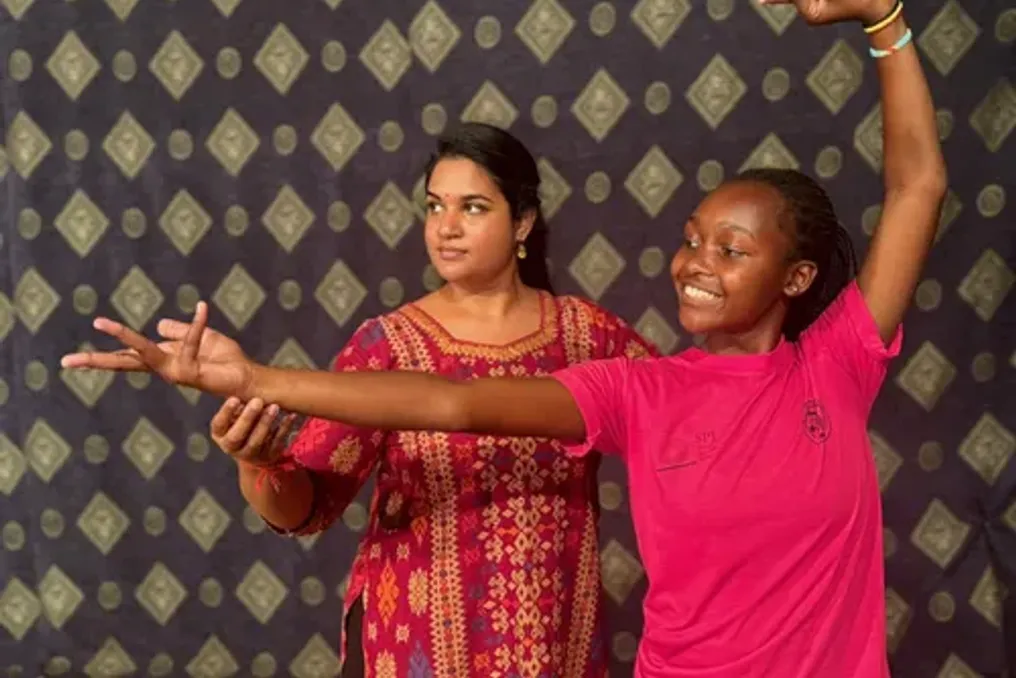
The author's personal experience in Uganda gave him another perspective on the question of culture and belonging. He currently works with Ugandan performers, teaching them Bharatha Natyam. Observing how Ugandan dancers interact with the Indian classical form of dance was deeply enriching. During the process, there was great appreciation, openness, and curiosity, which led the author to ponder what happens when culture extends beyond the community from which it originates.
Culture travels. It crosses oceans and borders. It enters new bodies and new environments. It may be taught by one community and received by another. This does not necessarily mean it loses its original identity. Instead, it can generate new dialogues and new opportunities for understanding.
This is particularly significant for the author, who hails from the Indian diaspora in South Africa. The histories of Indians in South Africa and Uganda do not align, and he never wants to minimize these differences. But there are common threads: migration, colonialism, racism, displacement, and cultural preservation.
The Indian diaspora is often perceived as a homogenous community scattered across the globe. This is not the case. An Indian in Uganda has a different history than an Indian in South Africa, Mauritius, Kenya, Malaysia, or Trinidad and Tobago. Each community had to build its own relationship with the country where it lives, the country from which its ancestors came, and the stories that shaped both.
Perhaps this is why the author thought about his Ugandan dancers while sitting among the Indian community in the temple. On one hand, he was observing a community preserving and celebrating its culture internally. On the other hand, his own work here involves transmitting a cultural form to people who may not share his cultural background. These two experiences might seem very different, but both speak to the power of culture to connect people.
The author came to Uganda to teach dance, but he did not expect Uganda to teach him anything about belonging. Perhaps this is the gift of cultural exchange. We come thinking we are bringing something with us, only to discover that we are also receiving something in return.
At Kuch Temple in Kampala, surrounded by hundreds of people, food, conversations, and culture, the author recalled that home is not always the place we come from. Sometimes home is a place we rebuild. Sometimes it is found in a temple, at a table, in a dance, in a language, or in a gathering of people who understand part of this journey. Culture becomes home when we continue to live it. And perhaps the most beautiful part is that home does not have to remain closed. It can be remembered, rebuilt, opened, and shared.