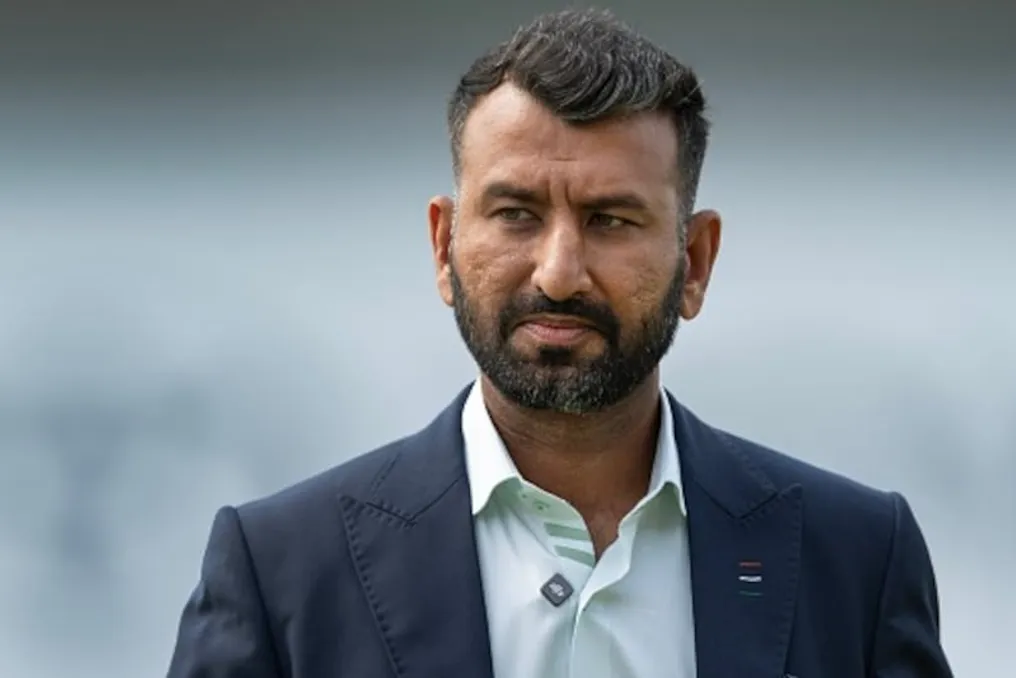
Former Australian captain Tim Pen shared memories of matches against India, mentioning Cheteshwar Pujara and Rishabh Pant
Read more
Aaj Tak
www.aajtak.in

Former Australian captain Tim Pen shared memories of matches against India, mentioning Cheteshwar Pujara and Rishabh Pant

Former Australian captain Tim Pen spoke about his past encounters against the Indian team, making a notable statement about Cheteshwar Pujara. Pen noted that getting Pujara out was very difficult for the Australian team, as he constantly created problems for their batting line-up.

Tim Pen is currently part of the support staff for Australia A. During an interview with the Times of India before the four-day match between Australia A and India A in Puducherry, he discussed the significance of the A-tour in India.

He emphasized that it is extremely important for young Australian players to gain as much experience as possible playing in Indian conditions, as the next Border-Gavaskar Trophy series is scheduled from January to March 2027.

When asked which Indian batter presented the greatest challenge to dismiss under his leadership, Pen unhesitatingly named Cheteshwar Pujara. Pen described Pujara's strengths, highlighting his outstanding concentration and discipline, as well as his reputation for staying at the crease. Although the Australian team repeatedly tried to get him out, Pujara rarely lost his wicket.

According to Pen, the Australian bowlers eventually succeeded against Pujara, with Pat Cummins finding a way to dismiss him by catching him behind.

Tim Pen also recalled a memorable innings by Rishabh Pant at the Gabba. He noted that when Pant arrived in Australia and played aggressively and confidently, he put pressure on the Australian bowlers. Pen stated that Pant changed the course of the match by playing aggressive cricket against high-caliber players, adding that young Australian players should also develop such confidence.

Pen also commented on the upcoming Border-Gavaskar Trophy, calling it very important for Australia. He admitted that the Australian batting line-up has not scored as many runs recently as expected from the team, but there are still many outstanding players in the squad. He also assured that the Australian team will prepare well for the visit to India.
Similar stories

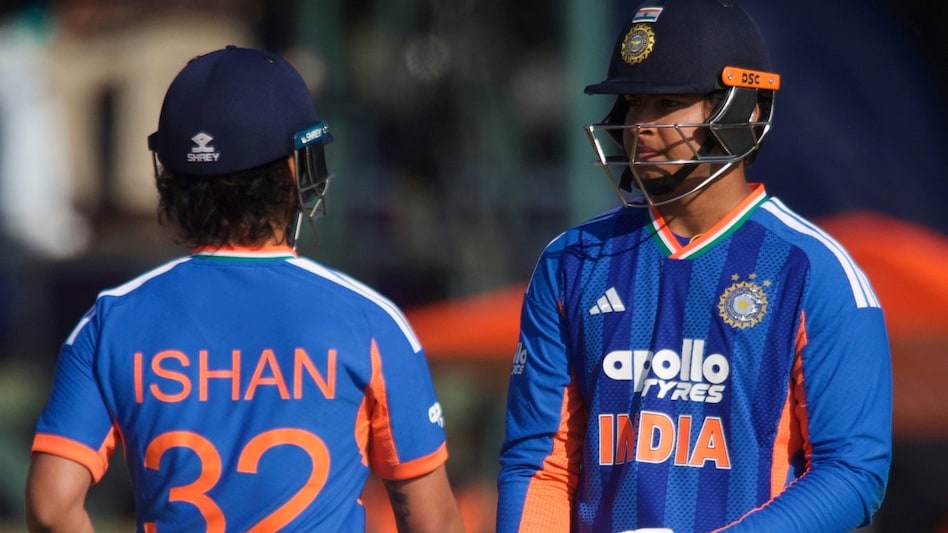
Former player Krishnamachari Shrikant criticizes decision not to include Vaibhav Suryavanshi in the Indian squad
Read more
www.aajtak.in

Former player Krishnamachari Shrikant criticizes decision not to include Vaibhav Suryavanshi in the Indian squad

The Indian team defeated Afghanistan in the first match of the three-match T20 series, winning by seven wickets. After a confident start, the Indian squad aims to win the second game to gain an advantage in the series.

Young 15-year-old batsman Vaibhav Suryavanshi, who impressed with his powerful batting during the visit to Zimbabwe, did not get a chance to play in the first match against Afghanistan. Before the game, there were active discussions among fans regarding Vaibhav Suryavanshi's participation.

Despite India's comfortable seven-wicket victory, the decision not to include Vaibhav in the starting lineup sparked controversy. Former Indian selector and experienced player Krishnamachari Shrikant sharply criticized this decision by the team management.

Speaking on his YouTube channel, Shrikant noted that it was completely unclear why the player, who was the best in the previous match of the series, was suddenly excluded. He joked that when Vaibhav Suryavanshi didn't play yesterday, they started watching movies instead of the match on TV. His wife also expressed dissatisfaction, questioning why the star from the previous match was absent from the team today. He added that if such an ordinary viewer asks this question, one should consider what the player himself is going through.

Shrikant believes that constantly including and excluding a young athlete undermines his confidence. He stated that the team is treating Vaibhav incorrectly. Now, when he steps onto the field for the next match, he will have the fear of being excluded again if he does not score runs.

Shrikant emphasized that this young batsman, who has proven his worth in domestic cricket, India-A, IPL, and international T20, should be given consistent opportunities. Furthermore, he expressed regret over the treatment of Sanju Samson. He noted that Samson is sometimes included in the team and sometimes suddenly excluded, which does not contribute to the stability of any player.

It turned out that Vaibhav Suryavanshi participated in the final match of the Theleef Trophy, a red-ball tournament, just two days before the series against Afghanistan. Because of this, he had fewer opportunities to train with white balls (T20). In the first match, Sanju Samson played in place of him in the opening batting alongside Abhishek Sharma. Although Samson was dismissed after scoring 10 runs, the Indian team achieved the target of 157 runs in just 13.4 overs.

The Story of Lala Amarnath, India's First Centre Batsman Who Played Alongside His Sons for India
Read more
www.aajtak.in

The Story of Lala Amarnath, India's First Centre Batsman Who Played Alongside His Sons for India

September 11 marks an important date in the history of Indian cricket: 115 years ago, in 1911, Lala Amarnath was born, the first centre batsman for the Indian team. Amarnath became not just an athlete, but a significant figure who left a deep mark on the culture and system of Indian cricket, being involved in it as a player, bowler, captain, selector, coach, and commentator.

Lala Amarnath, born into a modest family in Lahore, demonstrated his talent in 1933-34, scoring 109 runs for the South Punjab team against MCC. Shortly after, he got the opportunity to play in India's first home Test match against England at the Jimkhana ground in Bombay. Despite India's difficult situation, Amarnath managed to counter the attacks of the English bowlers, completing a century in 117 minutes and becoming the first player to score a centre in international cricket for India, although the team ultimately lost.

In 1936, during a tour of England, Lala Amarnath was one of the most influential players in the Indian squad. However, a dispute arose with the team captain, Maharaja Kumar from Vijnagaram, known as 'Viji'. Following this incident, Amarnath was sent back to India mid-tour, which seriously affected his Test career, forcing him to step away from it for about 12 years. Nevertheless, his domestic performances continued, and in 1938-39, he scored an impressive 241 runs for the Hinduja team against The Rest.

Lala Amarnath's return was not limited to batting. In 1946, during a visit to England, he made a splash in a match at Lord's, dismissing players such as Len Hutton, Cyril Washbrook, Dennis Compton, and Wally Hammond in England's first innings. A specialty of his bowling was the ability to bring the ball inside with precise length, allowing him to play a useful role both with the bat and with the ball for the Indian side.

In 1947, Lala Amarnath was appointed captain of the first Australian touring Indian team after the departure of Vijay Merchant. The Australian team under Don Bradman was very strong, and India faced serious difficulties in five Test matches. Although his personal Test performances did not meet expectations, he performed brilliantly against regional teams, notably his innings of 228 runs against Victoria was noted by the great Australian player Neil Harvey.

In the 1952-53 season, Lala Amarnath once again led India, and this time the opponent was Pakistan. This was the first official Test series between the two countries, which India won, creating a historic moment. Nevertheless, Amarnath's relationship with Indian cricket politics remained complicated; due to disagreements with the then influential council officials, he faced problems regarding leadership and team decisions.

Throughout his career, Lala Amarnath played 24 Test matches, scoring 878 runs at an average of 24.38. In Tests, he scored 1 centre and 4 half-centuries. Regarding bowling, he took 45 wickets at an average of 32.91. In total across 186 first-class matches, he scored 10426 runs and took 463 wickets.

Although Lala Amarnath's sporting career concluded, his contribution to Indian cricket remains significant. He became a selector, and his name is particularly associated with the decision to give a chance to spinner Jaswant Patel in the Kanpur match against Australia in 1959-60. Patel secured a historic victory for India through his outstanding bowling. His family also continued the cricketing tradition: his sons Surinder Amarnath and Mohinder Amarnath represented India. Surinder also scored a centre in his debut Test match, and Mohinder played 69 Test and 85 ODI matches.

Lala Amarnath was characterized by his straightforward nature and ability to openly express his opinion. His contemporary Mushtaq Ali vividly described his personality. Given his contribution to Indian cricket, former Prime Minister Atal Bihari Vajpayee called him an 'icon'.

Popular