Uzbekistan participated in the London Design Festival for the first time, which took place in the UK capital from September 12 to 20. The Uzbekistan Fund for the Development of Culture and Arts (ACDF) supported the public program, which focused on demonstrating traditional crafts and hosting live performances.
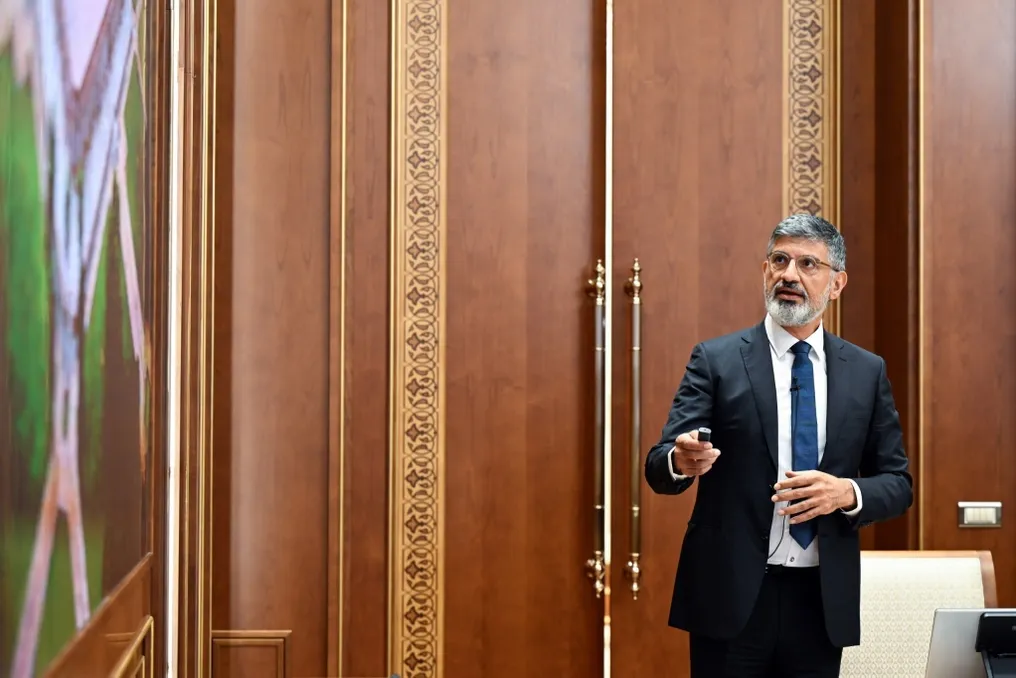
Events featuring Uzbek musicians and artists were held at the Victoria and Albert Museum (V&A), one of the world's centers for decorative arts and design. The creators of the London Design Festival—designer John Sorrell, co-founder of the design agency Newell and Sorrell, and curator Ben Evans, a design expert—developed the festival in 2003 with the aim of bringing together leading industry specialists and strengthening London's image as a global design hub.
The festival does not have a single location but unfolds across the city, attracting significant cultural institutions such as the Barbican Centre, Somerset House, where the London Design Biennale is held, and the Victoria and Albert Museum (V&A), where Uzbekistan debuted.
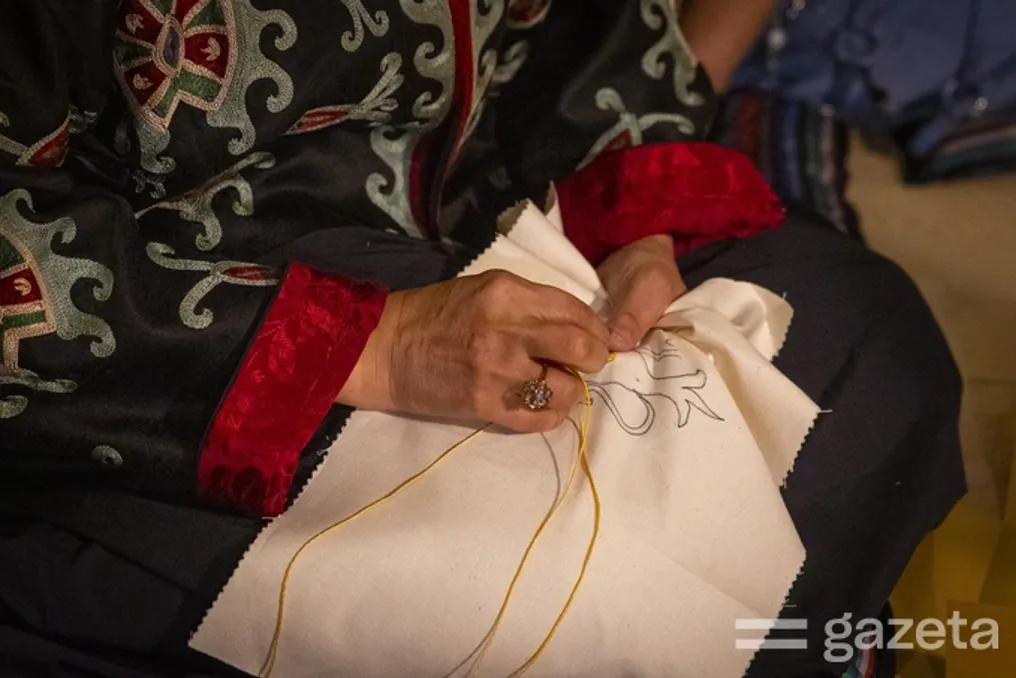
The public program, organized by ACDF in collaboration with the V&A, kicked off on September 16 with the workshop 'Suzani Demonstration.' Traditional embroidery master Yulduz Mukhidinova conducted this session, thoroughly explaining the techniques and visual language of suzani to visitors while assisting them in creating their own pieces.
The embroiderer noted that she was impressed by the museum's attentive approach to exhibits from Uzbekistan, as the V&A collection houses suzanis and other textile samples. According to her, the museum shows interest in studying Uzbek decorative and applied arts.
The program continued on the evening of September 18 as part of the Friday Late: Awakenings event. This monthly event is dedicated to a specific theme, in this case, the collaboration between the museum and the fund, merging technology and traditional methods.
During this evening, Yulduz Mukhidinova conducted two more suzani embroidery masterclasses. The program concluded with two live performances by singer Laylo. She performed songs in English from her album Roots, which was presented with support from the Tashkent Contemporary Art Center (CCA Tashkent) in November 2025.
In her work, Laylo addresses themes of growing up in a young independent country, social change, mixed national identity, and the role of women in a collectivist society. The artist described her work as a 'form of soft activism,' as packaging a complex theme into art facilitates its perception.
Although the Roots album uses samples of Uzbek folk instruments, they were presented in a piano arrangement in London. Laylo expressed hope of being able to bring her full orchestra to demonstrate the full depth of her music.
Both mentioned events were held in support of the project by Uzbek artist Aziza Kadiri. This project is an installation titled Sender Unknown, commissioned by the museum as part of the V&A Jameel Programme, timed for the 20th anniversary of the Jameel Gallery of Islamic Art (V&A Islamic Art Gallery), and with additional financial assistance from the Sarikhani family.
The Sender Unknown installation consists of two contrasting embroidered canvases mounted on curved metal frames suspended in mid-air. These canvases pass through several sections of the gallery, bypassing columns and arches, and float above the display cases. They combine traditional suzani motifs with contemporary subjects, including images of women at sewing machines, referencing the labor of female artisans.
Kadiri explained that this work is the culmination of her years of research into suzani and artificial intelligence, reflecting an attempt to understand the influence of modern technologies on the preservation and loss of cultural memory. The artist draws a parallel between AI datasets and the modern archive, and traditional embroidery with the coded knowledge of women passed down through generations.
According to Aziza Kadiri, a human processes borrowed ideas when creating new material through personal experience, unlike artificial intelligence, which merely generalizes and 'homogenizes data,' leading to the disappearance of many details, similar to how culture can be lost over time. To prevent this, the artist trains AI models and then passes the resulting output to artisans, transforming technology into a tool for preserving, rather than destroying, tradition.